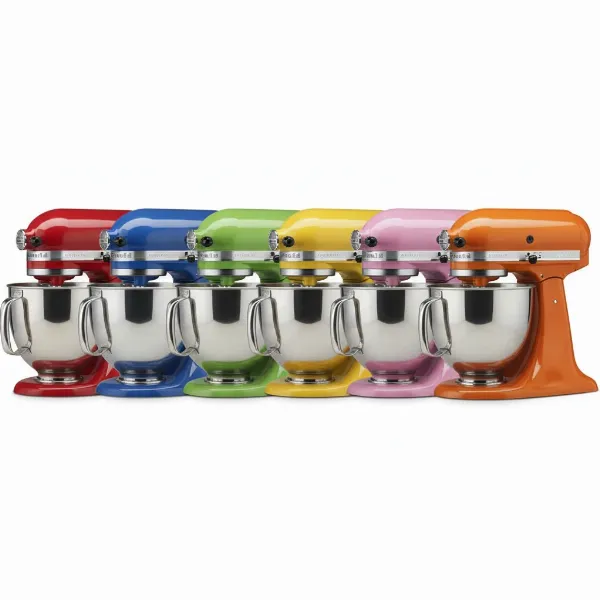
Achieving perfectly whipped egg whites is a cornerstone of countless culinary masterpieces, from airy meringues and delicate soufflés to light and fluffy cakes. Yet, for many home bakers, reaching those elusive, stable peaks can feel like a daunting task, often taking longer than expected or failing to materialize altogether. As a technician with over a decade of experience with stand mixers, I’ve seen firsthand how the right technique and equipment can transform this delicate process. This comprehensive guide will equip you with the expert knowledge and practical tips to whip egg whites to perfection, in the fastest possible time, ensuring your creations rise to their full potential.
Understanding Egg Whites: Overview and Benefits of Whipping
Egg whites are primarily composed of protein and water. When you whip them, you’re essentially forcing air into this protein-water matrix. The mechanical action of the whisk stretches and denatures the protein strands, causing them to unfold and create a network that traps air bubbles. This process transforms a clear liquid into a voluminous, stable foam. The benefits of this transformation are immense in baking, providing structure, lightness, and a delicate texture that is otherwise impossible to achieve.
Throughout culinary history, the ability to create this airy foam has been central to many classic desserts and savory dishes. From the 17th-century meringues to the elaborate soufflés of modern cuisine, whipped egg whites add that crucial lift and ethereal quality. Understanding the science behind this simple act is the first step to mastering it.
The journey of whipping egg whites involves several stages, commonly referred to as “peaks.” Soft peaks are when the whites hold a shape but gently flop over when the whisk is lifted. Medium peaks are firmer but still have a slight curl at the tip. Finally, stiff peaks stand straight up, indicating a strong, stable structure. Each stage has its specific applications, and knowing how to identify them is key to a successful recipe.
Your Guide to Choosing the Right Tools and Ingredients
Achieving perfect egg white peaks efficiently begins long before the whisk starts spinning. The quality of your ingredients and the suitability of your equipment play a pivotal role in the speed and stability of your results.
Selecting the Best Eggs
|
Our Picks for the Best Stand mixer in 2026
As an Amazon Associate I earn from qualifying purchases.
|
||
| Num | Product | Action |
|---|---|---|
| 1 | Cuisinart SM-50G Precision Master 5.5-Quart 12-Speed Stand Mixer with Mixing Bowl, Chef's Whisk, Flat Mixing Paddle, Dough Hook, and Splash Guard with Pour Spout, Agave Green, Manual |

|
| 2 | Kitchen in the box Stand Mixer,3.2Qt Small Electric Food Mixer,6 Speeds Portable Lightweight Kitchen Mixer for Daily Use with Egg Whisk,Dough Hook,Flat Beater (Blue) |
|
| 3 | Cuisinart SPI-50 Spiralizer, White |
|
| 4 | Cuisinart SMD-50GPH Precision Pro 5.5-Quart Digital Stand Mixer with 12-Speeds, 3 Preprogrammed Food Prep Settings, Mixing Bowl, Whisk, Flat Mixing Paddle, Dough Hook, and Splash Guard, Graphite |
|
| 5 | 3-IN-1 Electric Stand Mixer, 6.5QT Bowl 660W 10-Speed Kitchen Mixer, Household Food Mixers include Dough Hook, Beater and Whisk, Bread Cake Mixer for Baking and Most Home Cooks, Red |
|
| 6 | Kitchen in the box Stand Mixer,3.2Qt Small Electric Food Mixer,6 Speeds Portable Lightweight Kitchen Mixer for Daily Use with Egg Whisk,Dough Hook,Flat Beater (Black) |
|
| 7 | Cuisinart SMD-50CRM Precision Pro 5.5-Quart Digital Stand Mixer with 12-Speeds, 3 Preprogrammed Food Prep Settings, Mixing Bowl, Chef's Whisk, Flat Mixing Paddle, Dough Hook, and Splash Guard, Cream |
|
| 8 | Cuisinart SMD-50BC Precision Pro 5.5-Quart Digital Stand Mixer With 12-Speeds, 3 Preprogrammed Food Prep Settings, Mixing Bowl, Whisk, Flat Mixing Paddle, Dough Hook, And Splash Guard, Silver Lining |
|
| 9 | Cuisinart Stand Mixer, 12 Speeds, 5.5-Quart Mixing Bowl, Chef's Whisk, Flat Mixing Paddle, Dough Hook, and Splash Guard with Pour Spout, Silver Lining, SM-50BC, Silver Lining |
|
| 10 | Kitchen in the box Stand Mixer,3.2Qt Mini Electric Food Mixer,6 Speeds Portable Lightweight Kitchen Mixer for Daily Use with Egg Whisk,Dough Hook,Flat Beater (Green) |
|
For optimal whipping, fresh eggs are paramount. Fresher egg whites have a tighter protein structure, allowing them to whip up quicker and form a more stable foam. While older eggs might be easier to peel for boiling, they can be less reliable for whipping.
The temperature of your egg whites is another critical factor. Eggs are easiest to separate when cold, as the yolk is firmer and less likely to break. However, room temperature egg whites whip up to a significantly greater volume and more quickly than cold whites. The proteins in warmer whites are more elastic and expand better. A good practice is to separate your eggs when they are cold, then let the whites sit at room temperature for at least 30 minutes, or gently warm them in a bowl set over lukewarm water.
Proper separation is non-negotiable. Any trace of egg yolk, which contains fat, will inhibit the egg whites from whipping properly. Use a three-bowl method: one for separating, one for the whites, and one for the yolks. This way, if a yolk breaks, only one white is compromised, and you won’t ruin your entire batch.
Essential Equipment
The right equipment can drastically cut down whipping time and improve results.
A stand mixer fitted with a whisk attachment is the champion for speed and efficiency, allowing for hands-free operation and consistent results. An electric hand mixer is a good alternative for smaller batches or if counter space is limited, though it requires more manual effort. Whisking by hand is possible but will take considerably longer and require more arm strength.
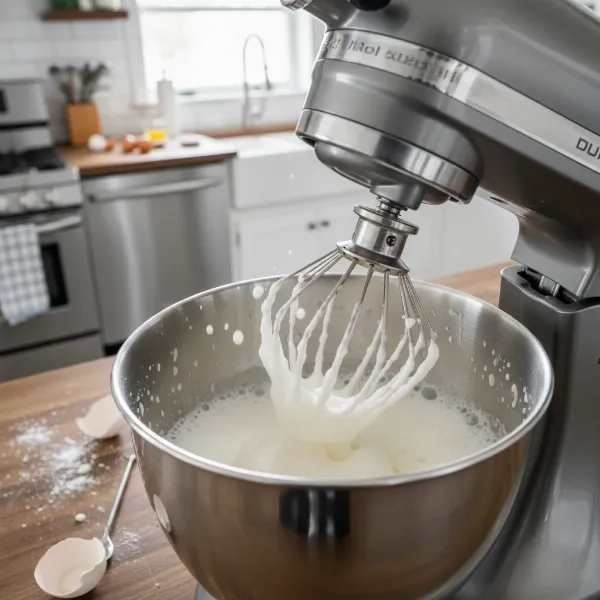 A stand mixer efficiently whipping egg whites to perfect peaks in a clean bowl.
The mixing bowl material and cleanliness are crucial. Any residual grease or oil on the bowl or whisk attachment will prevent the egg whites from foaming. Stainless steel, glass, or ceramic bowls are ideal. While some experts debate the impact of minimal oil, it’s best to err on the side of extreme cleanliness. A copper bowl is often considered the gold standard for whipping egg whites because the copper ions react with the egg proteins to create an exceptionally stable foam. If using a copper bowl, you can skip adding cream of tartar, as the copper provides a similar stabilizing effect.
Ensure your whisk attachment is clean and appropriate for the task. A balloon whisk, whether for a stand mixer or hand-held, is designed to incorporate the maximum amount of air, leading to faster whipping and greater volume.
Stabilizers and Additives
Certain ingredients can act as stabilizers, assisting the egg whites in forming a stronger, more stable foam, which can also indirectly contribute to faster whipping by preventing collapse.
- Cream of Tartar: This acidic powder is a common stabilizer. For every 2-4 egg whites, a pinch or 1/8 teaspoon is typically added once the whites become foamy. It helps the proteins stiffen and hold air more effectively.
- Lemon Juice or Vinegar: Similar to cream of tartar, a few drops of an acidic ingredient like lemon juice or white vinegar can also help stabilize the egg whites.
- Salt: A small pinch of salt added at the beginning can help break up the egg whites, making them easier to beat initially.
- Sugar: When making meringues or recipes requiring sweetened egg whites, sugar acts as a powerful stabilizer. It dissolves into the foam, creating a denser, more stable structure that is less prone to weeping. However, it’s crucial to add sugar gradually, usually a tablespoon at a time, once soft peaks have formed. Adding it too early or too quickly can inhibit volume.
Step-by-Step: Whipping Egg Whites for Speed and Stability
Mastering the technique involves precision and attention at each stage, from preparation to the final peak.
1. Preparation is Key: Begin with fresh, room-temperature egg whites and meticulously clean, dry equipment. Separate your eggs carefully using the three-bowl method to avoid any yolk contamination.
2. Initial Whipping: Pour the egg whites into your clean mixing bowl. Start your stand mixer (or hand mixer) on a low speed. This initial slow agitation allows the proteins to begin unfolding and incorporating small, uniform air bubbles, forming a foamy, translucent mixture. Adding a tiny pinch of salt at this stage can assist in breaking up the whites.
3. Gradually Increase Speed: Once the egg whites turn foamy and slightly opaque, begin to gradually increase the mixer speed to medium or medium-high. Avoid going immediately to the highest speed, as this can create larger, less stable air bubbles. A medium-high speed generally yields smaller, more stable bubbles and a stronger foam.
4. Add Stabilizers (If Using): As the egg whites reach the foamy stage—where small bubbles appear and the mixture is mostly white and opaque—it’s the ideal time to add cream of tartar, lemon juice, or vinegar. Sprinkle it over the surface while the mixer is running.
5. Monitoring Peak Stages:
- Soft Peaks: Continue beating. The whites will double in volume and become noticeably thicker and whiter. When you lift the whisk, the peaks will form but gently curl over at the tip. This stage typically takes 4-5 minutes with an electric mixer.
- Medium Peaks: The peaks will be firmer and hold their shape better, with just a slight curve at the tip.
- Stiff Peaks: Beat until the egg whites are smooth, shiny, and the peaks stand straight up when the whisk is lifted. The mixture should be voluminous and glossy, not dry or granular.
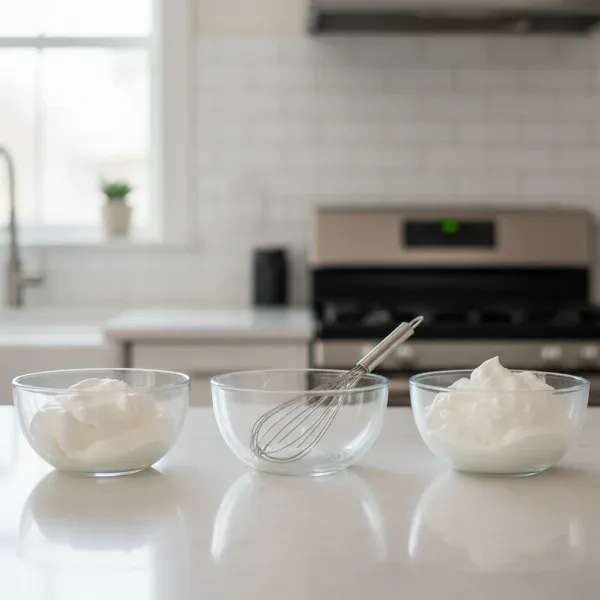 Visual guide to egg white whipping stages: soft, medium, and stiff peaks for baking.
6. Incorporating Sugar (for Meringues): If your recipe calls for sugar, begin adding it gradually (superfine sugar works best for quick dissolving) once soft peaks have formed. Sprinkle 1-2 tablespoons at a time into the running mixer, allowing each addition to dissolve before adding more. This slow process helps stabilize the foam and ensures a glossy, stable meringue. Continue beating until stiff, shiny peaks form and the sugar is completely dissolved (test by rubbing a tiny bit between your fingers—it should feel smooth, not gritty).
7. Avoiding Common Pitfalls:
- Fat Contamination: Even a tiny speck of yolk or grease will prevent whipping. Always ensure your bowl and whisk are impeccably clean.
- Overwhipping: Be vigilant! Egg whites can go from perfectly stiff to overwhipped very quickly. Overbeaten whites will look dry, curdled, clumpy, and eventually separate, releasing liquid. If you catch them early (slightly granular), you might be able to recover them by beating in another fresh egg white.
Common Stand Mixer Models for Whipping Egg Whites
When it comes to whipping egg whites, the right stand mixer can make all the difference, providing consistent power and effective aeration. While many models are capable, some features and brands excel in this task. Here’s a comparative look at common stand mixer categories well-suited for achieving perfect peaks.
| Brand | Model (Example) | Capacity (Quarts) | Power (Watts) | Key Features for Whipping | Price Range | Pros | Cons |
|---|---|---|---|---|---|---|---|
| KitchenAid | Artisan Series | 5 | 325 | Planetary mixing, robust wire whisk, multiple speeds. | $$$ | Reliable, stable, wide range of attachments. | Can be pricey, sometimes louder at higher speeds. |
| KitchenAid | Professional 600 | 6 | 575 | Bowl-lift design, powerful motor for heavy tasks, large whisk. | $$$$ | Excellent for large batches, very stable. | Heavy, larger footprint, higher cost. |
| Cuisinart | Precision Master | 5.5 | 500 | 12 speeds, powerful motor, includes chef’s whisk. | $$ | Good value, versatile, precise speed control. | Durability can vary, whisk not always full coverage. |
| Ankarsrum | Original | 7 | 600 | Unique bowl rotation, open top, excellent for large batches. | $$$$$ | Exceptional for doughs, gentle mixing for delicate items. | Very expensive, learning curve for new users, bulky. |
| Bosch | Universal Plus | 6.5 | 800 | Open bowl design, powerful motor, high-speed whisking. | $$$$ | Powerful, lightweight, great for volume. | Louder, plastic bowl, unique design might not suit all. |
Note: Prices are approximate and can vary based on retailer and promotions.
Choosing a mixer with a strong motor and an effective whisk attachment that reaches the bottom of the bowl is crucial for efficiently whipping egg whites. Planetary action mixers, like KitchenAid, ensure thorough mixing.
Expert Tips for Lightning-Fast and Flawless Peaks
Achieving perfect egg white peaks quickly is a blend of science, technique, and a few insider tricks. Here are the keys to unlocking record-time results.
Speeding Up the Process
- Optimal Egg Temperature: Always start with room-temperature egg whites. Their proteins are more elastic and incorporate air much faster and more effectively than cold ones.
- Impeccably Clean Equipment: This cannot be stressed enough. Any fat residue will prevent your egg whites from whipping, making the process endlessly frustrating. Use a bowl and whisk attachment that are spotless and completely dry.
- Start Slow, Build Speed: Begin whipping on a low speed to create small, uniform bubbles, then gradually increase to medium-high. This method ensures a stable, fine-celled foam that builds volume quickly. Going too fast too soon can create large, unstable bubbles that collapse easily.
- Strategic Stabilizers: Incorporating a pinch of cream of tartar or a few drops of lemon juice once the whites are foamy will help them reach stiff peaks faster and maintain their structure.
Ensuring Peak Stability
Beyond speed, the stability of your whipped egg whites is paramount for successful baking.
- Gradual Sugar Addition: If your recipe includes sugar, add it slowly, one tablespoon at a time, only after soft peaks have formed. This technique allows the sugar to fully dissolve and integrate, creating a stronger, more resilient meringue that holds its shape and prevents weeping.
- Don’t Overbeat: While aiming for speed, resist the urge to beat past the stiff peak stage. Overbeaten egg whites lose their elasticity, become dry and brittle, and are prone to collapsing. Watch for the shiny, smooth appearance of perfectly stiff peaks.
- Gentle Folding: Once whipped, handle your egg whites with care. Fold them into other ingredients gently to preserve the incorporated air and maintain their volume.
Troubleshooting Common Issues
Even seasoned bakers encounter challenges. Here’s how to address them:
- “My egg whites won’t whip!”: The most common culprit is fat contamination from yolk, oil, or grease on the bowl/whisk. Other reasons include cold egg whites or very old eggs.
- “My egg whites are grainy/curdled!”: This is a clear sign of overwhipping. While severely overbeaten whites are hard to save, sometimes incorporating a fresh egg white and gently mixing can help rescue a slightly granular batch.
- “My peaks collapse quickly!”: This could be due to under-whipping (not enough structure), over-whipping (proteins breaking down), or insufficient stabilization (if sugar/acid was needed but not used correctly).
“Mastering egg whites is a true test of a baker’s attention to detail. Freshness, cleanliness, and timing are the holy trinity for achieving that ethereal lift.” – Admin, Standmixerpro.com
Where to Find Your Ideal Egg Whipping Machine
Investing in a good stand mixer is a game-changer for anyone serious about baking, especially when it comes to tasks like whipping egg whites. You can find these essential kitchen appliances at various reputable retailers.
Major electronics and home goods stores, both brick-and-mortar and online, are excellent places to start. Retailers like Amazon, Best Buy, Target, Walmart, and specialty kitchen stores such as Williams Sonoma or Sur La Table, offer a wide selection of stand mixers from leading brands. Online marketplaces often provide competitive pricing and a broader range of models and colors.
When purchasing a stand mixer, especially with egg white whipping in mind, look for:
- Motor Power: While not the sole indicator, a more powerful motor (e.g., 300W+ for planetary mixers) generally handles dense mixtures better and maintains speed, which can aid in consistent whipping.
- Whisk Attachment Design: Ensure the whisk is a balloon style and reaches close to the bottom and sides of the bowl for efficient aeration of even small quantities of egg whites.
- Stability: A heavy, sturdy mixer will not “walk” on your counter during high-speed operation, which is common when whipping.
Always read customer reviews, focusing on feedback related to ease of cleaning, durability, and specific performance with egg whites or light batters.
The Ultimate Buying Guide: Expert Insights for Stand Mixers
Choosing the perfect stand mixer for your kitchen, especially when intricate tasks like whipping egg whites are a priority, requires careful consideration. Drawing from years of hands-on experience, here’s an ultimate buying guide to help you make an informed decision.
First, prioritize a mixer with robust power and a well-designed whisk attachment. While a powerful motor helps with heavy doughs, for egg whites, a good whisk that effectively incorporates air across the entire bowl is crucial. Look for a balloon whisk that reaches the very bottom and sides of the mixing bowl. This ensures that even a small quantity of egg whites can be whipped efficiently without leaving unmixed portions.
Consider the bowl capacity based on your typical batch sizes. A 5-quart bowl is versatile for most home bakers, but larger capacities (6-7 quarts) are excellent if you frequently bake for crowds or make large meringue batches. Conversely, for very small amounts of egg whites (e.g., one or two), ensure the whisk attachment design can still make contact.
Stability and construction are key. A mixer with a heavy, all-metal construction will provide the necessary stability for high-speed whipping, preventing it from vibrating excessively or moving across your countertop. While plastic components might reduce cost, they can compromise long-term durability and stability.
Finally, evaluate the speed settings and control. Good mixers offer a range of speeds, allowing you to start slowly and gradually increase, which is optimal for building a stable foam. Precise speed control is more beneficial than just having a “high” setting. Durability, ease of cleaning, and available attachments are also important for overall user satisfaction. Don’t let cost be the only factor; a well-chosen stand mixer is a long-term investment that will elevate your baking for years to come.
Conclusion
Mastering the art of whipping egg whites to perfect peaks is an invaluable skill for any baker. By understanding the science, utilizing the right room-temperature eggs, ensuring impeccable cleanliness, and employing the correct technique with a reliable stand mixer, you can achieve voluminous, stable peaks in record time. Remember, the journey from clear liquid to an airy cloud is a delicate dance of proteins and air, and with these insights, your creations are destined for new heights. Don’t be afraid to experiment and fine-tune your approach, as consistent practice truly makes perfect. What culinary masterpiece will you create next with your newfound whipping prowess?
Frequently Asked Questions
Why won’t my egg whites whip properly or reach stiff peaks?
The most common reasons are fat contamination (even a tiny speck of yolk, oil, or grease) on the bowl or whisk, or using cold egg whites directly from the refrigerator. Ensure all equipment is impeccably clean and dry, and allow egg whites to come to room temperature before whipping.
Can I whip egg whites in a plastic bowl?
While technically possible, plastic bowls are not ideal. They are porous and can retain residual fats and oils even after washing, which can inhibit egg whites from whipping. Stainless steel, glass, or copper bowls are recommended for their non-porous surfaces and superior cleanliness.
How can I tell if my egg whites are at soft, medium, or stiff peaks?
To check, lift the whisk attachment from the bowl. For soft peaks, the whites will form a peak but the tip will gently droop. For medium peaks, the tip will still curl slightly. For stiff peaks, the whites will form a firm, upright peak that holds its shape and stands straight when the whisk is inverted.
What is cream of tartar, and do I need it for whipping egg whites?
Cream of tartar is an acidic salt that acts as a stabilizer. It helps egg whites whip faster, achieve greater volume, and maintain a more stable, glossy foam that is less prone to weeping. While not always strictly necessary, it’s highly recommended for added security, especially in humid conditions or for delicate recipes like meringues.
Can I use leftover egg whites that have been stored?
Yes, you can use leftover egg whites, but ensure they were stored properly in an airtight container in the refrigerator. For best results, allow them to come to room temperature before whipping, as colder whites will take longer and yield less volume. Fresher egg whites generally whip up quicker and are more stable.