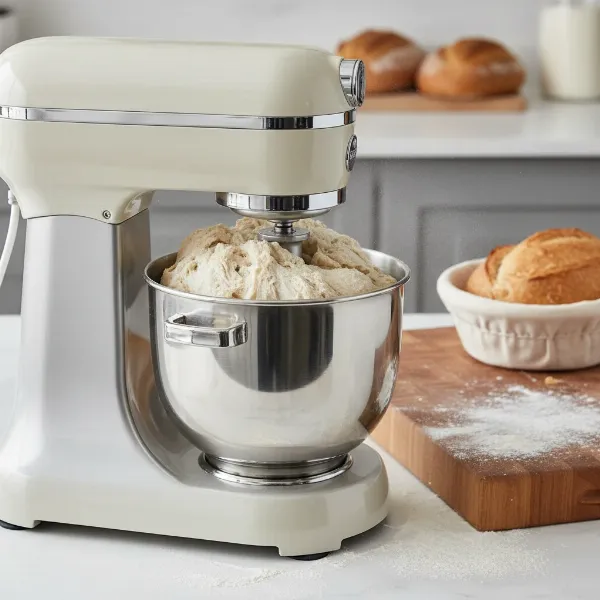
Choosing the perfect stand mixer often feels like navigating a maze of features, attachments, and specifications. Among these, wattage stands out as a frequently discussed, yet often misunderstood, metric. Many bakers wonder if a higher wattage automatically means a better mixer, or if they truly need a powerhouse machine for their kitchen endeavors. The truth is, the ideal wattage for your stand mixer isn’t a one-size-fits-all answer; it hinges entirely on your baking habits, the types of recipes you tackle, and the consistency of your usage. This guide will demystify stand mixer wattage, helping you understand what those numbers really mean and how to select a mixer that perfectly matches your culinary ambition and budget.
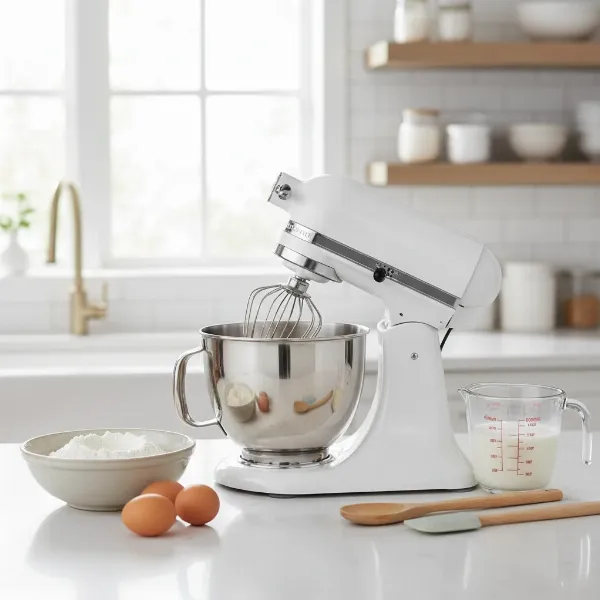 A modern stand mixer on a kitchen counter with flour, eggs, and a whisk attachment ready for baking.
Stand Mixer Wattage: Beyond the Numbers
When you see a wattage rating on a stand mixer, it primarily indicates the power consumption of the motor. A higher wattage typically suggests a stronger motor, capable of handling more demanding tasks. However, it’s crucial to understand that wattage alone doesn’t paint the full picture of a mixer’s performance. The overall design, the efficiency of the motor, the gearing system, and the mixer’s ability to maintain speed under heavy loads (often referred to as torque) are equally vital.
Historically, stand mixers have evolved significantly, moving from manual operation to powerful electric motors that revolutionize kitchen tasks. Early electric mixers offered basic mixing capabilities, but modern designs boast a range of wattages to cater to diverse needs. While a high wattage can be a selling point, a well-engineered mixer with moderate wattage from a reputable brand might outperform a less efficient, higher-wattage model. For instance, some KitchenAid models with different stated wattages (e.g., 275W vs. 325W) can even share internally identical motors, with the wattage difference primarily reflecting the power consumed when mixing larger bowl capacities at maximum speed. This highlights that raw wattage isn’t always a direct comparison across different brands or even within a brand if the internal mechanics are similar.
Matching Wattage to Your Baking Needs
The key to choosing the right stand mixer wattage lies in a realistic assessment of your baking style and frequency. Are you an occasional baker who enjoys simple cakes and cookies, or a passionate bread maker who regularly kneads dense doughs? Your answer will guide you toward the most suitable power level.
Understanding Your Usage Frequency and Batch Size
Before diving into wattage specifics, consider how often you plan to use your stand mixer and the typical size of your batches.
- Occasional light baking: If you bake once a month or less, primarily light batters, whipping cream, or a small batch of cookies, you might not need the highest wattage.
- Regular home baking: For those who bake weekly, including a variety of cookies, cakes, and occasional bread, a versatile mid-range wattage is often ideal.
- Frequent heavy-duty baking or large batches: If you’re consistently making multiple loaves of bread, large quantities of stiff doughs, or using power-hungry attachments, a higher wattage will be a significant asset.
|
Our Picks for the Best Stand mixer in 2026
As an Amazon Associate I earn from qualifying purchases.
|
||
| Num | Product | Action |
|---|---|---|
| 1 | Cuisinart SMD-50GPH Precision Pro 5.5-Quart Digital Stand Mixer with 12-Speeds, 3 Preprogrammed Food Prep Settings, Mixing Bowl, Whisk, Flat Mixing Paddle, Dough Hook, and Splash Guard, Graphite |

|
| 2 | Kitchen in the box Stand Mixer,3.2Qt Mini Electric Food Mixer,6 Speeds Portable Lightweight Kitchen Mixer for Daily Use with Egg Whisk,Dough Hook,Flat Beater (Green) |
|
| 3 | Cuisinart SM-50G Precision Master 5.5-Quart 12-Speed Stand Mixer with Mixing Bowl, Chef's Whisk, Flat Mixing Paddle, Dough Hook, and Splash Guard with Pour Spout, Agave Green, Manual |
|
| 4 | Kitchen in the box Stand Mixer,3.2Qt Small Electric Food Mixer,6 Speeds Portable Lightweight Kitchen Mixer for Daily Use with Egg Whisk,Dough Hook,Flat Beater (Black) |
|
| 5 | 3-IN-1 Electric Stand Mixer, 6.5QT Bowl 660W 10-Speed Kitchen Mixer, Household Food Mixers include Dough Hook, Beater and Whisk, Bread Cake Mixer for Baking and Most Home Cooks, Red |
|
| 6 | Cuisinart Stand Mixer, 12 Speeds, 5.5-Quart Mixing Bowl, Chef's Whisk, Flat Mixing Paddle, Dough Hook, and Splash Guard with Pour Spout, Silver Lining, SM-50BC, Silver Lining |
|
| 7 | Cuisinart SPI-50 Spiralizer, White |
|
| 8 | Cuisinart SMD-50CRM Precision Pro 5.5-Quart Digital Stand Mixer with 12-Speeds, 3 Preprogrammed Food Prep Settings, Mixing Bowl, Chef's Whisk, Flat Mixing Paddle, Dough Hook, and Splash Guard, Cream |
|
| 9 | Cuisinart SMD-50BC Precision Pro 5.5-Quart Digital Stand Mixer With 12-Speeds, 3 Preprogrammed Food Prep Settings, Mixing Bowl, Whisk, Flat Mixing Paddle, Dough Hook, And Splash Guard, Silver Lining |
|
| 10 | Kitchen in the box Stand Mixer,3.2Qt Small Electric Food Mixer,6 Speeds Portable Lightweight Kitchen Mixer for Daily Use with Egg Whisk,Dough Hook,Flat Beater (Blue) |
|
300W Stand Mixers: Ideal for Everyday Baking
Stand mixers in the 300W range are excellent entry-level options and perfect for light to moderate baking tasks.
- Suitable tasks: These mixers excel at whipping egg whites into fluffy meringues, creaming butter and sugar for delicate cake batters, mixing cookie dough, and preparing lighter frostings. They handle regular baking projects for small to medium-sized households with ease.
- Limitations: While capable, a 300W mixer may struggle with very stiff bread doughs, especially if you’re making larger quantities. Pushing a lower wattage motor too hard or too frequently with heavy loads can shorten its lifespan.
- Target user: The 300W stand mixer is perfect for casual bakers, beginners, or those with limited kitchen space who primarily focus on everyday desserts and lighter recipes.
500W Stand Mixers: The Versatile Workhorse
Often considered the sweet spot for home bakers, 500W stand mixers offer a significant upgrade in power and versatility.
- Capabilities: A 500W mixer can confidently tackle most bread doughs, including whole wheat and sourdough, handle thick cookie doughs, and mix larger batches of batter without straining the motor. Its robust power makes it suitable for a wider range of recipes and more frequent use.
- Why it’s a popular choice: This wattage strikes a great balance between power, durability, and affordability for the average enthusiastic home baker. It provides enough strength for heavy-duty tasks while remaining practical for daily use.
- Target user: If you’re a regular baker, enjoy making homemade bread, frequently bake for family gatherings, or occasionally use attachments like a pasta maker, a 500W mixer is likely your best bet.
800W+ Stand Mixers: Power for the Pros
For the most demanding kitchen tasks and professional-grade performance, stand mixers with 800W or higher motors are the ultimate choice.
- Benefits: These high-wattage machines are built for exceptional power, effortlessly handling very stiff doughs, massive batches, and continuous heavy use. They are often paired with larger bowl capacities (7 quarts and above) and can run specialized, power-hungry attachments like meat grinders or grain mills without overheating. The extra power also means the motor isn’t pushed as hard, potentially leading to greater longevity.
- Considerations: Higher wattage mixers typically come with a higher price tag and often a larger, heavier footprint, requiring more counter space. For a casual baker, this level of power might be overkill and an unnecessary expense.
- Target user: Avid bakers, small business owners (e.g., a home bakery), or those who frequently prepare very large quantities of dough for events will benefit most from an 800W+ stand mixer. If you consider your kitchen a professional workspace, this power class is for you.
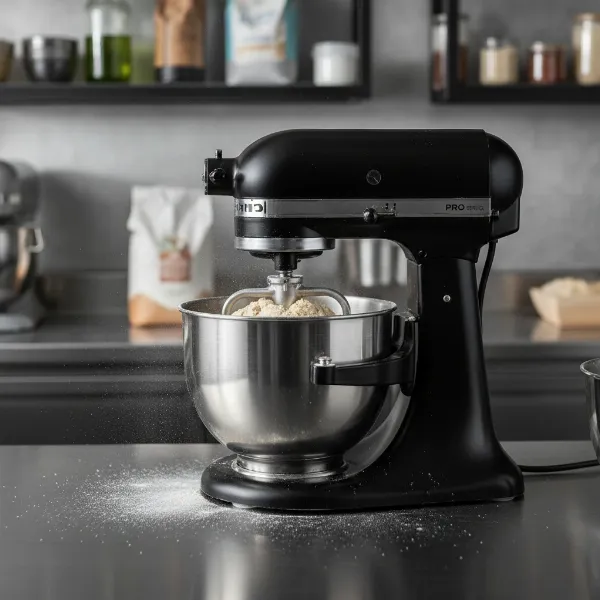 Powerful stand mixer with a dough hook attachment kneading stiff, dense bread dough in a large bowl.
Important Factors Beyond Wattage
While wattage is a key consideration, it’s part of a larger ecosystem of features that define a stand mixer’s performance.
- Bowl Capacity: The size of the mixing bowl directly influences the load on the motor. A larger bowl, capable of holding more ingredients, naturally requires a more powerful motor to mix effectively. For example, a 300W mixer with a 4.5-quart bowl might handle its maximum capacity well, but a 500W mixer is usually recommended for larger 6-quart bowls when kneading dough.
- Attachments: The versatility of a stand mixer is significantly expanded by its attachments. Dough hooks for bread, flat beaters for batters, and wire whisks for aerating are standard. However, many mixers offer power hubs for optional accessories like pasta makers, food grinders, or spiralizers. These attachments can place additional demands on the motor, making higher wattage beneficial for optimal performance.
- Motor Type & Gearing: Some professional models feature direct-drive motors, which are often more efficient at transferring power directly to the attachments, potentially allowing for lower reported wattage while delivering high torque. Gearing also plays a crucial role in converting motor speed into mixing force. A well-designed gear system can maximize the effective power of any given wattage.
- Brand Reputation & Build Quality: The internal components and overall construction quality are paramount. A mixer from a reputable brand, even with a slightly lower wattage, might feature superior gears, a more efficient motor, and better heat dissipation than a generic brand boasting a higher number. This translates to better performance, greater durability, and a longer lifespan. Prioritize mixers known for their robust build and reliable performance.
How to Choose Your Perfect Stand Mixer Wattage
Selecting the right stand mixer wattage involves a thoughtful assessment of your specific needs. Start by identifying your primary use case:
- For Light & Occasional Baking: If you primarily whip creams, mix cake batters, or make small batches of cookies a few times a month, a 300W (or 275-350W) stand mixer is likely sufficient. It’s cost-effective and takes up less space.
- For Versatile Home Baking & Regular Bread Making: If you’re a regular baker who enjoys making a variety of items, including homemade bread, cookies, and cakes, and occasionally larger batches, a 500W (or 450-600W) mixer offers the best balance of power and versatility. This is the sweet spot for most home kitchens.
- For Heavy-Duty Use, Large Batches, or Professional Needs: For avid bakers, small businesses, or those consistently tackling very stiff doughs, large quantities, or using specialized power-intensive attachments, an 800W+ (or 650W-1000W+) stand mixer will provide the necessary power and longevity.
“Don’t get too fixated on wattage alone. While it indicates motor strength, a mixer’s true performance shines in its ability to handle heavy loads without slowing down. Always consider your most demanding tasks first.” – Admin, Standmixerpro.com
When reviewing product descriptions, look beyond just the wattage. Check the mixer’s maximum flour capacity, its bowl size, and read reviews from users who engage in similar baking activities as you. This comprehensive approach will ensure you invest in a stand mixer that truly meets your expectations.
Conclusion
Choosing the right stand mixer wattage is about finding harmony between power and purpose. While a 300W mixer can gracefully handle lighter tasks, a 500W model often provides the versatility most home bakers crave, and an 800W+ machine stands ready for the most rigorous demands. Remember that wattage is one piece of the puzzle, with build quality, motor efficiency, and bowl capacity also playing significant roles in a mixer’s overall performance and durability. By thoughtfully considering your baking habits, you can select a stand mixer that not only feels powerful in your hands but also empowers you to create culinary masterpieces with ease.
What kind of baking projects are you most excited to tackle with your next stand mixer?
Frequently Asked Questions
Can a 300W stand mixer knead bread dough?
A 300W stand mixer can knead some lighter bread doughs, but it may struggle with very stiff or large batches. For regular bread making, especially dense doughs, a 500W mixer or higher is generally recommended to prevent motor strain and ensure thorough kneading.
Is higher wattage always better for a stand mixer?
Not necessarily. While higher wattage generally indicates a stronger motor, it doesn’t always translate to better performance if the mixer lacks good engineering, efficient gearing, or torque. A well-built 300W mixer from a reputable brand might be more effective and durable than a poorly designed 500W model. Consider the overall construction and brand reputation.
What wattage is good for a KitchenAid mixer?
KitchenAid mixers come in a range of wattages. For light-to-moderate baking, models around 275W-325W (like the Classic or Artisan) are popular. For those who frequently make bread or larger batches, KitchenAid models with 450W-575W motors (like the Professional series) are more suitable. Some higher-end KitchenAid models may also feature wattages over 500W.
How long should a stand mixer last?
With proper care and maintenance, a high-quality stand mixer can last 10 to 15 years or more. The lifespan can be extended by choosing a wattage appropriate for your most demanding tasks, as this reduces motor strain. Overworking a low-wattage mixer with heavy doughs can significantly shorten its life.