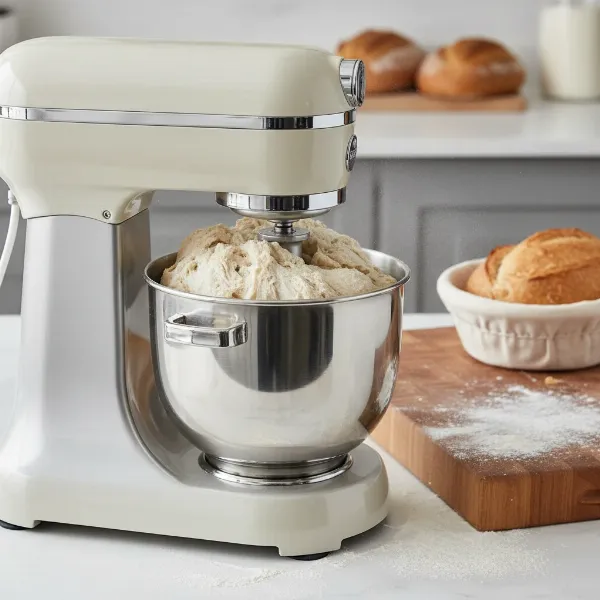
The kitchen can be a crowded space, filled with gadgets promising to simplify your culinary adventures. Among the most fundamental yet debated are hand mixers and stand mixers. For many home bakers and seasoned chefs, the question isn’t just which one to buy, but whether both deserve a coveted spot in their kitchen arsenal. Understanding the distinct strengths and limitations of each appliance is key to optimizing your baking process and ensuring you have the right tool for every task. This guide will delve into their differences, ideal uses, and help you decide if your kitchen truly needs both a hand mixer and a stand mixer.
Hand Mixer: Overview and Benefits
A hand mixer is a portable, handheld electric device designed for straightforward mixing tasks. Typically lightweight and compact, it consists of a motor housing with a handle and slots for detachable beaters. Hand mixers are celebrated for their convenience and ease of storage, making them a go-to for many everyday baking needs.
They excel at small to medium-sized batches and lighter mixing tasks. Think about whipping a modest amount of cream for a dessert, beating a few eggs for an omelet, or mixing up a single batch of cookie dough or cake batter. Their maneuverability allows you to control the mixing process by moving the beaters around any bowl you choose, ensuring all ingredients are incorporated. This flexibility is particularly useful in kitchens with limited counter space, as they can be easily stored in a drawer or cabinet when not in use. Hand mixers are also significantly more affordable than their stand mixer counterparts, presenting a lower initial investment for those just starting their baking journey or with occasional needs.
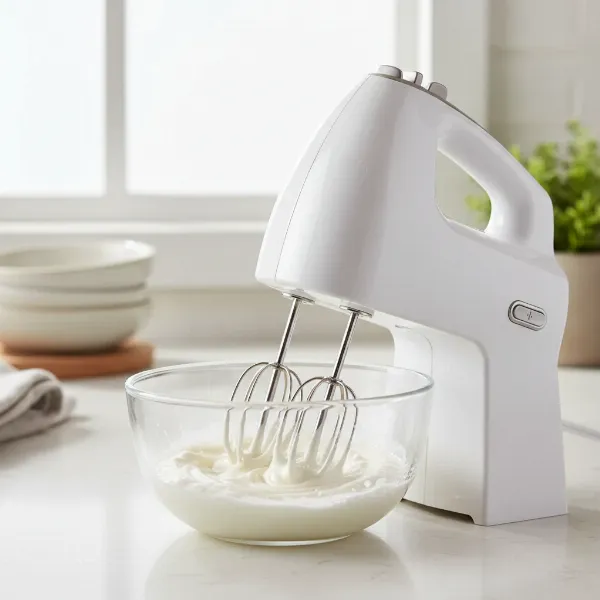 Portable hand mixer efficiently whipping cream in a small bowl for dessert preparation.
Despite their advantages, hand mixers have limitations. They are generally less powerful (typically 150-400 watts) and are not designed for heavy-duty tasks like kneading thick bread dough, which can strain the motor and tire your arm. The operation is entirely “hands-on,” meaning you must hold the mixer throughout the process, which can be fatiguing for longer mixing times or more complex recipes. Their range of attachments is also often limited compared to stand mixers.
Stand Mixer: Overview and Benefits
A stand mixer is a countertop appliance featuring a powerful motor, a stationary mixing bowl, and various attachments that rotate on an orbital axis. It’s built for stability, power, and hands-free operation, making it a workhorse for more demanding and larger-scale baking projects.
Stand mixers are ideal for large batches and heavy mixtures such as dense bread doughs, stiff cookie dough, or multiple batches of cake batter. Their robust motors (ranging from 250 to over 800 watts) and gear-driven systems provide sustained power, effortlessly handling tasks that would overwhelm a hand mixer or exhaust a baker. The primary benefit of a stand mixer is its hands-free capability, allowing you to add ingredients, prep other components, or even clean up while the mixer does its work. This automation is a significant time and effort saver, especially for long mixing or kneading times.
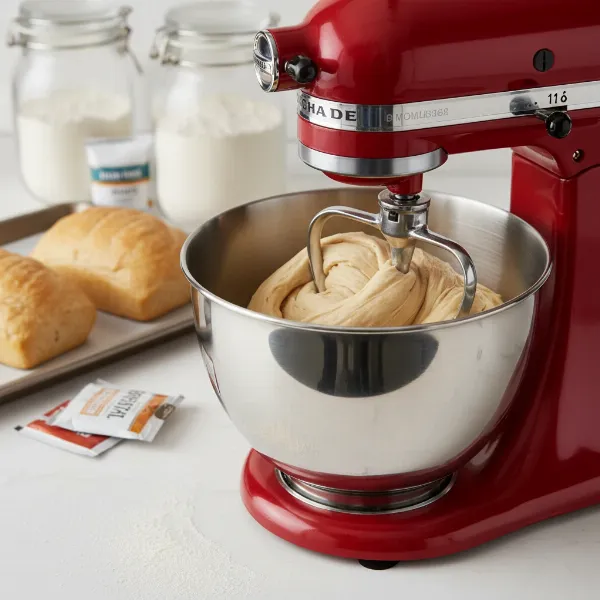 Robust stand mixer kneading thick bread dough hands-free in a large stainless steel bowl.
Beyond standard beating and whisking, many stand mixers offer greater versatility with a wide array of specialized attachments, transforming them into multi-functional kitchen machines. These can include pasta makers, meat grinders, spiralizers, and even ice cream makers, expanding your culinary horizons far beyond baking. While a stand mixer requires a dedicated space on your counter due to its weight (often 20 pounds or more) and bulk, its durability means it can be a long-term investment, often lasting 20 years or more with proper care.
Choosing Your Perfect Mixer: Key Considerations
Deciding between a hand mixer and a stand mixer, or opting for both, boils down to several practical factors tailored to your unique baking habits and kitchen environment.
Identify Your Baking Needs
|
Our Picks for the Best Stand mixer in 2026
As an Amazon Associate I earn from qualifying purchases.
|
||
| Num | Product | Action |
|---|---|---|
| 1 | Cuisinart SMD-50BC Precision Pro 5.5-Quart Digital Stand Mixer With 12-Speeds, 3 Preprogrammed Food Prep Settings, Mixing Bowl, Whisk, Flat Mixing Paddle, Dough Hook, And Splash Guard, Silver Lining |

|
| 2 | Cuisinart SM-50G Precision Master 5.5-Quart 12-Speed Stand Mixer with Mixing Bowl, Chef's Whisk, Flat Mixing Paddle, Dough Hook, and Splash Guard with Pour Spout, Agave Green, Manual |
|
| 3 | Cuisinart SMD-50GPH Precision Pro 5.5-Quart Digital Stand Mixer with 12-Speeds, 3 Preprogrammed Food Prep Settings, Mixing Bowl, Whisk, Flat Mixing Paddle, Dough Hook, and Splash Guard, Graphite |
|
| 4 | Cuisinart SPI-50 Spiralizer, White |
|
| 5 | Cuisinart Stand Mixer, 12 Speeds, 5.5-Quart Mixing Bowl, Chef's Whisk, Flat Mixing Paddle, Dough Hook, and Splash Guard with Pour Spout, Silver Lining, SM-50BC, Silver Lining |
|
| 6 | Kitchen in the box Stand Mixer,3.2Qt Mini Electric Food Mixer,6 Speeds Portable Lightweight Kitchen Mixer for Daily Use with Egg Whisk,Dough Hook,Flat Beater (Green) |
|
| 7 | Kitchen in the box Stand Mixer,3.2Qt Small Electric Food Mixer,6 Speeds Portable Lightweight Kitchen Mixer for Daily Use with Egg Whisk,Dough Hook,Flat Beater (Black) |
|
| 8 | Cuisinart SMD-50CRM Precision Pro 5.5-Quart Digital Stand Mixer with 12-Speeds, 3 Preprogrammed Food Prep Settings, Mixing Bowl, Chef's Whisk, Flat Mixing Paddle, Dough Hook, and Splash Guard, Cream |
|
| 9 | 3-IN-1 Electric Stand Mixer, 6.5QT Bowl 660W 10-Speed Kitchen Mixer, Household Food Mixers include Dough Hook, Beater and Whisk, Bread Cake Mixer for Baking and Most Home Cooks, Red |
|
| 10 | Kitchen in the box Stand Mixer,3.2Qt Small Electric Food Mixer,6 Speeds Portable Lightweight Kitchen Mixer for Daily Use with Egg Whisk,Dough Hook,Flat Beater (Blue) |
|
Consider what you typically bake and how often. If your passion lies in crafting artisanal bread weekly, a stand mixer is almost a necessity for its dough-kneading capabilities. For occasional cookies, light batters, or whipping cream for dessert, a hand mixer will often suffice. An avid baker who tackles a variety of recipes will find the power and versatility of a stand mixer invaluable, while a casual baker might only need the portability and simplicity of a hand mixer.
Batch Size
Think about the quantity of ingredients you usually process. Stand mixers are equipped with larger bowls (4.5 to 7 quarts or more) and the power to handle substantial batches—enough for holiday baking or feeding a large family. Hand mixers are best suited for single recipes or smaller quantities, where a stand mixer’s large bowl might not make enough contact with the ingredients.
Kitchen Space & Storage
This is a critical factor for many. Hand mixers are compact and can be easily tucked away in a drawer or cabinet. Stand mixers, on the other hand, demand significant counter space and can be heavy and awkward to move, meaning many owners keep them permanently displayed. If kitchen real estate is a premium, a hand mixer offers a practical solution.
Budget
Hand mixers are considerably more budget-friendly, often costing a fraction of a stand mixer’s price. A quality hand mixer can be purchased for under $100, while stand mixers range from $110 for entry-level models to $700 or more for premium options. Factor in your long-term culinary goals when considering this investment.
Power & Performance
For recipes requiring sustained power and thorough mixing, such as creaming butter and sugar for extended periods or kneading stiff dough, a stand mixer offers superior performance. Hand mixers, with their lower wattage, are better suited for lighter mixtures and quicker tasks. Using a hand mixer for heavy dough can lead to overheating and potential damage to the appliance, not to mention a very tired arm.
Versatility & Attachments
If you envision your mixer as a multi-tasking appliance that can also make pasta, grind meat, or shred vegetables, a stand mixer with its wide range of available attachments is the clear winner. Hand mixers typically come with standard beaters and sometimes a whisk, limiting their functional scope to basic mixing.
Hand Mixer vs. Stand Mixer: A Detailed Comparison
To help you visualize the differences, here’s a detailed comparison:
| Feature | Hand Mixer | Stand Mixer |
|---|---|---|
| Motor Power | 150-400 watts (less powerful) | 250-800+ watts (more powerful, gear-driven) |
| Capacity | Small to medium batches | Large batches (4.5 to 7+ quarts) |
| Hands-Free | No (requires constant holding) | Yes (allows multitasking) |
| Portability | Highly portable, lightweight | Stationary, heavy, less portable |
| Storage | Compact, fits in drawers/cabinets | Bulky, often requires dedicated counter space |
| Price Range | Budget-friendly ($30-$100) | Significant investment ($100-$700+) |
| Best For | Whipped cream, light batters, scrambled eggs, small cookie batches | Bread dough, large cake batters, stiff cookie dough, meringues |
| Common Attachments | Beaters, whisk (sometimes) | Flat beater, wire whip, dough hook (standard), many optional accessories |
Do You Really Need Both?
For many kitchens, the answer to “Do you really need both?” is often a resounding yes. A hand mixer and a stand mixer are not mutually exclusive; rather, they are complementary tools that can significantly enhance your baking experience.
Imagine a scenario where your stand mixer is busy kneading a large batch of bread dough, but you also need to whip up a small amount of egg whites for a quick meringue topping. This is where the efficiency of owning both shines. The hand mixer handles the small, quick task without interrupting the stand mixer’s heavy-duty job.
“For bakers who enjoy a wide range of recipes, from light meringues to dense sourdough, having both a hand mixer and a stand mixer offers unparalleled flexibility and efficiency in the kitchen,” says a Standmixerpro.com technician with over 10 years of experience.
If you are an occasional baker with limited space and budget, a hand mixer might be all you need. It handles most common tasks well. However, if you frequently bake large quantities, experiment with diverse recipes, or delve into bread making, a stand mixer is an invaluable investment. For those who do both—regularly tackling ambitious baking projects while also needing a quick, simple solution for everyday tasks—the combination of a robust stand mixer and a versatile hand mixer creates the ultimate baking setup.
Tips for Using and Maintaining Your Mixers
Proper use and regular maintenance are crucial for extending the lifespan of your hand and stand mixers and ensuring consistent performance.
How to Use Your Mixer Safely
- Read the Manual: Always refer to your specific mixer’s instruction manual for safety guidelines and operational procedures.
- Stable Surface: Ensure your stand mixer is placed on a flat, stable, and dry surface to prevent wobbling or tipping during operation. For hand mixers, always use a sturdy bowl that can withstand mixing.
- Check for Damage: Before each use, inspect the power cord and attachments for any signs of wear or damage. Never operate a mixer with a frayed cord.
- Secure Attachments: Make sure attachments are properly locked into place before turning on the mixer.
- Start Slow: Always begin mixing at the lowest speed setting to prevent splattering ingredients and gradually increase as needed.
- Keep Hands Clear: Never insert hands or utensils into the mixing bowl while the mixer is operating. Use a spatula to scrape down the sides only when the mixer is off.
- Unplug When Not in Use: Always unplug your mixer from the power outlet when changing attachments, cleaning, or when it’s not in use.
Cleaning and Maintenance
- Clean After Each Use: Disassemble and clean all removable attachments immediately after use. Most attachments are dishwasher safe, but check your manual.
- Wipe Down the Body: Use a damp cloth to wipe down the mixer’s head and base. Avoid immersing the motor housing in water.
- Thorough Drying: Ensure all parts are completely dry before reassembling or storing to prevent rust or mildew.
- Store Properly: Store hand mixers and their attachments neatly in a drawer or cabinet. If your stand mixer is a countertop fixture, cover it to protect against dust.
- Periodic Checks: Occasionally check the mixer’s ventilation slots for dust buildup and clean them carefully with a soft brush or vacuum cleaner attachment. This helps prevent overheating.
Buying Guide: Making Your Final Decision
Navigating the world of kitchen mixers can feel overwhelming, but with a clear understanding of your needs, the decision becomes much simpler. The “perfect” mixer isn’t universally defined; it’s the one that best fits your lifestyle, your baking ambitions, and your kitchen.
If you’re an occasional baker, dabbling in light cakes, cookies, or whipping cream, a hand mixer offers an affordable, space-saving, and perfectly capable solution. Its portability makes it adaptable to any counter space and bowl.
For serious bakers, frequent entertainers, or those who enjoy the challenge of making bread and other heavy doughs, a stand mixer is an indispensable ally. Its power, hands-free operation, and versatility with attachments will transform your baking, making complex tasks enjoyable rather than arduous.
Ultimately, for the most comprehensive and flexible baking experience, investing in both a quality hand mixer and a robust stand mixer creates a dynamic duo. They address each other’s shortcomings, ensuring you’re equipped for every culinary challenge, big or small.
Frequently Asked Questions
Can a hand mixer knead bread dough?
While some hand mixers come with dough hooks, they generally lack the power and sustained torque required to effectively knead dense bread dough. Using a hand mixer for bread dough can strain its motor and often results in underdeveloped gluten, leading to a less desirable texture. For optimal bread dough, a stand mixer with a dedicated dough hook is recommended.
How much wattage do I need in a mixer?
For a hand mixer, 150-300 watts is typically sufficient for light batters and whipping. For a stand mixer, aim for 250-575 watts for home use. Higher wattage (500W+) is ideal if you frequently knead heavy doughs like bread or large batches, as it provides more consistent power without overheating.
Which mixer is better for beginners?
A hand mixer is often better for beginners due to its lower cost, smaller size, and simpler operation. It allows new bakers to learn basic mixing techniques without a significant investment or demanding counter space. As skills and passion for baking grow, upgrading to or adding a stand mixer can be a natural progression.
Can I make whipped cream with both?
Yes, you can make whipped cream with both a hand mixer and a stand mixer. A hand mixer is excellent for small quantities of cream, offering precise control. A stand mixer can whip larger batches of cream hands-free and often more quickly, especially with a whisk attachment.