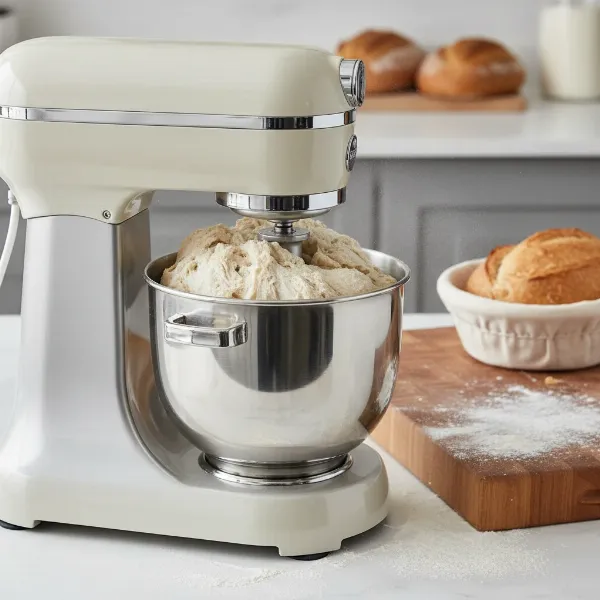
Choosing the perfect stand mixer can be a pivotal decision for any home baker or chef. It’s not merely about finding an appliance; it’s about investing in a culinary partner that will handle everything from delicate meringues to robust bread dough. In the bustling world of kitchen gadgets, two names consistently rise to the top: KitchenAid and Cuisinart. Both brands have carved out reputations for quality and performance, making the choice between them a delightful, yet often challenging, dilemma. This comprehensive guide aims to dissect the offerings of each, helping you navigate their features, performance, and value to select the stand mixer that truly complements your kitchen and culinary ambitions.
Stand Mixer: Overview and Benefits
A stand mixer is a countertop appliance that uses a gear-driven mechanism to rotate a set of beaters in a stationary bowl, designed to simplify numerous mixing tasks. From blending ingredients to kneading dough, whipping cream, and mashing potatoes, its primary function is to eliminate manual effort and introduce efficiency to food preparation. The robust motor and specialized attachments make it an indispensable tool, especially for those who frequently bake or cook large quantities.
The concept of a mechanized mixer dates back to the late 19th century, with KitchenAid introducing its iconic model for home use in 1919, revolutionizing home baking forever. Over the decades, stand mixers have evolved, becoming more powerful, versatile, and aesthetically pleasing. Today, the market offers various types, primarily categorized by their head design: the popular tilt-head models, which allow easy access to the bowl and beaters by tilting the motor head back, and bowl-lift models, typically found in more heavy-duty or professional mixers, where the bowl is raised and locked into place. Both KitchenAid and Cuisinart offer excellent examples within these categories, catering to diverse user needs.
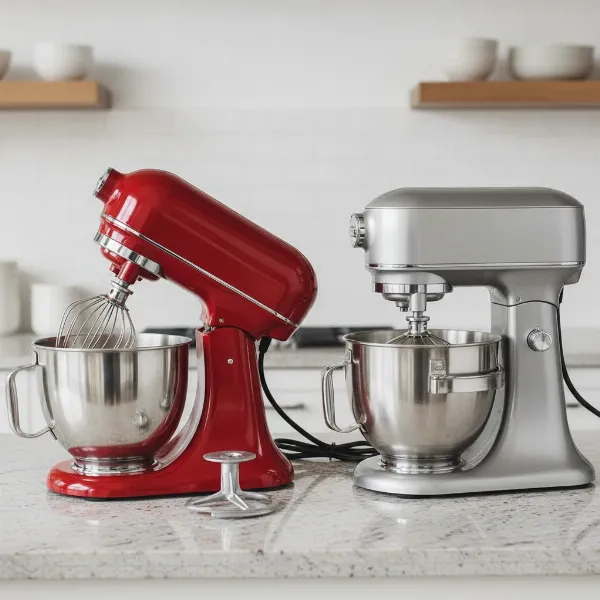 Illustration comparing a tilt-head and bowl-lift stand mixer side by side for different designs
Guide to Choosing the Right Stand Mixer
Selecting a stand mixer is a significant investment that should align with your specific cooking and baking habits. Consider these factors before making your final decision.
Determine Your Usage Needs
|
Our Picks for the Best Stand mixer in 2026
As an Amazon Associate I earn from qualifying purchases.
|
||
| Num | Product | Action |
|---|---|---|
| 1 | Kitchen in the box Stand Mixer,3.2Qt Small Electric Food Mixer,6 Speeds Portable Lightweight Kitchen Mixer for Daily Use with Egg Whisk,Dough Hook,Flat Beater (Black) |

|
| 2 | Cuisinart SMD-50BC Precision Pro 5.5-Quart Digital Stand Mixer With 12-Speeds, 3 Preprogrammed Food Prep Settings, Mixing Bowl, Whisk, Flat Mixing Paddle, Dough Hook, And Splash Guard, Silver Lining |
|
| 3 | Cuisinart SMD-50CRM Precision Pro 5.5-Quart Digital Stand Mixer with 12-Speeds, 3 Preprogrammed Food Prep Settings, Mixing Bowl, Chef's Whisk, Flat Mixing Paddle, Dough Hook, and Splash Guard, Cream |
|
| 4 | Cuisinart SMD-50GPH Precision Pro 5.5-Quart Digital Stand Mixer with 12-Speeds, 3 Preprogrammed Food Prep Settings, Mixing Bowl, Whisk, Flat Mixing Paddle, Dough Hook, and Splash Guard, Graphite |
|
| 5 | Cuisinart SM-50G Precision Master 5.5-Quart 12-Speed Stand Mixer with Mixing Bowl, Chef's Whisk, Flat Mixing Paddle, Dough Hook, and Splash Guard with Pour Spout, Agave Green, Manual |
|
| 6 | Cuisinart SPI-50 Spiralizer, White |
|
| 7 | Cuisinart Stand Mixer, 12 Speeds, 5.5-Quart Mixing Bowl, Chef's Whisk, Flat Mixing Paddle, Dough Hook, and Splash Guard with Pour Spout, Silver Lining, SM-50BC, Silver Lining |
|
| 8 | 3-IN-1 Electric Stand Mixer, 6.5QT Bowl 660W 10-Speed Kitchen Mixer, Household Food Mixers include Dough Hook, Beater and Whisk, Bread Cake Mixer for Baking and Most Home Cooks, Red |
|
| 9 | Kitchen in the box Stand Mixer,3.2Qt Mini Electric Food Mixer,6 Speeds Portable Lightweight Kitchen Mixer for Daily Use with Egg Whisk,Dough Hook,Flat Beater (Green) |
|
| 10 | Kitchen in the box Stand Mixer,3.2Qt Small Electric Food Mixer,6 Speeds Portable Lightweight Kitchen Mixer for Daily Use with Egg Whisk,Dough Hook,Flat Beater (Blue) |
|
Before you even glance at models, pause and consider your culinary routine. What will you primarily use your stand mixer for? If you’re an avid baker who frequently tackles dense bread doughs, you’ll need a mixer with substantial power and durability. For lighter tasks like whipping cream or mixing cake batter occasionally, a less powerful model might suffice. How often do you bake? Daily use demands a robust machine built to withstand constant operation, while weekend baking might allow for a more moderately priced option. Also, think about the quantity of ingredients you typically process; this will influence the ideal bowl capacity.
Capacity and Power
The bowl capacity of a stand mixer, measured in quarts, dictates how much you can mix at once. Smaller households or those baking modest batches might find a 4.5 to 5-quart mixer ample. Larger families or avid bakers often benefit from 6 to 7-quart bowls, which can handle bigger recipes. The motor’s wattage, on the other hand, indicates its raw power. Higher wattage generally translates to better performance with thick doughs and heavier loads, reducing strain on the motor and extending the mixer’s lifespan. While a powerful motor is often desirable, it’s also crucial to consider the motor’s construction and how efficiently it transfers power to the attachments.
Key Features
Beyond basic mixing, modern stand mixers offer a variety of features that enhance functionality and user experience.
- Speed Settings: Look for a mixer with a wide range of speeds, including slow-start options to prevent splattering and higher speeds for whipping. Most mixers offer 6 to 12-speed variations.
- Attachments: Standard attachments usually include a flat beater for general mixing, a wire whip for aerating, and a dough hook for kneading. Many mixers also offer optional attachments like pasta makers, meat grinders, spiralizers, and juicers, transforming the stand mixer into a versatile kitchen appliance.
- Dough Kneading: If bread making is a passion, a sturdy dough hook and sufficient motor power are non-negotiable for effectively kneading heavy doughs without bogging down the machine.
- Timer Function: Some advanced models feature built-in timers, allowing for precise mixing durations and freeing you up for other tasks.
Brand Reputation and Price
KitchenAid and Cuisinart both boast strong brand reputations, but they often cater to slightly different market segments. KitchenAid is often seen as a premium, heritage brand, known for its extensive color options and attachment ecosystem. Cuisinart, while also a respected brand, often provides competitive features at a more accessible price point. When evaluating the price, consider it an investment. A higher upfront cost for a durable, versatile mixer might save you money in the long run by avoiding replacements or the need for additional single-purpose appliances. Compare models not just by their price tag, but by the overall value they offer in terms of features, performance, and longevity.
KitchenAid vs. Cuisinart Stand Mixers: A Detailed Comparison
When it comes to the ultimate showdown between KitchenAid and Cuisinart, both brands present compelling arguments, often making the decision feel like splitting hairs. Let’s break down their core differences and similarities across key aspects.
| Feature | KitchenAid (e.g., Artisan, Classic) | Cuisinart (e.g., Precision Master, SM-50) |
|---|---|---|
| Price Range | Generally higher, premium investment | Often more affordable, great value |
| Motor Power | Typically 275-325 watts (DC or AC depending on model) | Often higher, 500-600+ watts (AC) |
| Bowl Capacity | 4.5 to 7 quarts | 5.5 to 7 quarts (Precision Master often 5.5 qt) |
| Speed Settings | 10 speeds | 12 speeds |
| Standard Attachments | Flat beater, wire whip, dough hook | Flat beater, wire whip, dough hook, splash guard |
| Optional Attachments | Extensive ecosystem (dozens of unique attachments) | Limited compared to KitchenAid (pasta maker, grinder often available) |
| Design/Colors | Iconic, wide array of colors (40+), customizable | Sleek, modern, fewer color options (stainless, black, red) |
| Weight/Stability | Heavier (e.g., 22 lbs), very stable | Lighter (e.g., 18 lbs), still robust for most tasks |
| Warranty | Often 1-year full replacement, 5-year limited | Often 3-year limited (motor 5-year or more) |
| Key Advantages | Unmatched versatility, iconic design, durable build | Excellent value, strong motor, more speeds |
| Key Disadvantages | Higher price, lower wattage motor (can handle tasks), fewer speeds | Fewer optional attachments, less iconic design, lighter build |
Power and Performance
Cuisinart often boasts higher wattage motors, with models like the Precision Master featuring 500 to 600 watts. This raw power can translate into exceptional performance for heavy-duty tasks, especially when kneading dense bread doughs, often with less motor strain. KitchenAid models, while frequently having lower stated wattage (e.g., 275-325 watts for the Artisan series), are known for their efficient direct-drive motor design. This design allows them to effectively tackle tough jobs without feeling underpowered, often relying on torque rather than sheer wattage. For those consistently making heavy doughs, Cuisinart might offer a perceived edge in brute strength, while KitchenAid delivers consistent, reliable performance across all tasks.
Design and Aesthetics
KitchenAid stand mixers are legendary for their timeless, iconic design and an unparalleled spectrum of colors. With over 40 vibrant shades, a KitchenAid mixer often serves as a kitchen centerpiece, allowing for significant personalization and aesthetic appeal. The robust, all-metal construction contributes to its classic, durable feel. Cuisinart mixers, while still well-built, tend to feature a more modern, streamlined aesthetic. They offer fewer color choices, typically sticking to classic metallics and neutrals like stainless steel, black, and red. If visual appeal and color coordination are paramount, KitchenAid often holds the advantage.
Attachments and Versatility
This is where KitchenAid truly shines. The brand has cultivated an extensive ecosystem of optional attachments – dozens of them – that connect to a universal power hub on the front of the mixer. From pasta makers and meat grinders to spiralizers, food processors, and even ice cream makers, a KitchenAid stand mixer can transform into an entire culinary workstation. This makes it an incredibly versatile appliance for those who want to consolidate kitchen tools. Cuisinart offers a more limited range of additional attachments, though they do provide essentials like pasta rollers and meat grinders for some models. If maximizing functionality from a single appliance is your goal, KitchenAid’s vast array of attachments is a compelling draw.
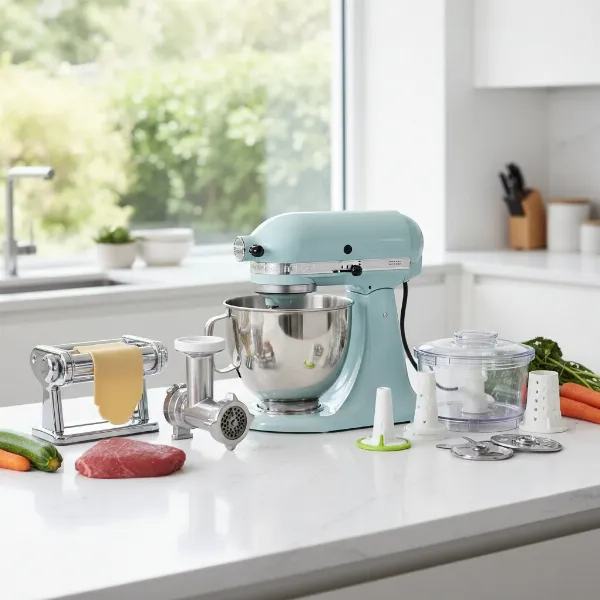 A stand mixer showcasing multiple culinary attachments for enhanced kitchen versatility
Price and Value
Cuisinart stand mixers typically come with a more budget-friendly price tag compared to KitchenAid, often making them an attractive option for those seeking high performance without the premium cost. For instance, you might find a Cuisinart model with comparable bowl capacity and higher wattage for significantly less than a KitchenAid Artisan. This makes Cuisinart an excellent value proposition if your primary concern is performance per dollar. KitchenAid, while a larger initial investment, is often viewed as a heritage purchase, valued for its long-term durability, extensive attachment options, and iconic design, which some consider worth the premium price.
“While KitchenAid offers unparalleled versatility through its attachment ecosystem, Cuisinart often delivers exceptional motor power and value, especially for bakers focused on heavy-duty mixing tasks.” – Chef Elena Rodriguez, Culinary Technologist
Durability and Build Quality
Both brands construct their mixers with quality in mind, but there are subtle differences. KitchenAid mixers are renowned for their heavy, all-metal construction, which contributes to their impressive stability on the countertop during vigorous mixing. A heavier machine (e.g., KitchenAid at 22 lbs) is less likely to “walk” across your counter when kneading stiff doughs. Cuisinart mixers are also robust, often featuring a blend of stainless steel and sturdy plastics, making them slightly lighter (e.g., 18 lbs) but still highly capable. While both are built to last, KitchenAid’s generally heavier frame often gives it an edge in perceived and actual stability during intense operation.
Tips for Using and Maintaining Your Stand Mixer
To ensure your stand mixer provides years of reliable service, proper use and maintenance are crucial, regardless of the brand.
Safe Operation
Always begin by thoroughly reading your stand mixer’s instruction manual. Familiarize yourself with all components, safety features, and recommended operating procedures. Before starting, ensure the mixer is placed on a stable, flat countertop to prevent tipping or movement during use. Never operate the mixer if the power cord is damaged or frayed, and always make sure attachments are securely locked in place before turning it on. Avoid inserting utensils or your hands into the bowl while the mixer is running.
Cleaning and Care
Regular cleaning is essential for hygiene and prolonging your mixer’s life. After each use, immediately disassemble the bowl and attachments and wash them, either by hand or in the dishwasher if they are dishwasher-safe (check your manual). Wipe down the motor head and base with a damp cloth, ensuring no food particles or liquid seep into the motor housing. Dry all parts thoroughly before reassembling or storing to prevent rust or corrosion. Periodic maintenance might include checking for wear on attachments or ensuring the power cord is in good condition. Proper care will keep your stand mixer looking new and performing optimally for countless recipes.
Where to Buy Stand Mixers
Whether you opt for a KitchenAid or a Cuisinart, finding the right place to purchase your stand mixer can impact pricing, warranty, and customer service.
Reputable electronics stores and home goods retailers are excellent places to start. These stores often have display models, allowing you to get a hands-on feel for the mixer’s size, weight, and build quality. Sales associates can also provide valuable insights and answer specific questions.
For convenience and often competitive pricing, online retailers are a popular choice. Websites like Amazon, Williams Sonoma, Bed Bath & Beyond, and the official KitchenAid and Cuisinart brand websites frequently offer sales and a wider selection of models and colors. When buying online, always verify the seller’s authenticity, check their return policy, and confirm that the product comes with the full manufacturer’s warranty. Reading recent customer reviews can also provide additional perspective on shipping, packaging, and product performance.
Buying Guide Summary: Making Your Choice
The decision between a KitchenAid and a Cuisinart stand mixer ultimately boils down to your personal priorities and kitchen needs. Both are exceptional appliances, but they cater to slightly different preferences.
If you prioritize an iconic design, a vast ecosystem of versatile attachments that can transform your mixer into a multi-purpose appliance, and a proven track record of durability, the KitchenAid is likely your ideal choice. It’s an investment in a classic, often serving as a culinary centerpiece.
If, however, you’re looking for superb performance with a powerful motor for heavy-duty tasks like bread making, desire a wider range of speed settings, and appreciate excellent value for a more accessible price, the Cuisinart stand mixer stands out. It offers robust functionality without necessarily demanding the premium price tag.
Consider your budget, the types of dishes you prepare most often, how much counter space you have, and your aesthetic preferences. Think of the stand mixer as an extension of your culinary passion. Which brand feels more aligned with your cooking journey?
Frequently Asked Questions
Is Cuisinart as good as KitchenAid?
Both Cuisinart and KitchenAid are highly respected brands offering quality stand mixers. Cuisinart often provides excellent value with powerful motors and more speed options at a lower price point, excelling in heavy-duty mixing. KitchenAid, while often higher priced and with lower stated wattage, is renowned for its iconic design, extensive attachment ecosystem, and robust, durable construction. The “better” choice depends on your specific needs, budget, and how much you value versatility versus raw power and cost-effectiveness.
Which KitchenAid mixer is comparable to the Cuisinart Precision Master?
The Cuisinart Precision Master SM-50, typically a 5.5-quart tilt-head mixer with a 500-watt motor and 12 speeds, is most closely comparable to KitchenAid’s 5-quart Artisan Series tilt-head stand mixers. While the Artisan often has a lower wattage (around 325 watts) and 10 speeds, it delivers comparable performance through its efficient direct-drive motor and offers a much wider range of optional attachments. The Cuisinart might have a slight edge in motor power, but the KitchenAid excels in customization and accessory options.
What is the average lifespan of a KitchenAid vs. Cuisinart stand mixer?
Both KitchenAid and Cuisinart stand mixers are built for durability, with many users reporting a lifespan of 10 to 15 years or even more with proper care. KitchenAid mixers, known for their all-metal gears and robust construction, often boast impressive longevity, with some original models still functioning after decades. Cuisinart mixers are also well-regarded for their build quality. Regular cleaning, adherence to capacity limits, and avoiding motor strain by not overworking the machine will significantly contribute to the lifespan of either brand’s stand mixer.