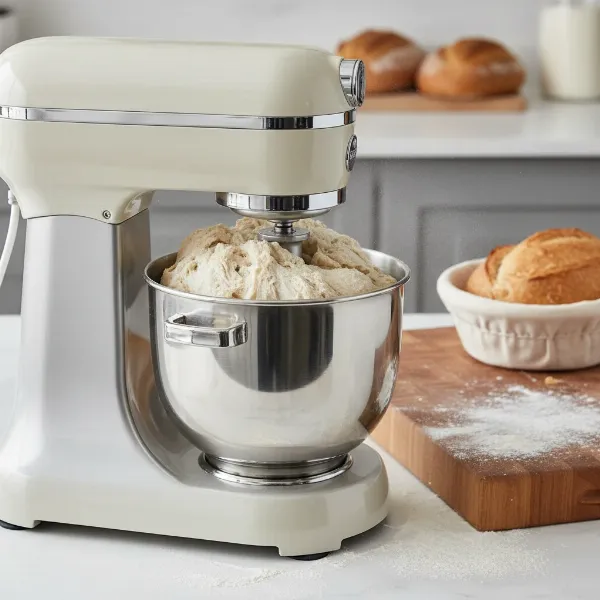
As an experienced stand mixer technician and avid baker, I’ve seen countless kitchens transformed by the right appliance. Deciding between two powerhouses like the KitchenAid Artisan and the Professional 600 can be daunting, but understanding their unique strengths will guide you to the perfect fit for your culinary adventures. Both are iconic machines, yet they cater to different baking demands and preferences. Let’s dive deep into what makes each mixer special and help you pick the ultimate kitchen companion.
Stand Mixer: Overview and Benefits
A stand mixer is a fundamental tool for any serious home baker or culinary enthusiast. It automates repetitive and strenuous tasks like kneading dough, whipping cream, and mixing batters, saving time and effort while ensuring consistent results. Beyond mere mixing, modern stand mixers, including the KitchenAid Artisan and Professional 600, become versatile culinary hubs with a wide array of attachments for everything from grinding meat to making pasta.
Historically, stand mixers evolved from basic hand-cranked devices to the sophisticated electric models we know today. KitchenAid has been a pioneer, introducing its first home stand mixer in 1919. The two primary designs in the stand mixer world are tilt-head and bowl-lift, a crucial distinction when comparing the Artisan and Professional series. The tilt-head design, exemplified by the Artisan, allows the motor head to tilt back, providing easy access to the bowl and attachments. The bowl-lift design, characteristic of the Professional 600, secures the bowl with levers that raise it into mixing position, offering greater stability, especially for heavier loads.
Guided Selection: Finding Your Ideal Stand Mixer
Choosing a stand mixer isn’t just about picking a brand; it’s about aligning the machine’s capabilities with your specific needs. The Artisan and Professional 600 series each excel in different scenarios.
Assessing Your Baking Needs
Before making a decision, consider your typical baking routine and aspirations. Do you occasionally bake cookies and cakes for your family, or are you consistently tackling multiple loaves of sourdough bread?
- Casual Baker (Artisan): If your baking mostly involves standard recipes like cookies, cakes, frosting, and occasional light bread dough, and you rarely make large quantities, the Artisan series is likely your sweet spot. It’s built for the average household’s baking adventures, handling single batches with ease.
- Serious Baker / High-Volume User (Professional 600): For those who frequently bake heavy bread doughs (like whole wheat or sourdough), double or triple recipes, or even run a small home baking business, the Professional 600 is designed to meet these demanding challenges. Its robust construction and powerful motor prevent strain during intensive use.
|
Our Picks for the Best Stand mixer in 2026
As an Amazon Associate I earn from qualifying purchases.
|
||
| Num | Product | Action |
|---|---|---|
| 1 | Cuisinart SMD-50BC Precision Pro 5.5-Quart Digital Stand Mixer With 12-Speeds, 3 Preprogrammed Food Prep Settings, Mixing Bowl, Whisk, Flat Mixing Paddle, Dough Hook, And Splash Guard, Silver Lining |

|
| 2 | Cuisinart Stand Mixer, 12 Speeds, 5.5-Quart Mixing Bowl, Chef's Whisk, Flat Mixing Paddle, Dough Hook, and Splash Guard with Pour Spout, Silver Lining, SM-50BC, Silver Lining |
|
| 3 | Cuisinart SPI-50 Spiralizer, White |
|
| 4 | Kitchen in the box Stand Mixer,3.2Qt Small Electric Food Mixer,6 Speeds Portable Lightweight Kitchen Mixer for Daily Use with Egg Whisk,Dough Hook,Flat Beater (Black) |
|
| 5 | Cuisinart SM-50G Precision Master 5.5-Quart 12-Speed Stand Mixer with Mixing Bowl, Chef's Whisk, Flat Mixing Paddle, Dough Hook, and Splash Guard with Pour Spout, Agave Green, Manual |
|
| 6 | Kitchen in the box Stand Mixer,3.2Qt Small Electric Food Mixer,6 Speeds Portable Lightweight Kitchen Mixer for Daily Use with Egg Whisk,Dough Hook,Flat Beater (Blue) |
|
| 7 | 3-IN-1 Electric Stand Mixer, 6.5QT Bowl 660W 10-Speed Kitchen Mixer, Household Food Mixers include Dough Hook, Beater and Whisk, Bread Cake Mixer for Baking and Most Home Cooks, Red |
|
| 8 | Cuisinart SMD-50CRM Precision Pro 5.5-Quart Digital Stand Mixer with 12-Speeds, 3 Preprogrammed Food Prep Settings, Mixing Bowl, Chef's Whisk, Flat Mixing Paddle, Dough Hook, and Splash Guard, Cream |
|
| 9 | Kitchen in the box Stand Mixer,3.2Qt Mini Electric Food Mixer,6 Speeds Portable Lightweight Kitchen Mixer for Daily Use with Egg Whisk,Dough Hook,Flat Beater (Green) |
|
| 10 | Cuisinart SMD-50GPH Precision Pro 5.5-Quart Digital Stand Mixer with 12-Speeds, 3 Preprogrammed Food Prep Settings, Mixing Bowl, Whisk, Flat Mixing Paddle, Dough Hook, and Splash Guard, Graphite |
|
Capacity and Power
The core difference between these two models lies in their capacity and motor power, which directly impacts their performance.
The KitchenAid Artisan typically features a 5-quart stainless steel bowl and a 325-watt motor. This capacity is ample for mixing dough for about 7 dozen cookies or up to 9 cups of flour. Its power is perfectly adequate for most home baking tasks, ensuring thorough ingredient incorporation for everyday recipes.
In contrast, the KitchenAid Professional 600 boasts a larger 6-quart stainless steel bowl and a significantly more powerful 575-watt motor. This translates to the ability to handle much larger batches, mixing enough dough for up to 13 dozen cookies or over 8 loaves of bread in a single batch. The higher wattage is critical for kneading tough, low-hydration doughs, preventing motor strain and ensuring consistent performance even under heavy loads.
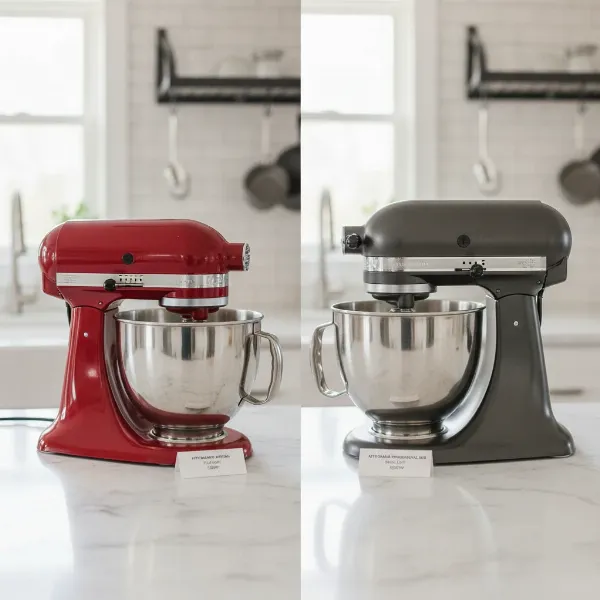 KitchenAid Artisan and Professional 600 stand mixers side-by-side
Key Features & Design
The design philosophy behind the Artisan and Professional 600 series dictates much of their user experience and functional advantages.
- Tilt-Head vs. Bowl-Lift: The Artisan’s tilt-head design is highly intuitive for home cooks. It allows the mixer head to tilt back, providing unrestricted access to the bowl for scraping down sides, adding ingredients, or swapping attachments. This design contributes to its more compact profile, fitting easily under most standard kitchen cabinets (around 14 inches tall). The Professional 600 features a bowl-lift design, where the bowl is secured by levers and raised into position. This stationary head offers superior stability, particularly crucial when kneading dense doughs or mixing large quantities, as there’s no hinge point to introduce weakness. However, its taller profile (around 17 inches) means it often won’t fit under standard kitchen cabinets, requiring careful measurement of your counter space.
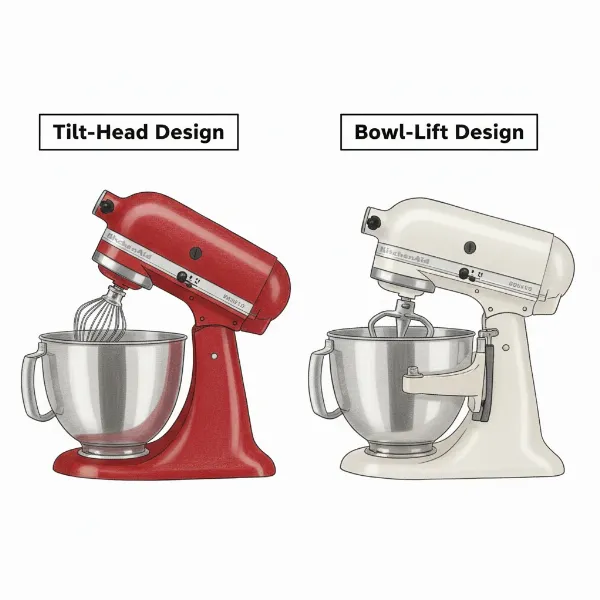 Illustration of tilt-head and bowl-lift stand mixer designs
-
Speed Settings: Both models offer 10 optimized speeds, ranging from a gentle stir to a powerful whip, providing precise control for a wide variety of recipes. The Professional 600 typically includes a “Soft Start” feature, which gently accelerates to the selected speed to minimize splatter, a benefit not found in most Artisan models (except the Mini).
-
Attachments: Both mixers come standard with a flat beater, wire whip, and dough hook. The Professional 600’s attachments are generally larger to accommodate its bigger bowl, and it often includes a PowerKnead™ Spiral Dough Hook for enhanced dough handling. Both models feature a multipurpose attachment hub at the front, allowing them to transform into versatile kitchen tools with over 10 optional hub-powered attachments, from pasta makers to meat grinders. It’s important to note that the main mixing attachments (beaters, hooks, whisks) are generally not interchangeable between the 5-quart Artisan and 6-quart Professional 600 due to size differences.
-
Noise Level: This is a notable differentiator. The Artisan runs quieter, typically between 70-75 decibels, akin to a normal conversation. The Professional 600, with its more powerful motor, operates louder, often reaching 80-85 dB, and can spike close to 90 dB when tackling very thick doughs at high speeds. This might be a consideration if you prefer a quieter kitchen environment.
-
Aesthetics & Colors: The Artisan series is renowned for its vast color palette, offering dozens of vibrant and special-edition finishes. It’s often chosen as a statement piece in the kitchen. The Professional 600, in contrast, prioritizes function over form, coming in a more limited range of classic, industrial-style colors. Its design is more imposing and utilitarian, reflecting its heavy-duty capabilities.
Brand Reputation and Price Considerations
KitchenAid has a long-standing reputation for building durable, reliable appliances that can last for decades. Both the Artisan and Professional 600 are constructed with sturdy, die-cast metal bodies. However, the Professional 600 incorporates heavier-duty internal components, including all-metal gears, designed to withstand the increased torque from its powerful motor and handle more intensive use.
- Price: The Artisan series typically retails for around $450, representing excellent value for a high-quality machine that meets the needs of most home cooks. The Professional 600 series usually starts around $600, a higher investment justified by its stronger motor, larger capacity, and more robust construction. Sometimes, the Professional 600 might appear cheaper online, especially refurbished units or clearance sales, as it can be an older model or one they are clearing out. Always check if it’s new or refurbished when seeing price discrepancies.
Detailed Comparison: KitchenAid Artisan vs. Professional 600
Here’s a detailed side-by-side comparison to highlight the key differences:
| Feature | KitchenAid Artisan Series | KitchenAid Professional 600 Series |
|---|---|---|
| Design | Tilt-Head | Bowl-Lift |
| Motor Wattage | 325 Watts | 575 Watts |
| Bowl Capacity | 5 Quarts | 6 Quarts |
| Ideal Use | Everyday baking, casual home cooks, standard batches | Heavy-duty baking, large families, dense doughs, frequent use |
| Flour Capacity | Up to 9 cups | Up to 14 cups |
| Cookie Yield | Up to 7 dozen | Up to 13 dozen |
| Bread Loaves | Occasional, lighter doughs | Up to 8+ loaves, heavy doughs |
| Height | Approx. 14 inches (fits under most cabinets) | Approx. 17 inches (may not fit under standard cabinets) |
| Aesthetics/Colors | Vast array (dozens), decorative statement piece | Limited classic colors, industrial, functional |
| Noise Level | Quieter (70-75 dB) | Louder (80-85 dB, up to 90 dB with heavy loads) |
| Stability | Good for light to moderate loads | Superior for heavy loads |
| Soft Start | Generally not included (except Mini models) | Often included |
| Typical Price Range | ~$350 – $450 | ~$450 – $600+ |
| Dough Hook Type | Coated Dough Hook | Burnished PowerKnead™ Spiral Dough Hook |
| Gear Material | Durable metal | Heavy-duty all-metal gears |
Tips for Using and Maintaining Your Stand Mixer
Regardless of which KitchenAid mixer you choose, proper use and maintenance are crucial for its longevity and optimal performance.
Safe Operation
- Read the Manual: Always start by thoroughly reading the instruction manual specific to your model.
- Stable Surface: Ensure your stand mixer is placed on a flat, stable, and dry countertop to prevent it from moving or tipping during operation, especially with heavy doughs.
- Check the Cord: Before each use, inspect the power cord for any damage. Never operate a mixer with a frayed or damaged cord.
- Proper Attachment: Always ensure attachments are securely locked in place and the mixer head (for tilt-head models) or bowl (for bowl-lift models) is properly secured before starting.
- Don’t Overload: While the Professional 600 handles large capacities, avoid exceeding the manufacturer’s recommended limits for flour and ingredients, as this can strain the motor.
- Unplug When Not in Use: Always unplug the mixer when changing attachments, scraping the bowl, or when it’s not in active use to prevent accidental activation.
Cleaning and Care
- Clean After Each Use: Disassemble the attachments and bowl immediately after use. Most KitchenAid bowls and coated attachments are dishwasher-safe, but always verify with your manual. Wire whips and burnished attachments often require hand washing.
- Wipe Down the Base: Use a damp cloth to wipe the mixer’s head and base. Avoid abrasive cleaners or submerging the mixer base in water.
- Dry Thoroughly: Ensure all parts are completely dry before reassembling or storing to prevent rust or mildew.
- Store Properly: If storing in a cabinet, ensure the mixer fits without straining. For bowl-lift models, this may mean finding a dedicated spot on the counter due to their height.
- Regular Check-ups: Periodically check for any loose screws or parts and address them promptly. Proper care will ensure your mixer remains a reliable workhorse for years to come.
Where to Purchase Your KitchenAid Stand Mixer
KitchenAid stand mixers are widely available, both online and in brick-and-mortar stores.
- Department Stores & Appliance Retailers: Stores like Macy’s, Bed Bath & Beyond, Williams Sonoma, and major appliance retailers often carry a selection of Artisan and Professional 600 models. Shopping in-store allows you to see the mixers firsthand, compare their sizes, and sometimes find exclusive colors or bundles.
- Online Marketplaces: Websites like Amazon, KitchenAid’s official website, and major retailers’ online stores (e.g., Target, Walmart, Best Buy, The Home Depot) offer competitive pricing and a broader selection of colors and models.
- Refurbished Options: For the Professional 600, you might find refurbished units directly from KitchenAid or reputable third-party sellers at a lower price. These often come with a warranty, but it’s essential to verify the terms.
When buying online, always:
- Check return policies: Ensure you can return the mixer if it doesn’t meet your expectations or space requirements.
- Read customer reviews: Pay attention to recent reviews for insights on product performance and customer service.
- Compare prices: Prices can fluctuate, especially during sales events, so shop around.
Buying Guide: Expert Advice for Your Stand Mixer Choice
Choosing between the KitchenAid Artisan and Professional 600 ultimately boils down to a clear understanding of your personal baking habits and priorities.
If you are a casual baker, enjoy the aesthetic appeal of your appliances, and primarily make standard batches of cookies, cakes, and occasional lighter bread doughs, the KitchenAid Artisan is an excellent choice. Its tilt-head design offers convenience for everyday use, and its vast array of colors allows you to personalize your kitchen. It’s a reliable workhorse for typical home needs, striking a perfect balance of performance and style.
“For most home bakers, the Artisan hits the sweet spot. It’s versatile, visually appealing, and handles the majority of recipes without breaking a sweat.” – Admin, Standmixerpro.com
However, if you are a dedicated baker who frequently works with large quantities, dense bread doughs (like sourdough or whole wheat), or heavy batters, the KitchenAid Professional 600 will be the more suitable investment. Its powerful motor and stable bowl-lift design are engineered for consistent, heavy-duty performance, providing the unwavering strength needed for challenging tasks. Be prepared for its larger footprint and potentially louder operation. If space and aesthetics are less critical than raw power and capacity for demanding recipes, the Professional 600 is your go-to.
Remember that while the Professional 600 can handle small batches, its larger bowl and attachments are less ideal for very small quantities, sometimes requiring specific techniques or larger recipes to ensure proper mixing. Attachments like beaters, dough hooks, and whisks are specifically sized for their respective bowls and are generally not interchangeable between the Artisan and Professional 600 series. However, the front power hub attachments are universal across most KitchenAid stand mixers, allowing for extensive versatility regardless of the model you choose.
In essence, consider your long-term baking goals. Are you looking for a stylish, versatile everyday mixer or a heavy-duty powerhouse that can keep up with a high-volume baking passion? Your answer will lead you to your perfect KitchenAid companion.
Frequently Asked Questions
Is the Professional 600 too much for a casual baker?
For a casual baker, the Professional 600 might be overkill. Its higher power and capacity are designed for heavy, frequent use, which most casual bakers won’t fully utilize. The Artisan is generally more appropriate for everyday baking needs.
Can the Professional 600 handle small batches?
While the Professional 600 is built for large batches, it can handle small batches. However, its larger bowl and attachments mean that very small quantities might not be fully incorporated as efficiently as with the Artisan’s smaller bowl, sometimes requiring manual scraping.
Are KitchenAid Artisan and Professional 600 attachments interchangeable?
The main mixing attachments (flat beater, wire whip, dough hook) are generally not interchangeable between the 5-quart Artisan and 6-quart Professional 600 due to their different bowl sizes and designs. However, the front power hub attachments are universal across both models.
Which is better for bread dough?
The KitchenAid Professional 600 is significantly better for bread dough, especially dense or large batches. Its powerful 575-watt motor, all-metal gears, and stable bowl-lift design can knead tough doughs without straining, outperforming the Artisan for this specific task.
Why is the Professional 600 sometimes cheaper than the Artisan?
Occasionally, the Professional 600 might be available at a lower price than the Artisan, often due to sales, clearance events for older models, or the availability of refurbished units. Always verify the condition (new vs. refurbished) and warranty when encountering such price differences.
What is the noise difference between the two?
The Artisan mixer typically runs quieter, at around 70-75 decibels, comparable to a normal conversation. The Professional 600 is louder, operating between 80-85 decibels, and can reach up to 90 dB when mixing heavy doughs at high speeds.