Let’s be honest, we’ve all been there: elbow-deep in a sticky dough, flour dusting every surface, and your arm screaming for a break. Or perhaps you’re trying to whip egg whites to perfect stiff peaks by hand, a task that feels like an Olympic sport. If you’re serious about baking, this is where a proper Multi Function Stand Mixer Review becomes your best friend. A great stand mixer isn’t just a kitchen appliance; it’s your tireless sous-chef, your secret weapon for lighter cakes, chewier bread, and fluffier frostings. It’s the one piece of equipment that truly elevates your kitchen game from hobbyist to pro. Are you ready to discover how this powerhouse can transform your culinary creations?
Why You Need a Stand Mixer in Your Life
Before we dive into the nitty-gritty, let’s talk about the why. A stand mixer is more than just a pretty countertop accessory. It’s a serious investment in your passion for cooking and baking.
- Hands-Free Heaven: This is the big one. Imagine being able to perfectly knead bread dough while you prep your other ingredients. A stand mixer frees up your hands and your time, letting you multitask like a kitchen maestro.
- Unmatched Power and Consistency: A stand mixer’s motor delivers consistent power that your arms simply can’t replicate. This means better gluten development in bread for that perfect chew, and more air incorporated into batters for lighter, fluffier results. It’s the key to repeatable success in your recipes.
- Versatility Unleashed: We’re talking about a multi function machine here. With the right attachments, your stand mixer can become a pasta maker, a meat grinder, a sausage stuffer, or even an ice cream machine. It truly is the central hub of a creative kitchen.
I still remember my first stand mixer. It was a revelation. Suddenly, making meringue wasn’t a chore, and weekly homemade pizza night became a reality because kneading the dough took zero effort. It completely changed the game for me.
Tilt-Head vs. Bowl-Lift: What’s the Difference?
When you start shopping, you’ll immediately run into two main designs: tilt-head and bowl-lift. Neither is inherently “better,” but one is likely better for you.
Tilt-Head Mixers
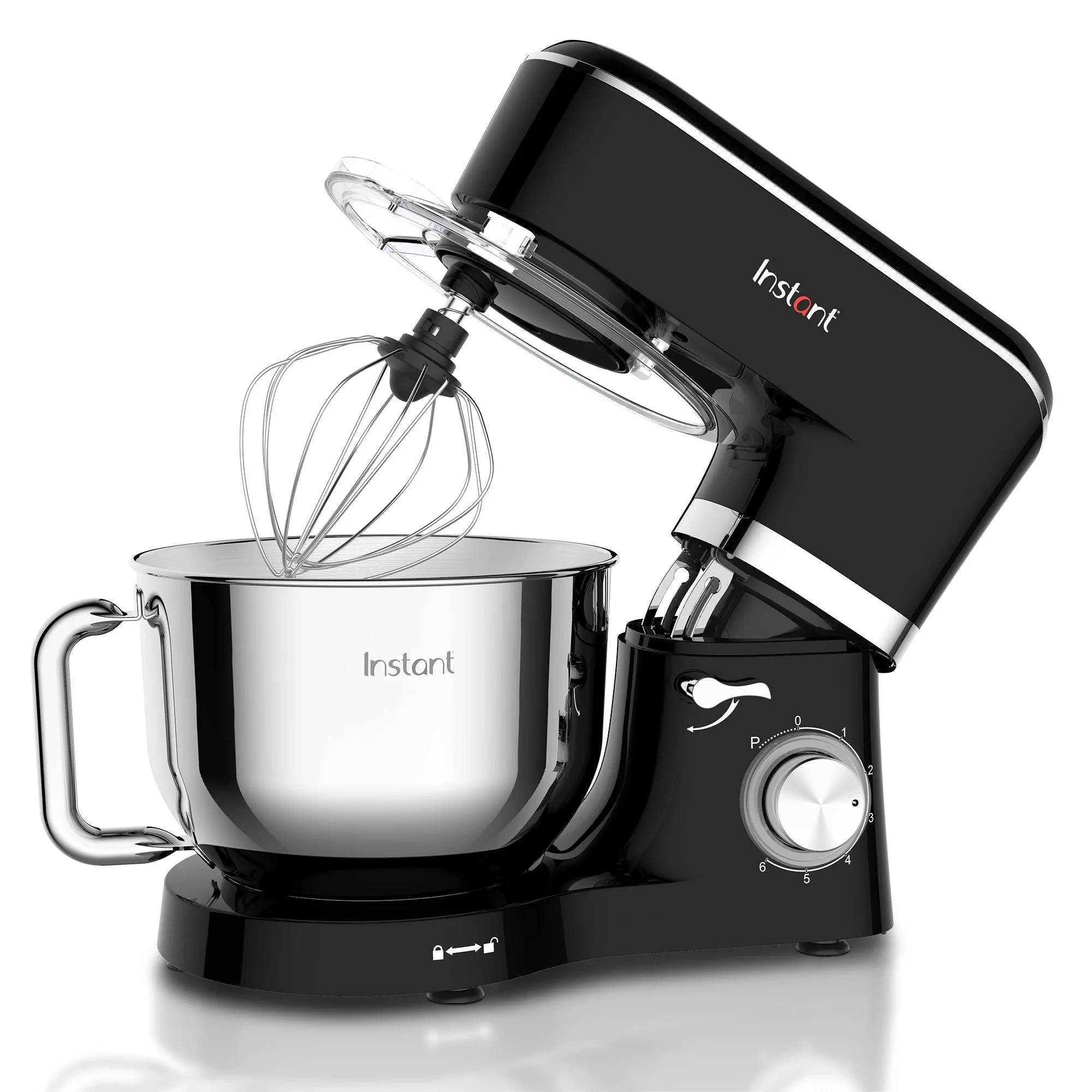
Think of these as the classic design, like the iconic KitchenAid Artisan series. The motor head is on a hinge and tilts back, allowing you to easily access the bowl and beater.
- Pros: Easy to add ingredients, simple to swap attachments, generally more compact and suitable for most home kitchens.
- Cons: The hinge can be a weak point on cheaper models, and they can sometimes struggle or “walk” on the counter when kneading very heavy, dense doughs.
Bowl-Lift Mixers
These are the workhorses, often found in professional settings. The head is fixed, and a lever raises the bowl up into position.
- Pros: Extremely stable and powerful, designed for heavy-duty tasks and larger batches. The direct power transfer from the motor makes them incredibly efficient.
- Cons: They are taller and heavier, so you’ll need to check your counter-to-cabinet clearance. Accessing the bowl to add ingredients can be a bit more cumbersome.
Key Features to Look for in a Multi Function Stand Mixer
When you’re comparing models, the spec sheet can look like a foreign language. Let’s break down what actually matters.
- Power and Motor Type: Don’t just look at wattage. A 325-watt mixer with a DC motor can outperform a 500-watt mixer with an AC motor. DC (Direct Current) motors are quieter, more energy-efficient, and deliver consistent torque even at low speeds—perfect for kneading tough dough. AC (Alternating Current) motors are more common but can be noisier and less efficient under heavy load.
- Bowl Capacity: This is measured in quarts. A 4.5 to 5-quart bowl is the sweet spot for most families, easily handling a batch of cookies or dough for two loaves of bread. If you regularly bake for a crowd, look for 6 quarts or more.
- Planetary Mixing Action: This is a non-negotiable feature. It means the beater spins on its own axis while also orbiting around the bowl in the opposite direction. Think of the Earth spinning as it revolves around the Sun. This ensures all ingredients—from the bottom to the sides—are thoroughly incorporated. No more stopping to scrape down the bowl every 30 seconds.
- Speed Settings: Look for a mixer with at least 5-10 speed settings. You need a slow “stir” speed to avoid flinging flour everywhere and a high speed for whipping cream and egg whites. A soft-start feature is a fantastic bonus that ramps up the speed gradually.
A Deep Dive into Stand Mixer Attachments
The “multi function” promise of a stand mixer lives and dies by its attachments. While some optional extras are amazing, every great mixer should come with these three essentials.
- Flat Beater (or Paddle): This is your all-purpose tool. It’s for creaming butter and sugar, mixing cake batters and cookie dough, and even shredding cooked chicken or pork. It’s the attachment you’ll use 80% of the time.
- Dough Hook: This magical C-shaped or spiral hook mimics the motion of hand-kneading. It develops the gluten in yeast doughs for bread, pizza, and cinnamon rolls, saving you a serious arm workout.
- Wire Whisk (or Whip): Designed to incorporate air. This is your go-to for whipping egg whites into glossy meringue, turning heavy cream into whipped cream, and making light, airy frostings.
Beyond these, many brands like KitchenAid and Kenwood offer a universe of optional attachments. From pasta rollers and cutters to meat grinders and spiralizers, these add-ons can replace multiple other kitchen gadgets. If you’re looking to maximize counter space, a quality multi function stand mixer is an incredible investment. For more details, [check out our complete guide to stand mixer attachments].
As renowned pastry chef John Ackerman puts it, “A stand mixer gives you the gift of consistency. Whether it’s your first loaf of sourdough or your thousandth, the machine provides the same perfect kneading action every single time, which is the foundation of great baking.”
How to Properly Use Your Stand Mixer: An A-Z Guide
Getting a new kitchen appliance can be intimidating. Here’s a simple rundown to get you started on the right foot.
- Secure the Bowl: For a bowl-lift, place the bowl on the locating pins and snap it into place. For a tilt-head, twist the bowl onto the base plate until it locks.
- Select Your Attachment: With the head tilted back or the bowl lowered, slide your chosen attachment (beater, whisk, or dough hook) onto the beater shaft. Push up and turn until it locks into the pin.
- Lock and Load: Tilt the head down and lock it, or raise the bowl into the mixing position. Never turn the mixer on without the head or bowl locked in place.
- Start Low, Go Slow: Always start on the lowest speed (“Stir”) for the first 15-30 seconds. This incorporates ingredients without creating a flour cloud in your kitchen.
- Follow the Recipe: Gradually increase the speed according to your recipe’s instructions. A common mistake is over-mixing cake batters or under-kneading bread dough. Trust the process.
Maintenance and Cleaning Tips
A stand mixer is a workhorse built to last for decades, but it needs a little TLC. Proper care will ensure it remains your trusted kitchen partner for years to come.
- Unplug First: This is the golden rule. Always unplug your mixer before cleaning or changing attachments.
- Wipe Down the Body: Use a soft, damp cloth to wipe down the mixer’s body and head. Never immerse the main unit in water.
- Attachments and Bowl: Most stainless steel bowls, flat beaters, and dough hooks are dishwasher safe (top rack is best). However, always check your manual. Some attachments, especially wire whisks with an aluminum hub, must be hand-washed to prevent oxidation and discoloration.
- Deep Clean the Nooks: Use a toothpick or a small brush to clean out flour and gunk from the locking mechanism and vent holes.
- Check the “Dime Test”: For KitchenAid models, you can check the beater-to-bowl clearance. Drop a dime in the bowl; the flat beater on “Stir” should move it gently without hitting it hard. If it needs adjustment, a small screw on the hinge controls the head height. Refer to your manual for specific instructions.
Frequently Asked Questions (FAQ)
Q: What can I make with a multi function stand mixer besides cake?
A: So much! You can knead any type of bread dough, make homemade pasta, grind meat for burgers, whip up mashed potatoes, mix meatballs, shred pulled pork, and even make homemade ice cream with the right attachment.
Q: Is a more expensive stand mixer really worth it?
A: Generally, yes. With brands like KitchenAid or Kenwood, you’re paying for a more powerful and durable motor (often a DC motor), all-metal construction for stability, and a wider range of high-quality attachments. They are built to last a lifetime.
Q: Can a multi function stand mixer knead all types of dough?
A: Absolutely. From soft brioche to dense whole wheat and stiff bagel dough, a quality stand mixer with a good dough hook can handle it. Just be sure to use the recommended speed (usually speed 2) to avoid overworking the motor.
Q: How much power do I really need in a stand mixer?
A: Focus on motor type over wattage. A 325W DC motor mixer will handle dense dough better than a 600W AC motor mixer. For the average home baker, anything in the 300-500W range with a solid motor is more than sufficient.
Q: How do I know if my dough is done kneading in the mixer?
A: Look for the “windowpane test.” Take a small piece of dough and gently stretch it between your fingers. If you can stretch it thin enough to see light through it without it tearing, the gluten is perfectly developed and it’s ready.
The Final Verdict
After a thorough multi function stand mixer review, it’s clear that this isn’t just another gadget; it’s the heart of a modern baker’s kitchen. It saves you time, reduces physical effort, and delivers consistently superior results that are difficult to achieve by hand. It empowers you to tackle more ambitious projects and perfect your favorite recipes. While the initial cost can seem high, think of it as a long-term investment in your culinary passion—one that will pay delicious dividends for decades to come.
Do you have a stand mixer? Share your favorite things to make with it in the comments below! We’d love to hear your stories.