Welcome to the heart of the kitchen, where flour flies and magic happens. If you’re here, you’re likely dreaming of that one kitchen appliance that can truly transform your baking: a stand mixer. But as you browse, one question looms larger than a perfectly risen sourdough: What Size Mixer For A Home Baker is actually the right one? It’s a classic Goldilocks problem. Too small, and you’ll be frustrated by its limits. Too big, and you’ve got an expensive, heavy beast taking up precious counter space. Don’t worry, I’ve been there. My first stand mixer was a game-changer, but choosing it felt like a monumental decision. Let’s break it down together, cut through the noise, and find the perfect fit for your baking adventures.
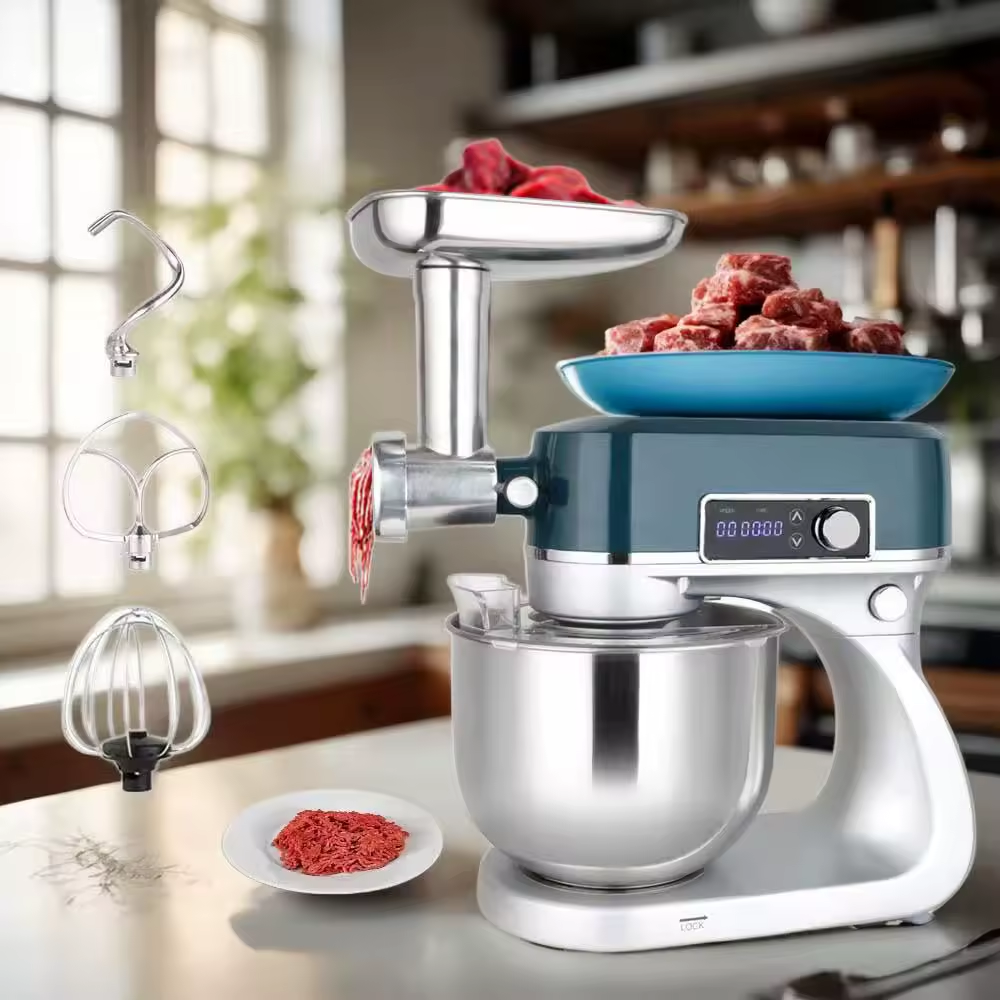
Why Bowl Size is More Than Just a Number
Before we dive into quarts and liters, let’s get one thing straight: the size of the mixing bowl is a direct reflection of the machine’s overall capability. It’s not just about how much batter it can hold. A larger bowl is typically paired with a more powerful motor, a sturdier build, and a higher price tag. Think of it like buying a car. You wouldn’t choose a two-seater convertible to haul a family of five, right? Similarly, the mixer you choose should match your baking style and volume.
Choosing the right size ensures:
- Proper Mixing: An underfilled large bowl can struggle to mix small quantities, as the attachments might not reach the ingredients. An overfilled small bowl will lead to spills and poorly incorporated dough.
- Motor Longevity: Forcing a small mixer to handle a batch of heavy, dense bread dough that’s too large for it can strain the motor, leading to overheating and a shorter lifespan for your beloved kitchen appliance.
- Kitchen Harmony: Your mixer should feel like a natural extension of your kitchen, not a clumsy intruder. Size impacts everything from storage to ease of use.
The Sweet Spot: Decoding Mixer Sizes
Let’s walk through the common size categories to figure out where you land. I’ll give you the lowdown on who they’re for and what they can realistically handle.
The Compact Powerhouse: 3.5 to 4.5-Quart Mixers
These are the smallest of the bunch, often found in tilt-head designs. They are perfect for bakers who are short on space or who bake for one or two people.
- Who it’s for: The apartment dweller, the couple, the occasional baker, or someone who primarily makes single batches of cookies, small cakes, or frosting.
- Typical Capacity: Can handle about 3-4 dozen cookies, one loaf of bread, or a single cake mix box.
- Pros: Lightweight, smaller footprint fits easily under standard cabinets, more affordable.
- Cons: Struggles with double batches or very stiff doughs like bagels. You might outgrow it quickly if your baking hobby takes off.
The Gold Standard: 5 to 6-Quart Mixers
If there’s a “one size fits most” answer to what size mixer for a home baker, this is it. This range, dominated by iconic models like the KitchenAid Artisan series (typically 5-quart), offers the perfect balance of power and capacity for the vast majority of home baking needs.
I remember my first stand mixer was a glorious 5-quart model. It felt like a spaceship on my counter, and it handled everything from my daughter’s birthday cake to my first (admittedly clumsy) attempts at sourdough.
- Who it’s for: The enthusiastic home baker, families of 3-5, anyone who enjoys holiday baking, or those who want to comfortably double a recipe.
- Typical Capacity: Easily handles up to 9 dozen cookies, two loaves of bread, or multiple cake batters at once. It’s the workhorse for most common recipes you’ll find online or in cookbooks.
- Pros: Extremely versatile, powerful enough for most doughs, huge ecosystem of attachments available, available in both tilt-head and bowl-lift models.
- Cons: Can be heavy and requires a dedicated spot on the counter.
As professional pastry chef Amelia Chen often says, “Your mixer should be a partner, not a hurdle. Choose the size that frees you to create, not the one that holds you back.” For most people, the 5-quart range is that perfect partner.
The Pro-Sumer Powerhouse: 7 to 8-Quart Mixers
Welcome to the big leagues. These are typically bowl-lift models with powerful DC motors designed for serious volume and heavy-duty tasks. If you’re churning out multiple loaves of bread every week or running a small cottage bakery from your kitchen, this is your territory.
- Who it’s for: The serious bread baker, large families, small business owners, or anyone who consistently bakes in very large batches.
- Typical Capacity: Can knead dough for 8+ loaves of bread or mix up to 14 dozen cookies in a single go.
- Pros: Immense power and capacity, incredibly stable due to the bowl-lift design, built to last.
- Cons: Very expensive, extremely heavy, and takes up significant counter space. Critically, they can perform poorly with small batches, as the large attachments may not effectively reach a single egg white, for example.
Beyond Quarts: What Else Influences Your Choice?
Now that you have a handle on bowl capacity, let’s look at a few other critical factors that are tied to size and will impact your final decision.
How do I choose between a tilt-head and a bowl-lift mixer?
This is a crucial question often tied to mixer size. Tilt-head mixers, common in the 3.5 to 5-quart range, have a hinged head that lifts up for easy bowl access. Bowl-lift models, typical for 5-quart and larger, keep the head fixed while a lever raises the bowl into position.
- Tilt-Head: Great for easy access to add ingredients and scrape the bowl. They are also generally shorter, making them a better fit under kitchen cabinets.
- Bowl-Lift: Offers more stability, which is essential when kneading heavy bread dough. The added stability allows for more powerful motors and larger capacities.
Is motor wattage the most important factor?
Not necessarily. A higher wattage doesn’t always mean a better mixer. The type of motor is often more important. Many high-end, larger-capacity mixers (like KitchenAid’s Pro Line) use a DC motor, which delivers more consistent torque and power more efficiently and quietly than an AC motor, even at a lower wattage. Don’t just shop by the wattage number; look at reviews that discuss performance with heavy dough.
What can I make with my stand mixer attachments?
Your mixer is more than just a cake batter machine! The standard attachments open up a world of possibilities, and their size and effectiveness are directly related to the mixer’s bowl capacity.
- Flat Beater (or Paddle): Your go-to for creaming butter and sugar, mixing batters, and even shredding cooked chicken.
- Dough Hook: The key to hands-free kneading of bread, pizza, and pasta dough. A properly sized mixer ensures the dough hook can work the entire batch effectively.
- Wire Whisk (or Whip): Perfect for whipping air into egg whites for meringue, creating fluffy whipped cream, or emulsifying dressings.
A Practical Capacity Chart
To make it even clearer, here’s a simple table translating quarts into real-world baking quantities. These are general estimates and can vary by recipe.
| Mixer Size (Quarts) | Cookie Dough (Dozens) | Bread Loaves (1.5 lbs each) | All-Purpose Flour (Cups) |
|---|---|---|---|
| 4.5-Quart | 4-6 dozen | 1-2 loaves | ~8 cups |
| 5-Quart | 6-9 dozen | 2 loaves | ~9 cups |
| 6-Quart | 10-13 dozen | 2-3 loaves | ~14 cups |
| 7-Quart | ~14 dozen | 4+ loaves | ~16 cups |
Frequently Asked Questions (FAQ)
Q: Can I make small batches in a large stand mixer?
A: You can, but it can be inefficient. The large beater or whisk on a 7-quart mixer may struggle to properly incorporate ingredients for a half-batch of cookies or whip a single egg white. If you often make small recipes, a larger mixer might not be the best primary tool.
Q: What’s more important for kneading bread: bowl size or motor power?
A: They are equally important partners. You need a bowl large enough to contain the dough as it’s worked (at least 5 quarts for two loaves) and a motor powerful and stable enough (often found in bowl-lift models) to handle the resistance without straining or “walking” across your counter.
Q: Is a 5-quart mixer big enough for a serious sourdough baker?
A: For most home sourdough bakers, a 5-quart mixer is perfectly adequate for handling the typical one or two-loaf recipes. If you plan on regularly baking more than two loaves at a time, stepping up to a 6 or 7-quart model would be a wise investment.
Q: Does the brand affect what size mixer I need for home baking?
A: While brands like KitchenAid, Kenwood, and Cuisinart all offer various sizes, their capacity ratings are generally comparable. A 5-quart mixer from one brand will have a similar working capacity to another. Focus on the size category first, then compare features and reviews between brands.
Q: I found a great deal on a 7-quart mixer. Should I just buy it even if I’m a beginner?
A: It’s tempting, but be cautious. An oversized mixer can be more of a hindrance than a help for a beginner. It’s heavy, harder to store, and less effective for the smaller, single-batch recipes you’ll likely start with. It’s often better to buy the machine that fits your current and near-future needs.
The Final Verdict
So, after all this, what size mixer for a home baker is the final answer? For over 90% of you reading this, a 5 or 6-quart stand mixer will be your culinary soulmate. It provides the perfect blend of capacity, power, and versatility to grow with you as your skills evolve. It will conquer holiday cookie marathons, knead weekend pizza dough without breaking a sweat, and whip up a birthday cake with ease.
Choosing a stand mixer is an investment in your creativity. It’s about more than just a spec sheet; it’s about finding the right partner for your kitchen. Pick the size that fits your life, and get ready to take your baking to a whole new level.
What size mixer are you leaning towards? Or if you already have one, share your experience in the comments below! We’d love to hear your story.