Hello fellow bakers and welcome to Stand Mixer Pro! If you’ve ever found yourself with a mountain of butter, sugar, and flour, dreaming of churning out dozens of cookies for a bake sale, a holiday gathering, or just… a Tuesday, you’ve probably asked the critical question: what size mixer for a double batch of cookies is actually up to the task? It’s a fantastic question, and getting it right is the difference between effortless baking and a kitchen counter dusted with flour from an overflowing bowl. I remember my first mixer, a trusty but small tilt-head model. It was a game-changer for single batches, but the moment I tried to double my favorite chocolate chip cookie recipe, it groaned, struggled, and threatened to walk itself right off the counter. Let’s make sure that doesn’t happen to you.
The Straight Answer: What’s the Magic Number?
Let’s cut right to the chase. For the ambitious home baker who regularly makes double batches of cookies, the sweet spot for a stand mixer is 5 to 6 quarts (approximately 4.8L to 5.7L). A mixer in this range provides the ideal balance of capacity and power without being an industrial-sized behemoth that takes over your entire kitchen.
This size gives you enough “headroom” in the bowl. Think of it like packing a suitcase; you can’t just fill it to the absolute brim. You need extra space for ingredients to move, cream together, and incorporate properly. A 5 or 6-quart bowl prevents cookie dough from climbing up the beater and spilling over the sides, a messy situation we’ve all been in. But as we’ll see, the quart size on the box is only part of the story.
Beyond Bowl Size: Power and Design Matter
So, you’ve zeroed in on a 5-quart model. Fantastic! But before you click “add to cart,” we need to talk about two other crucial factors that determine whether your mixer will laugh in the face of a dense, chunky double batch of cookie dough or whimper in the corner.
The Engine Room: Motor Power and Type
The motor is the heart of your stand mixer. A large bowl is useless if the motor can’t handle what’s inside it. For dense cookie dough, especially a double batch loaded with chocolate chips, nuts, or oats, you need torque—the rotational force that keeps the beater turning when the going gets tough.
- Wattage: While higher wattage can indicate a more powerful motor, it’s not the full story. It’s more a measure of power consumption than output. However, as a general rule, for heavy-duty tasks like cookie dough, look for mixers with at least 325 watts, with 500+ watts being even better for frequent big-batch bakers.
- AC vs. DC Motors: This gets a little technical, but it’s worth knowing. Many high-end models, like the KitchenAid Pro Line series, use a DC (Direct Current) motor. They are generally quieter, more energy-efficient, and deliver more consistent torque at all speeds, making them superstars with heavy loads. AC (Alternating Current) motors are more common and perfectly capable, but a powerful DC motor is the undisputed champion for tough jobs.
As seasoned pastry chef Eleanor Vance puts it, “A stand mixer’s bowl size tells you how much it can hold, but the motor tells you how much it can handle. For cookie dough, you always want to bet on the motor.”
Tilt-Head vs. Bowl-Lift: A Tale of Two Mixers
This is one of the biggest design choices you’ll make, and it has a direct impact on big-batch baking.
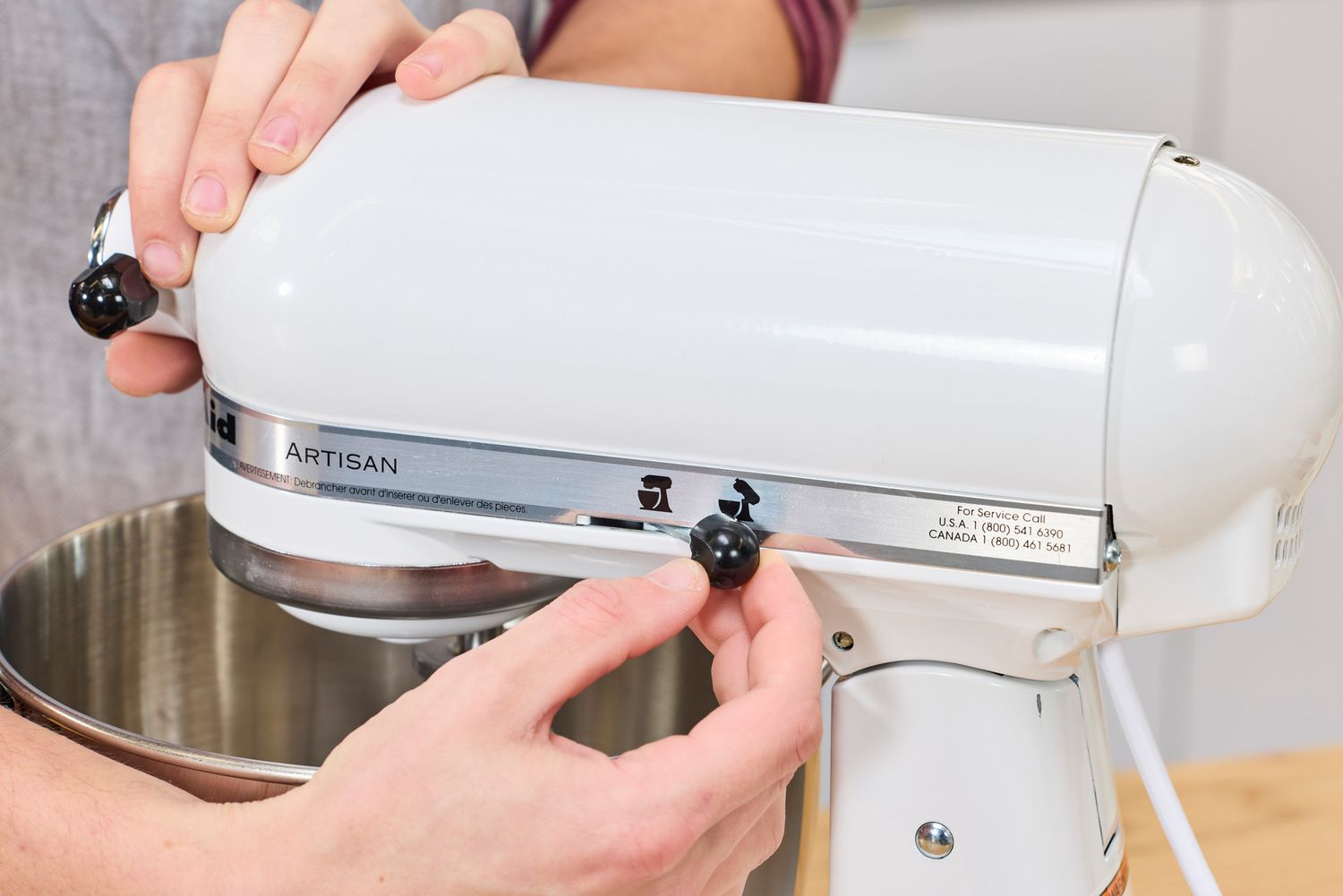
- Tilt-Head Mixers: These are the classic models where the motor head tilts back to access the bowl (like the popular KitchenAid Artisan series, typically 4.5-5 quarts). They are fantastic for most home baking needs, convenient for adding ingredients, and easy to scrape the bowl. However, for a very heavy double batch, the hinge point can be a point of stress, sometimes causing the head to bounce slightly.
- Bowl-Lift Mixers: On these models, the head is stationary, and you use a lever to raise the bowl up into the mixing position (common in KitchenAid Professional and commercial series, typically 5-8 quarts). This design provides superior stability. With no hinge in the head, all the machine’s weight and power are focused on the mix. This makes them the preferred choice for those who frequently work with stiff doughs like double batches of cookies or bread.
For a baker whose main goal is conquering what size mixer for a double batch of cookies, a bowl-lift model in the 5 to 6-quart range is often the most robust and reliable choice.
Sizing Up Your Options: A Quick Comparison
To make it even clearer, here’s a breakdown of what you can realistically expect from different mixer sizes when it comes to your favorite cookie recipes.
| Mixer Size (Quarts) | Typical Cookie Yield | Best For | Potential Downsides |
|---|---|---|---|
| 3.5 – 4.5 Quart | 4-6 dozen | The occasional baker, single batches, smaller kitchens. | Strains with double batches, ingredients may fly out. |
| 5 – 6 Quart | 8-12 dozen | The serious home baker, double batches, bread dough. | A larger countertop footprint, can be heavy to move. |
| 7 – 8 Quart | 12-14+ dozen | Small business owners, prolific bakers, large families. | Overkill for single batches, very heavy and expensive. |
As you can see, the 5-6 quart category is the undisputed sweet spot for handling a double batch of cookies with ease, offering the capacity and power you need without venturing into commercial territory.
Making the Most of Your Mixer: Attachments and Technique
Once you have the right machine, using it correctly is key. The workhorse for cookie dough is the flat beater (or paddle attachment). Its job is to cream butter and sugar, incorporate eggs, and mix in dry ingredients without developing too much gluten, which would make your cookies tough.
Here’s a pro tip: When making that double batch, don’t just dump everything in at once.
- Cream Properly: Start with your softened butter and sugars. Let the mixer run on a medium speed (a 4 on a KitchenAid, for example) for a good 3-5 minutes until it’s light and fluffy. This step is crucial for texture.
- Add Eggs One by One: This allows each egg to fully emulsify into the creamed butter, creating a stable structure.
- Go Low and Slow with Flour: Add your dry ingredients in thirds on the lowest speed (“Stir” on a KitchenAid). Mix just until the flour disappears. Overmixing at this stage is the number one enemy of tender cookies.
- Fold in the Fun Stuff: Whether it’s chocolate chips, nuts, or candy, it’s often best to mix these in on the lowest speed for just a few seconds, or even finish by hand with a spatula, to prevent breaking them up.
Getting the right what size mixer for a double batch of cookies is the first step, but mastering these simple techniques will elevate your final product from good to unforgettable.
Frequently Asked Questions (FAQ)
Q1: Can I get away with a 4.5-quart mixer for a double batch of cookies?
You can, but it’s not ideal. You’ll need to watch it closely to prevent ingredients from spilling, and you may need to scrape down the bowl constantly. The motor will also be under significant strain, which could shorten its lifespan if you do it often.
Q2: What happens if my mixer bowl is too small for my cookie dough?
A few things can happen: ingredients won’t incorporate evenly, leading to inconsistent cookies; the dough can climb up the beater and into the mixer’s mechanics; and the motor can overheat from the strain of trying to mix an overly dense mass.
Q3: How many watts should I look for in a mixer for heavy cookie dough?
Look for a stand mixer with at least 325 watts, but for frequent double batches, aiming for 500-575 watts or a model with a high-efficiency DC motor is a safer bet. Power ensures the mixer won’t struggle with dense, chunky doughs.
Q4: Is a bowl-lift mixer harder to use than a tilt-head?
Not necessarily, it’s just a different workflow. Some people find it slightly less convenient to add ingredients since the head doesn’t move out of the way. However, many users quickly adapt and prefer the stability and power that bowl-lift models offer.
Q5: Will a 6-quart mixer be too big for a single batch of cookies?
Generally, no. A 6-quart mixer can handle a single batch just fine. The planetary mixing action (where the beater spins on its axis while also orbiting the bowl) ensures that even smaller quantities are mixed thoroughly.
The Final Crumb
Choosing a stand mixer is a real investment in your baking journey. While it can be tempting to opt for a smaller, less expensive model, being honest about your ambitions is key. If you dream in double batches and see holiday cookie exchanges as a competitive sport, investing in a powerful, 5 to 6-quart stand mixer is a decision you will never regret. It’s the kitchen partner that will never complain, never tire, and will reliably help you turn out dozens of perfect cookies. Figuring out what size mixer for a double batch of cookies you need opens up a world of baking possibilities, saving you time and effort for years to come.
Happy baking! We’d love to hear about your big-batch baking adventures in the comments below.