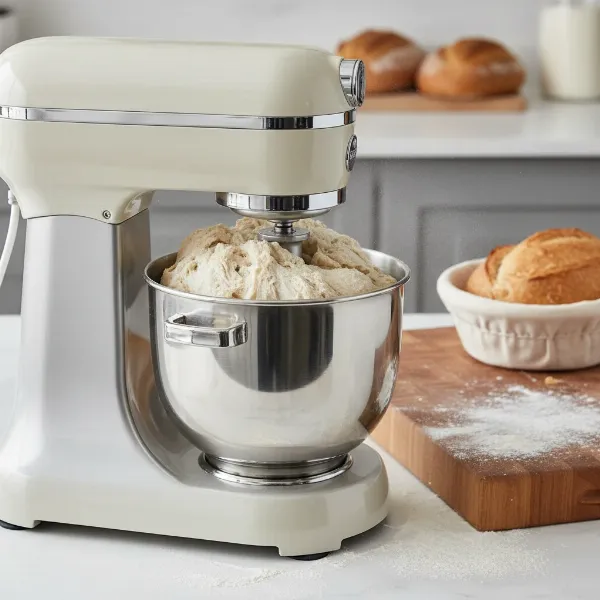
Are you a passionate baker who dreams of perfectly kneaded dough, rich sourdoughs, and artisan loaves, but find yourself caught between the legendary power of an Ankarsrum and the iconic versatility of a KitchenAid? Choosing the right stand mixer is a pivotal decision for any home baker, especially when your heart belongs to bread. This in-depth guide will dissect the capabilities of these two titans, focusing squarely on their performance with bread dough, to help you invest in the perfect culinary partner for your kitchen.
Stand Mixer: Overview and Benefits
A stand mixer is a fundamental tool in both home and professional kitchens, designed to automate and simplify strenuous tasks like mixing, beating, and kneading. For bread bakers, its primary benefit lies in taking over the intensive physical labor of kneading dough, ensuring consistent gluten development for superior texture and rise.
Historically, stand mixers have evolved significantly. KitchenAid, an American classic, introduced its first home stand mixer in 1919, establishing a planetary mixing system that has become a household standard. Ankarsrum, a Swedish brand originating in 1940, took a different approach, developing a unique design with a rotating bowl to handle heavy tasks, especially dough.
Broadly, stand mixers fall into two main types based on their mixing action:
- Planetary Mixers (e.g., KitchenAid): The attachment spins on its axis while simultaneously orbiting the bowl, covering all areas. The motor is typically housed in the head.
- Rotating Bowl Mixers (e.g., Ankarsrum): The bowl itself rotates on a spinning base, while the mixing attachment (roller or hook) remains largely stationary or moves along the bowl’s edge. The motor is usually located in the base.
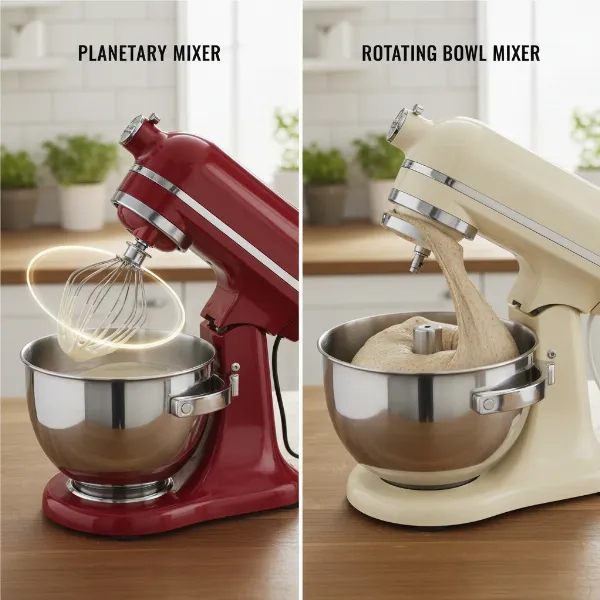 Illustration comparing planetary and rotating bowl stand mixers for baking.
Guide to Choosing the Right Stand Mixer
Selecting a stand mixer for bread requires careful consideration of several factors beyond just brand recognition. Your baking habits and aspirations should guide your choice.
Determine Usage Needs
|
Our Picks for the Best Stand mixer in 2026
As an Amazon Associate I earn from qualifying purchases.
|
||
| Num | Product | Action |
|---|---|---|
| 1 | Cuisinart SM-50G Precision Master 5.5-Quart 12-Speed Stand Mixer with Mixing Bowl, Chef's Whisk, Flat Mixing Paddle, Dough Hook, and Splash Guard with Pour Spout, Agave Green, Manual |

|
| 2 | Kitchen in the box Stand Mixer,3.2Qt Small Electric Food Mixer,6 Speeds Portable Lightweight Kitchen Mixer for Daily Use with Egg Whisk,Dough Hook,Flat Beater (Black) |
|
| 3 | Cuisinart SMD-50GPH Precision Pro 5.5-Quart Digital Stand Mixer with 12-Speeds, 3 Preprogrammed Food Prep Settings, Mixing Bowl, Whisk, Flat Mixing Paddle, Dough Hook, and Splash Guard, Graphite |
|
| 4 | Cuisinart SMD-50BC Precision Pro 5.5-Quart Digital Stand Mixer With 12-Speeds, 3 Preprogrammed Food Prep Settings, Mixing Bowl, Whisk, Flat Mixing Paddle, Dough Hook, And Splash Guard, Silver Lining |
|
| 5 | Kitchen in the box Stand Mixer,3.2Qt Mini Electric Food Mixer,6 Speeds Portable Lightweight Kitchen Mixer for Daily Use with Egg Whisk,Dough Hook,Flat Beater (Green) |
|
| 6 | 3-IN-1 Electric Stand Mixer, 6.5QT Bowl 660W 10-Speed Kitchen Mixer, Household Food Mixers include Dough Hook, Beater and Whisk, Bread Cake Mixer for Baking and Most Home Cooks, Red |
|
| 7 | Cuisinart SPI-50 Spiralizer, White |
|
| 8 | Cuisinart Stand Mixer, 12 Speeds, 5.5-Quart Mixing Bowl, Chef's Whisk, Flat Mixing Paddle, Dough Hook, and Splash Guard with Pour Spout, Silver Lining, SM-50BC, Silver Lining |
|
| 9 | Kitchen in the box Stand Mixer,3.2Qt Small Electric Food Mixer,6 Speeds Portable Lightweight Kitchen Mixer for Daily Use with Egg Whisk,Dough Hook,Flat Beater (Blue) |
|
| 10 | Cuisinart SMD-50CRM Precision Pro 5.5-Quart Digital Stand Mixer with 12-Speeds, 3 Preprogrammed Food Prep Settings, Mixing Bowl, Chef's Whisk, Flat Mixing Paddle, Dough Hook, and Splash Guard, Cream |
|
Before you commit, honestly assess your baking routine. Do you bake bread frequently, perhaps several times a week? Are you venturing into large batches for family or events? The type of bread also matters – light brioche dough will stress a mixer differently than a dense rye or high-hydration sourdough. If bread making is your primary reason for buying a stand mixer, prioritize models built for heavy-duty dough.
Capacity and Power
The capacity of a stand mixer’s bowl directly relates to the amount of dough it can handle. For bread, a larger capacity is almost always better, allowing for bigger batches without overcrowding the bowl or overworking the motor. Alongside capacity, motor power and design are critical. A powerful, durable motor is essential for kneading dense bread dough over extended periods without overheating or straining. Look beyond just wattage; the motor’s design (direct drive, belt-driven) impacts torque and longevity under heavy loads.
Important Features
Consider the specific features that impact bread making:
- Mixing Speed Control: Multiple speed settings allow you to start slow for combining ingredients and increase gradually for optimal kneading, crucial for developing gluten without overworking.
- Dough Attachments: While most mixers come with a dough hook, some, like the Ankarsrum, offer unique roller and scraper systems designed to mimic hand-kneading. Evaluate which mechanism you prefer and which is most effective for the types of dough you make.
- Dough Kneading Functionality: Does the mixer handle stiff dough without struggling? Does it effectively incorporate all ingredients without leaving flour pockets at the bottom? Can it knead for 10-20 minutes without motor strain or excessive shaking?
- Timer Functions: Some advanced models include timers, a convenient feature for precise kneading times.
Brand and Price
Both Ankarsrum and KitchenAid are reputable brands, but they cater to slightly different needs and budgets. Ankarsrum is often a premium investment, specialized for serious bread bakers, while KitchenAid offers a wider range of models and price points, from entry-level to professional-grade, known for all-around versatility. Consider the long-term value, including warranty, parts availability, and customer support, alongside the initial price tag.
Comparing Popular Stand Mixer Models
When it comes to bread, the Ankarsrum Assistent Original and various KitchenAid models present distinct philosophies and performance profiles. Here’s a detailed comparison:
| Feature | Ankarsrum Assistent Original | KitchenAid (Pro 600 / 7-Qt / 8-Qt Commercial) | KitchenAid (Artisan / Classic Tilt-Head) |
|---|---|---|---|
| Kneading Mechanism | Rotating bowl with stationary roller & scraper/dough hook | Planetary mixing action with spiral dough hook | Planetary mixing action with “C” dough hook |
| Motor Location | Bottom-mounted | Top-mounted in the head | Top-mounted in the head |
| Capacity (Approx.) | 7.4 quarts (7L) | 6-8 quarts | 4.5-5 quarts |
| Power/Motor Type | Robust direct-drive motor, known for durability & no overheating | Powerful motor (often DC), can handle heavy dough, but some report strain with very large/stiff batches | Less powerful, may struggle with stiff/large dough, prone to shaking |
| Strengths for Bread | Exceptional for heavy, high-hydration, and large batches; mimics hand-kneading; no motor strain; quiet; durable; open bowl access | Handles most bread dough well, especially higher-end models; good capacity in pro lines; wide range of attachments | Suitable for smaller, lighter doughs; good for occasional bread baking |
| Weaknesses for Bread | Steeper learning curve; high price point; less aesthetically diverse; not ideal for very small batches of some other tasks | Can struggle with very stiff or extremely large batches; tilt-head models less stable; motor can warm up; some durability concerns over time for non-pro models | Limited capacity; significant strain/shaking with heavy or large bread dough; potential for motor issues with frequent use |
| Overall Versatility | Excellent for dough, also good for other tasks with specific attachments | Highly versatile for all baking tasks (cakes, cookies, whipping); vast attachment ecosystem | Good all-around for general baking; limited for serious bread |
| Price Range (Approx.) | $700 – $900+ | $400 – $800+ (Pro/Commercial); $300 – $500 (Tilt-Head) | $250 – $400 |
| Warranty (Typical) | 7 years | 1 year | 1 year |
“The Ankarsrum is unbeatable for kneading bread dough. If you mostly bake bread, go with the Ankarsrum. For everything else, stick with KitchenAid.” – r/AskBaking User, Avid Home Baker
For serious bread bakers, the Ankarsrum Assistent Original stands out. Its unique rotating bowl and roller/scraper system are engineered to mimic hand-kneading, providing precise control and gentle yet thorough gluten development. It excels with high-hydration doughs and can handle up to 5kg (about 10 pounds) of dough without straining its powerful, bottom-mounted motor. While it has a steeper learning curve, dedicated users praise its durability and consistent results, especially for artisan breads like sourdough.
KitchenAid mixers, particularly the bowl-lift Professional and Commercial series, are capable of kneading bread dough effectively. Their planetary action and robust dough hooks work well for many recipes. However, smaller tilt-head models may show signs of strain (like shaking or motor overheating) when dealing with stiff or large quantities of dough over extended periods. KitchenAid’s main advantage lies in its overall versatility for a wide array of baking tasks beyond bread, supported by a vast ecosystem of attachments and a beloved, classic design.
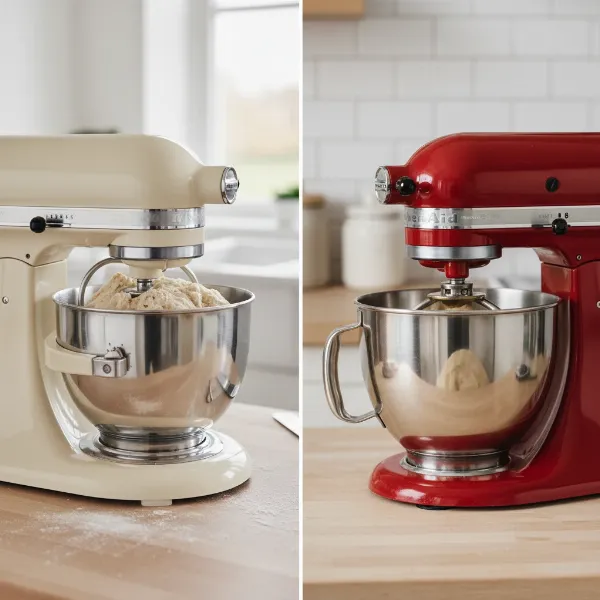 Ankarsrum and KitchenAid stand mixers actively kneading bread dough.
Tips for Using and Maintaining Your Stand Mixer
Proper use and maintenance are crucial for extending the life of your stand mixer, especially when frequently kneading dense bread dough.
How to Use Your Stand Mixer Safely
Always prioritize safety. Read the instruction manual thoroughly before first use. Ensure your stand mixer is placed on a flat, stable surface to prevent movement during operation, particularly with heavy dough. Never use the mixer if the power cord is damaged. Keep hands, hair, and clothing clear of moving parts. With the Ankarsrum’s open-bowl design, extra caution is advisable during operation. Avoid overloading your mixer beyond its recommended capacity, as this can strain the motor and attachments.
Cleaning and Maintaining Your Stand Mixer
Clean your stand mixer immediately after each use. Detachable parts, such as bowls and attachments, are often dishwasher-safe (check your manual), or can be hand-washed with warm, soapy water. Always dry all components thoroughly before storing to prevent rust or residue buildup. Wipe down the motor housing with a damp cloth. Regular maintenance, such as checking for wear and tear on attachments or lubricating specific parts as recommended by the manufacturer, can significantly prolong your mixer’s lifespan. The Ankarsrum’s design with a removable bowl often makes cleaning easier.
Where to Buy a Stand Mixer?
You can purchase stand mixers from a variety of reputable sources, both online and in brick-and-mortar stores. Large electronics retailers, specialized kitchenware stores, and department stores often carry a selection of both Ankarsrum and KitchenAid models. Online marketplaces and the official brand websites are also excellent resources, frequently offering competitive pricing, customer reviews, and detailed product specifications.
When buying online, pay attention to the seller’s return policy, warranty information, and shipping costs. Reading customer reviews, especially those focused on bread making, can provide valuable real-world insights into a specific model’s performance and reliability.
Buying Guide: Stand Mixer Selection Tips
As a seasoned technician with a decade of experience, I can tell you that the “best” stand mixer isn’t universal; it’s the one that best fits your baking journey. For bread enthusiasts, the choice between an Ankarsrum and a KitchenAid comes down to these core considerations:
- Bread-Focused Baking: If making bread, especially large or stiff batches and high-hydration doughs, is your primary goal, the Ankarsrum Assistent Original is engineered for this purpose. Its robust motor and unique kneading action are unmatched.
- Versatility and Design: If you seek a multi-purpose workhorse for a wide range of baking tasks, coupled with an iconic design and a vast array of color options and attachments, a KitchenAid bowl-lift model (like the Professional or Commercial series) is an excellent choice.
- Budget and Investment: Ankarsrum represents a significant upfront investment, but its exceptional durability and longer warranty can offer long-term value for serious bakers. KitchenAid offers more accessible price points, though its highest-capacity models can rival Ankarsrum’s cost.
- Learning Curve: Be prepared for a learning period with the Ankarsrum’s unique operation. KitchenAid mixers are generally more intuitive from day one.
Consider your passion. If the aroma of freshly baked bread is your ultimate reward and you’re ready to invest in a machine that feels like an extension of your craft, the Ankarsrum is a powerful ally. If you appreciate a mixer that seamlessly transitions between delicate meringues and sturdy cookie dough, with reliable bread-making capabilities in its professional lines, KitchenAid remains a beloved classic.
Conclusion
The debate between Ankarsrum and KitchenAid for bread baking ultimately highlights a choice between specialized power and versatile utility. For the dedicated bread maker tackling heavy, high-hydration, or large batches regularly, the Ankarsrum Assistent Original, with its unique rotating bowl and powerful, durable motor, often emerges as the superior choice, mimicking the careful artistry of hand-kneading. Its Swedish engineering is built for the long haul of intense dough work.
Conversely, while KitchenAid offers capable bread-making, especially within its professional-grade, bowl-lift models, its core strength lies in its all-around performance for a wider range of culinary tasks and its iconic presence in kitchens worldwide. For those who bake bread occasionally alongside other sweets and treats, a robust KitchenAid can be a fantastic, versatile companion.
Ultimately, your perfect Stand Mixer will empower your baking ambitions. Which mixer’s legacy will you invite into your kitchen to help you craft your next perfect loaf?
Frequently Asked Questions
Which stand mixer is best for kneading sourdough dough?
The Ankarsrum Assistent Original is widely regarded as exceptional for kneading sourdough dough due to its unique roller and scraper system and powerful motor, which can handle the stiff, high-hydration nature of sourdough without overheating or straining.
Can a KitchenAid Pro 600 handle large batches of bread?
Yes, the KitchenAid Professional 600 and larger bowl-lift models are designed with more powerful motors and greater capacity to handle substantial bread dough batches more effectively than the smaller tilt-head Artisan models.
Is the Ankarsrum mixer difficult to learn compared to KitchenAid?
The Ankarsrum does have a steeper learning curve compared to the more conventional planetary mixing action of a KitchenAid. Its rotating bowl and stationary roller/scraper require a different approach, but users often find it intuitive once mastered.
How do Ankarsrum’s dough attachments differ from KitchenAid’s?
Ankarsrum primarily uses a dough roller and scraper that work with the rotating bowl to gently yet thoroughly knead dough, simulating hand-kneading. KitchenAid uses a traditional dough hook that rotates around a stationary bowl in a planetary motion.
What is the typical lifespan difference between these mixers for heavy bread use?
Ankarsrum mixers are renowned for their exceptional durability and long lifespan, often lasting decades under heavy use due to their robust motor design. While higher-end KitchenAid models are also durable, some users report issues with motor strain or gear wear over time with very frequent, heavy bread baking compared to an Ankarsrum.
Which mixer is better for high-hydration doughs?
The Ankarsrum excels with high-hydration doughs, such as ciabatta or very wet sourdough, as its roller and scraper system handles sticky dough with remarkable efficiency and minimizes climbing up the attachment.
Is the price difference between Ankarsrum and KitchenAid justified for bread bakers?
For dedicated bread bakers who prioritize performance, capacity, and longevity for frequent, heavy dough work, the higher investment in an Ankarsrum is often justified by its specialized design and durability. For more general bakers, KitchenAid offers excellent value across its range.