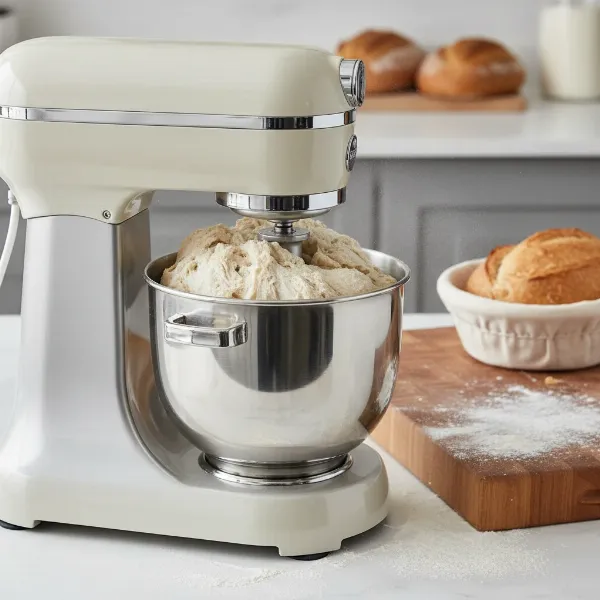
Choosing the right dough hook for your stand mixer can significantly impact the quality of your baked goods. While both C-shape and spiral dough hooks are designed to knead dough, they employ distinct mechanisms and excel with different types of dough. Understanding these differences is key to achieving perfect bread, pastries, and more.
The Classic C-Shape Dough Hook
|
Our Picks for the Best Stand mixer in 2026
As an Amazon Associate I earn from qualifying purchases.
|
||
| Num | Product | Action |
|---|---|---|
| 1 | Cuisinart SPI-50 Spiralizer, White |

|
| 2 | Kitchen in the box Stand Mixer,3.2Qt Small Electric Food Mixer,6 Speeds Portable Lightweight Kitchen Mixer for Daily Use with Egg Whisk,Dough Hook,Flat Beater (Black) |
|
| 3 | Kitchen in the box Stand Mixer,3.2Qt Mini Electric Food Mixer,6 Speeds Portable Lightweight Kitchen Mixer for Daily Use with Egg Whisk,Dough Hook,Flat Beater (Green) |
|
| 4 | Kitchen in the box Stand Mixer,3.2Qt Small Electric Food Mixer,6 Speeds Portable Lightweight Kitchen Mixer for Daily Use with Egg Whisk,Dough Hook,Flat Beater (Blue) |
|
| 5 | Cuisinart Stand Mixer, 12 Speeds, 5.5-Quart Mixing Bowl, Chef's Whisk, Flat Mixing Paddle, Dough Hook, and Splash Guard with Pour Spout, Silver Lining, SM-50BC, Silver Lining |
|
| 6 | Cuisinart SM-50G Precision Master 5.5-Quart 12-Speed Stand Mixer with Mixing Bowl, Chef's Whisk, Flat Mixing Paddle, Dough Hook, and Splash Guard with Pour Spout, Agave Green, Manual |
|
| 7 | 3-IN-1 Electric Stand Mixer, 6.5QT Bowl 660W 10-Speed Kitchen Mixer, Household Food Mixers include Dough Hook, Beater and Whisk, Bread Cake Mixer for Baking and Most Home Cooks, Red |
|
| 8 | Cuisinart SMD-50BC Precision Pro 5.5-Quart Digital Stand Mixer With 12-Speeds, 3 Preprogrammed Food Prep Settings, Mixing Bowl, Whisk, Flat Mixing Paddle, Dough Hook, And Splash Guard, Silver Lining |
|
| 9 | Cuisinart SMD-50GPH Precision Pro 5.5-Quart Digital Stand Mixer with 12-Speeds, 3 Preprogrammed Food Prep Settings, Mixing Bowl, Whisk, Flat Mixing Paddle, Dough Hook, and Splash Guard, Graphite |
|
| 10 | Cuisinart SMD-50CRM Precision Pro 5.5-Quart Digital Stand Mixer with 12-Speeds, 3 Preprogrammed Food Prep Settings, Mixing Bowl, Chef's Whisk, Flat Mixing Paddle, Dough Hook, and Splash Guard, Cream |
|
The C-shape dough hook is the most widely recognized attachment, often included as the standard with many stand mixers, particularly tilt-head models. Its design mimics the traditional hand-kneading technique.
Design and Kneading Action: As its name suggests, this hook is curved like the letter “C.” It works by pushing the dough against the sides of the mixing bowl in a repetitive push-and-pull motion. This action helps to develop gluten strands by folding and stretching the dough.
Ideal Uses: The C-hook is a versatile workhorse suitable for a broad range of common baking recipes. It performs admirably with:
- Softer doughs
- Enriched doughs (like brioche or cinnamon rolls)
- Standard bread recipes (sandwich bread, dinner rolls)
- Pizza dough
- Focaccia
Pros:
- Versatility: Excellent for a variety of dough consistencies and baking projects.
- Commonality: Comes standard with many stand mixer models, especially tilt-head designs.
- Gentle Kneading: Less aggressive action, preventing delicate doughs from being overworked.
Cons:
- Dough Climbing: Can sometimes cause the dough to “climb” up the hook, requiring manual intervention to push it back down.
- Efficiency: May require longer kneading times for optimal gluten development, especially with stiffer doughs.
- Heavy Dough Limitations: Can struggle with very dense, stiff, or low-hydration doughs, potentially straining the mixer.
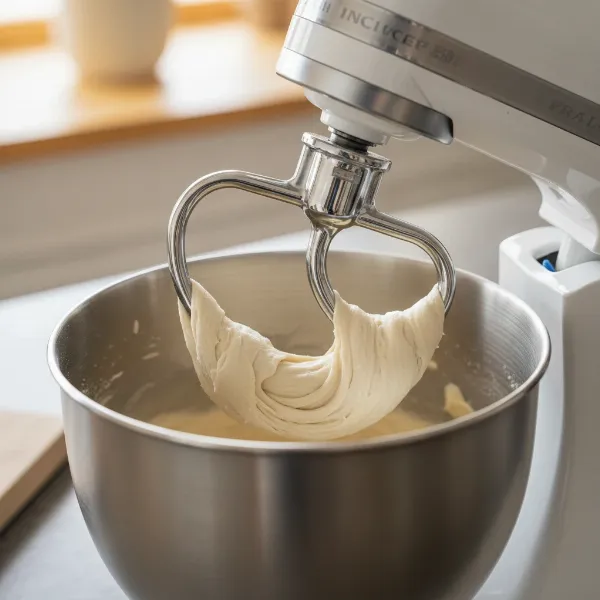 C-shape dough hook kneading soft dough in a tilt-head stand mixer bowl.
The Efficient Spiral Dough Hook
Often associated with larger, more powerful bowl-lift stand mixers, the spiral dough hook (sometimes called a “PowerKnead” hook) offers a more aggressive and efficient kneading experience, akin to commercial bakery mixers.
Design and Kneading Action: The spiral dough hook features a corkscrew or helical shape. Its unique design applies a constant downward pressure, pushing the dough off the bottom of the mixing bowl. This action thoroughly works the entire dough mass with each rotation, more effectively folding and stretching the gluten network. It rotates vertically across multiple planes, promoting superior gluten development.
Ideal Uses: The spiral hook shines when tackling challenging doughs and larger quantities. It is the preferred choice for:
- Dense, stiff, or low-hydration doughs (e.g., artisan bread, bagels, whole wheat bread)
- Large batches of dough
- Chewier, Neapolitan-style pizza crusts
- Doughs requiring robust gluten development for an open crumb structure
Pros:
- Efficiency: Kneads heavy dough faster and more effectively, significantly reducing mixing time.
- Superior Gluten Development: Its powerful action leads to a stronger, more consistent gluten network, resulting in better bread structure and chewiness.
- Dough Containment: Keeps dough at the bottom of the bowl, minimizing climbing and the need to stop and scrape.
- Potentially Faster Rise Times: Some bakers report faster rise times between bulk fermentations due to the efficient gluten development.
Cons:
- Less Versatility: Can be too aggressive for very delicate or soft doughs, potentially overworking them.
- Compatibility: Primarily designed for specific large-capacity bowl-lift stand mixers and is not interchangeable with tilt-head models.
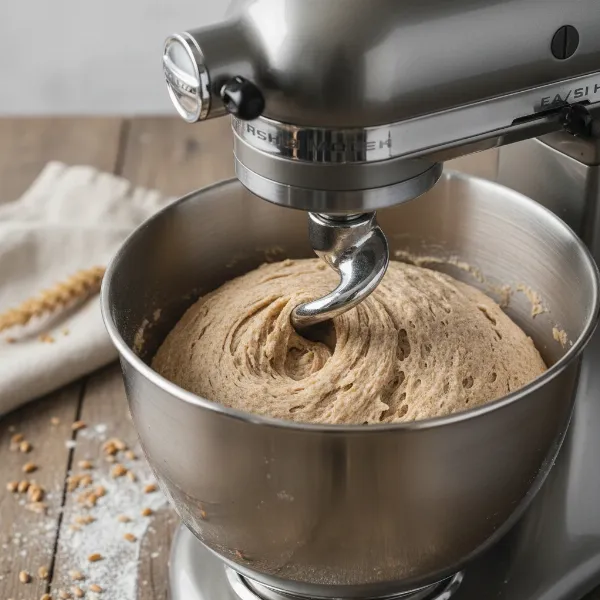 Spiral dough hook efficiently kneading dense, low-hydration dough in a bowl-lift mixer.
Choosing the Right Dough Hook for Your Baking Needs
The choice between a C-shape and a spiral dough hook ultimately depends on two main factors: your stand mixer type and your typical baking projects.
- Your Stand Mixer Model: This is the most critical consideration.
- Tilt-Head Mixers: Almost exclusively use C-shape dough hooks.
- Bowl-Lift Mixers: Can come with either C-shape (especially smaller models) or spiral hooks (typically larger, more powerful models). Always check your mixer’s specifications for compatibility before purchasing any new attachment. Dough hooks are generally not interchangeable between tilt-head and bowl-lift designs.
- The Type of Dough You Bake:
- For the All-Purpose Home Baker: If you frequently make a variety of softer doughs like sandwich bread, dinner rolls, or enriched sweet breads, the C-shape dough hook is a reliable and versatile tool.
- For the Serious Bread Enthusiast: If your passion lies in artisan loaves, dense bagels, whole-grain breads, or other stiff, heavy doughs, the spiral dough hook will provide more efficient kneading, superior gluten development, and professional-level results.
Both C-shape and spiral dough hooks are invaluable tools for any baker. By understanding their unique designs, kneading actions, and optimal uses, you can ensure you’re employing the right attachment to achieve consistently perfect dough for all your culinary creations.