Welcome to the world of baking, where passion meets precision! If you’re standing on the edge, wondering if a stand mixer is the right leap for your culinary journey, you’ve come to the right place. This is the definitive Stand Mixer For Beginners Guide, designed to turn your hesitation into confidence. I remember my first stand mixer; it felt like hiring a professional sous chef. It didn’t just mix ingredients; it completely transformed my baking game from laborious to effortless. Are you ready to do the same? Let’s dive in.
Why You Absolutely Need a Stand Mixer
Let’s be honest, kneading dough by hand is a workout, and holding an electric hand mixer for ten minutes can make your arm feel like it’s about to fall off. A stand mixer is more than just a kitchen appliance; it’s a trusty sidekick.
- Hands-Free Heaven: This is the biggest selling point. A stand mixer does the hard work while you’re free to measure out your next ingredient, grease a pan, or simply sip your coffee. It’s multitasking at its finest.
- Unmatched Power and Efficiency: A stand mixer’s motor is a workhorse. It can handle dense bread doughs and thick cookie batters without breaking a sweat, something a hand mixer—or your own two hands—would struggle with. The consistent power ensures everything is mixed evenly, every single time.
- Superior Results: The secret sauce is the planetary mixing action. This means the beater spins on its axis while also orbiting around the bowl. Think of the Earth spinning as it goes around the sun. This action ensures every last bit of flour at the bottom and sides of the bowl is incorporated, leading to better-textured cakes, fluffier meringues, and perfectly developed doughs.
- Incredible Versatility: A stand mixer isn’t just for baking. With the right attachments, it becomes a multi-functional kitchen hub. You can grind meat, make pasta, spiralize vegetables, and even churn ice cream. For those interested in expanding their appliance’s capabilities, understanding how to use a food processor attachment can be a complete game-changer, turning one machine into several.
Types of Stand Mixers and Key Features
So, you’re convinced. But which one do you choose? The two main styles you’ll encounter are Tilt-Head and Bowl-Lift.
Tilt-Head vs. Bowl-Lift: What’s the Difference?
A tilt-head mixer is exactly what it sounds like: the head of the mixer hinges back, allowing you easy access to the bowl and beater. This design is fantastic for most home bakers. It’s user-friendly and perfect for scraping the bowl or adding ingredients.
A bowl-lift mixer has a stationary head. Instead, a lever raises the bowl up to meet the beater. These are typically larger, heavier, and more powerful, making them the standard in professional kitchens and for those who frequently bake large batches or work with very heavy doughs.
As renowned pastry chef Isabelle Dubois often says, “For the passionate home baker making weekly breads and cakes, a quality tilt-head is your best friend. If you’re dreaming of opening a micro-bakery from your kitchen, invest in the stability of a bowl-lift model.”
What About Power and Bowl Size?
- Power (Wattage): Don’t get too caught up in the numbers game. A higher wattage doesn’t always mean a better mixer. A well-engineered 325-watt motor from a reputable brand like KitchenAid can easily outperform a poorly designed 600-watt motor. Look for mixers with DC motors if possible, as they tend to run quieter and more efficiently.
- Bowl Size (Quarts): For most beginners, a 4.5 to 5-quart bowl is the sweet spot. This is large enough to handle a batch of cookies, a couple of loaves of bread, or a standard cake recipe without being overwhelmingly large for smaller tasks.
|
Our Picks for the Best Stand Mixer in 2026
As an Amazon Associate, we earn from qualifying purchases.
|
||
| Num | Product | Action |
|---|---|---|
| 1 | Kitchen in the box Stand Mixer, 900W 8.5QT Kitchen Electric Mixer, 6-Speed Large Capacity Food Mixer for Home Cooks with Egg Whisk, Dough Hook & Flat Beater (Black) |

|
| 2 | KitchenAid Classic Series 4.5 Quart Tilt-Head Stand Mixer K45SS, White |
|
| 3 | KitchenAid Artisan Series 5 Quart Tilt Head Stand Mixer with Pouring Shield KSM150PS, Blue Velvet |
|
| 4 | Stand Mixer | Powerful 660W Motor | Large 6.5 Qt. Bowl | 6-Speed Control | Dishwasher-Safe Attachments | Tilt-Head Design | Perfect for Home Bakers (Red) |
|
| 5 | 6-in-1 Multifunctional Stand Mixer, 5.3Qt 660W, 6-Speed Tilt-head, Electric Kitchen Mixer with Stainless Steel Bowl,Meat Grinder, Juice Blender (Black) |
|
| 6 | KitchenAid 7 Quart Bowl-Lift Stand Mixer |
|
| 7 | Instant Pot Stand Mixer Pro,600W 10-Speed Electric Mixer with Digital Interface,7.4-Qt Stainless Steel Bowl,From the Makers of Instant Pot,Dishwasher Safe Whisk,Dough Hook and Mixing Paddle,Silver |
|
| 8 | DASH Tilt-Head 3.5qt Stand Mixer 12 Speeds with Paddle, Dough Hook, and Whisk Attaachments - Cream |
|
| 9 | COOKLEE 6-IN-1 Stand Mixer, 8.5 Qt. Multifunctional Electric Kitchen Mixer with Beater, Whisk, Dough Hook, Meat Grinder and Other Accessories for Most Home Cooks, SM-1507BM, Silvery |
|
| 10 | Kitchen in the box Stand Mixer,3.2Qt Small Electric Food Mixer,6 Speeds Portable Lightweight Kitchen Mixer for Daily Use with Egg Whisk,Dough Hook,Flat Beater (Blue) |
|
Your A-Z Guide: From Assembly to Operation
Unboxing your first stand mixer can be both exciting and a little intimidating. Let’s break it down into simple steps.
- Find a Home for It: These machines are heavy. Find a permanent spot on your counter where you can easily access it. You’ll use it more if it’s not a hassle to get out.
- Clean Everything: Before first use, wash the bowl and all attachments in warm, soapy water.
- Lock the Bowl: Place the mixing bowl onto the base plate and twist it until it locks firmly into place. You’ll feel a secure click.
- Attach the Beater: For a tilt-head model, lift the head back. Align the pin on the attachment with the slot on the shaft, push up, and twist to lock. Lower the head and lock it.
- The “Dime Test”: A crucial step for proper mixing! To check beater-to-bowl clearance, drop a dime into the empty bowl. Turn the mixer on low. The beater should gently push the dime around the bowl without aggressively hitting it. If it’s too high or too low, you can adjust the clearance (check your user manual for a specific screw to turn).
- Start Low, Go Slow: Always start your mixer on the lowest speed (“Stir”) and gradually increase. This prevents a “flour explosion” that coats your entire kitchen in a fine white dust. Trust me, I’ve been there.
Attachments and How to Use Them: Your Mixing Trio
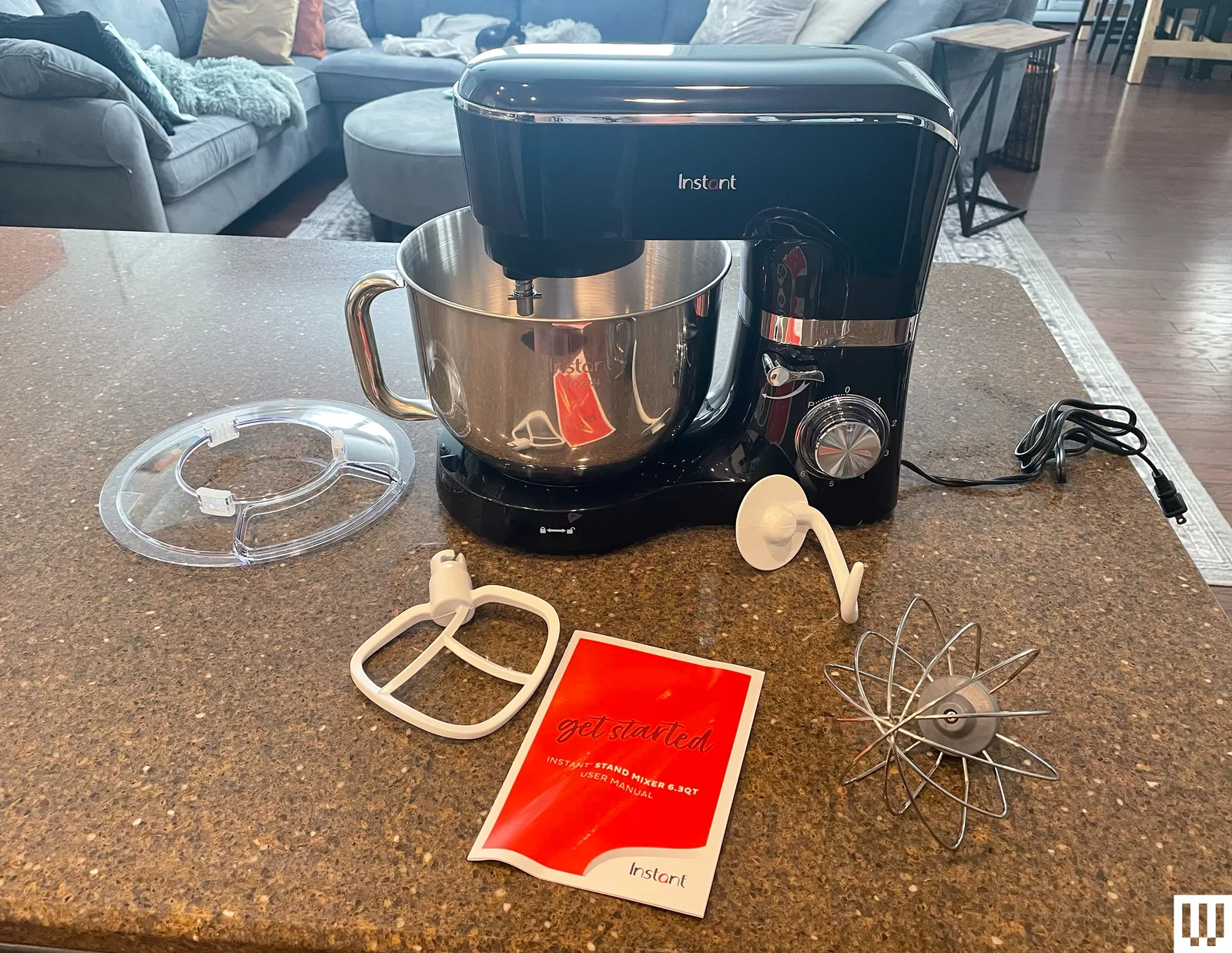
Your new stand mixer for beginners guide wouldn’t be complete without covering the three essential tools that come in the box.
The Flat Beater (or Paddle)
This is your everyday workhorse. Its design is perfect for thoroughly combining ingredients without whipping too much air into them.
- Use it for: Creaming butter and sugar for cookies, mixing cake and brownie batter, making frosting, and even shredding cooked chicken.
The Dough Hook
This C-shaped or spiral hook is a miracle for bread bakers. It mimics the motion of hand-kneading, developing gluten for a perfect rise and chewy texture.
- Use it for: Any kind of yeast dough—bread, pizza dough, cinnamon rolls, and brioche.
The Wire Whisk (or Whip)
This balloon-shaped attachment is designed to incorporate a large amount of air into liquids.
- Use it for: Whipping egg whites into stiff peaks for meringues or angel food cake, making homemade whipped cream, and creating light, airy frostings.
Maintenance and Cleaning Tips
A little TLC will keep your stand mixer running smoothly for decades. It’s a true investment piece.
- Safety First! Always unplug your mixer before cleaning or changing attachments.
- Wipe Down the Body: Use a damp cloth to wipe down the mixer body and head. Never submerge the main unit in water.
- Clean the Attachments: Most bowls and coated attachments (flat beater, dough hook) are dishwasher safe, but always check your manual. Wire whisks are often best washed by hand to protect the delicate wires.
- Check the Vents: Keep the motor vents clear of flour dust to prevent overheating.
- Occasional Check-up: Once a year, make sure the screws holding the head in place are snug.
Common Problems and Troubleshooting
Even the best kitchen appliances have their quirks. Here’s how to handle a few common issues.
- The mixer is shaking or “walking” on the counter. This usually happens when kneading a particularly stiff dough on too high a speed. Reduce the speed to 2. If it persists, the dough might be too large or dry for the machine.
- The motor sounds strained or gets hot. You’re likely overworking it. Stop the machine and let it cool down for 15-20 minutes. Consider splitting your batch in two.
- Ingredients aren’t incorporating at the bottom. This is a sign your beater-to-bowl clearance is too high. Perform the “dime test” and adjust as needed.
Frequently Asked Questions (FAQ)
What is the best stand mixer for a beginner?
The best stand mixer for a beginner is typically a 4.5 to 5-quart tilt-head model from a reputable brand. They offer a great balance of power, size, and ease of use for most common baking tasks without being overwhelming.
What’s the first thing I should make with my new stand mixer?
A batch of chocolate chip cookies is a perfect first project. It allows you to practice creaming butter and sugar with the flat beater and see how effortlessly the machine handles a moderately thick dough.
Can a stand mixer knead all types of dough?
Yes, a good quality stand mixer with a dough hook is designed to knead everything from soft brioche to stiff whole wheat and pizza doughs. Just be sure to use the correct low speed (usually speed 2) to avoid overworking the motor.
How do I know what speed to use?
Your mixer’s manual is the best guide, but a general rule is: use low speeds (1-2) for stirring and kneading, medium speeds (4-6) for mixing batters and creaming, and high speeds (8-10) for whipping cream and egg whites.
Is a more expensive stand mixer really worth it?
In most cases, yes. The extra cost often goes into a more durable all-metal construction, a more efficient and powerful motor, and better engineering. A well-made stand mixer is a lifetime investment that can be passed down through generations.
Your Baking Adventure Awaits
Stepping into the world of stand mixers is a pivotal moment for any home baker. It’s the point where you trade arm aches for artistry and inconsistency for perfection. This machine will become the heart of your kitchen, empowering you to tackle recipes you once only dreamed of. From the perfect loaf of bread to the lightest meringue, your creative potential is now limitless. We hope this stand mixer for beginners guide has equipped you with the knowledge to choose wisely and mix confidently. Now, what’s the first thing you’re going to make?