Choosing the right stand mixer can feel like a daunting task, especially when you start delving into the technical specifications. Beyond bowl size and wattage, one crucial component often overlooked is the motor type: Alternating Current (AC) or Direct Current (DC). This distinction isn’t just technical jargon; it profoundly impacts your mixer’s performance, durability, noise level, and ultimately, your baking experience. Understanding the fundamental differences between AC and DC motors is key to selecting a stand mixer that perfectly aligns with your culinary ambitions, whether you’re whipping up a delicate meringue or kneading a dense sourdough.
Understanding Stand Mixer Motors: AC vs. DC Defined
At its core, the difference between AC and DC motors lies in the type of electrical current they utilize. Alternating current (AC) periodically reverses direction, much like the power flowing from your home’s wall outlets. AC motors, common in many household appliances, are robust and generally simpler in design. Direct current (DC), on the other hand, flows constantly in one direction. While household outlets provide AC, stand mixers with DC motors incorporate a power inverter within their housing to convert this alternating current into direct current for operation. This conversion adds a layer of sophistication to DC motor designs, influencing everything from power delivery to operational acoustics.
The Power Play: Torque and Performance
When it comes to tackling tough mixing tasks, torque is king. Torque refers to the rotational force a motor produces, and it’s where the differences between AC and DC motors become most apparent in a stand mixer.
DC motors are renowned for delivering significantly higher torque, often up to 15% more than their AC counterparts, allowing them to power through stiff doughs like bread and cookies without straining or overheating. This superior torque translates into unwavering performance, maintaining consistent speeds even under heavy loads. If you frequently bake large batches or work with dense, sticky mixtures, a DC motor ensures your mixer won’t bog down or stall, providing a smoother and more efficient kneading or mixing process.
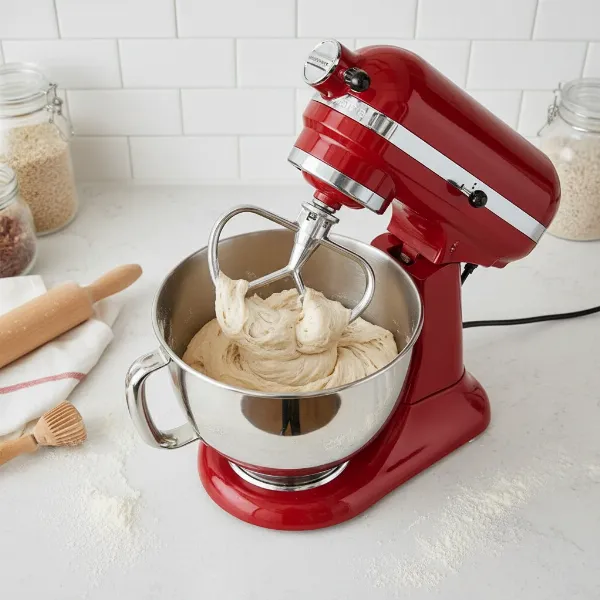 A powerful stand mixer with a DC motor kneading dense bread dough smoothly and efficiently.
AC motors, while reliable and efficient for general baking, may not offer the same raw power. They are perfectly capable of handling lighter batters, creams, and everyday mixing tasks. However, when faced with very heavy or voluminous ingredients, an AC motor might struggle, leading to noticeable speed fluctuations or even stalling. It’s crucial not to equate raw wattage directly across motor types; a 300-watt DC motor can often outperform a higher-wattage AC motor in terms of usable torque and consistent power delivery due to its inherent efficiency.
Beyond Power: Noise, Durability, and Efficiency
Beyond sheer mixing power, the choice between AC and DC motors impacts several other critical aspects of your stand mixer experience.
Noise Level
|
Our Picks for the Best Stand mixer in 2026
As an Amazon Associate I earn from qualifying purchases.
|
||
| Num | Product | Action |
|---|---|---|
| 1 | Kitchen in the box Stand Mixer,3.2Qt Mini Electric Food Mixer,6 Speeds Portable Lightweight Kitchen Mixer for Daily Use with Egg Whisk,Dough Hook,Flat Beater (Green) |

|
| 2 | Cuisinart SMD-50CRM Precision Pro 5.5-Quart Digital Stand Mixer with 12-Speeds, 3 Preprogrammed Food Prep Settings, Mixing Bowl, Chef's Whisk, Flat Mixing Paddle, Dough Hook, and Splash Guard, Cream |
|
| 3 | Cuisinart SM-50G Precision Master 5.5-Quart 12-Speed Stand Mixer with Mixing Bowl, Chef's Whisk, Flat Mixing Paddle, Dough Hook, and Splash Guard with Pour Spout, Agave Green, Manual |
|
| 4 | Kitchen in the box Stand Mixer,3.2Qt Small Electric Food Mixer,6 Speeds Portable Lightweight Kitchen Mixer for Daily Use with Egg Whisk,Dough Hook,Flat Beater (Blue) |
|
| 5 | Kitchen in the box Stand Mixer,3.2Qt Small Electric Food Mixer,6 Speeds Portable Lightweight Kitchen Mixer for Daily Use with Egg Whisk,Dough Hook,Flat Beater (Black) |
|
| 6 | 3-IN-1 Electric Stand Mixer, 6.5QT Bowl 660W 10-Speed Kitchen Mixer, Household Food Mixers include Dough Hook, Beater and Whisk, Bread Cake Mixer for Baking and Most Home Cooks, Red |
|
| 7 | Cuisinart SPI-50 Spiralizer, White |
|
| 8 | Cuisinart SMD-50BC Precision Pro 5.5-Quart Digital Stand Mixer With 12-Speeds, 3 Preprogrammed Food Prep Settings, Mixing Bowl, Whisk, Flat Mixing Paddle, Dough Hook, And Splash Guard, Silver Lining |
|
| 9 | Cuisinart Stand Mixer, 12 Speeds, 5.5-Quart Mixing Bowl, Chef's Whisk, Flat Mixing Paddle, Dough Hook, and Splash Guard with Pour Spout, Silver Lining, SM-50BC, Silver Lining |
|
| 10 | Cuisinart SMD-50GPH Precision Pro 5.5-Quart Digital Stand Mixer with 12-Speeds, 3 Preprogrammed Food Prep Settings, Mixing Bowl, Whisk, Flat Mixing Paddle, Dough Hook, and Splash Guard, Graphite |
|
One of the most noticeable differences is operational noise. DC motors typically operate much quieter than AC motors. Their smoother, more consistent power delivery minimizes vibrations and mechanical stress, resulting in a significantly reduced noise level. This makes DC-powered mixers ideal for early morning baking sessions or for those who simply prefer a more peaceful kitchen environment. AC motors, especially when working hard, can be considerably louder, a factor that can impact the overall comfort of your baking space.
Durability and Longevity
Both AC and DC motors, when well-designed and properly maintained, can offer impressive longevity. However, certain types of DC motors, particularly brushless DC (BLDC) motors, boast enhanced durability due to the absence of brushes that can wear out over time. While detailed longitudinal data comparing the long-term durability of all AC and DC stand mixer motors is not always readily available, quality construction and proper use remain the most significant factors in extending any mixer’s lifespan. Some industry experts suggest that older AC-motor KitchenAid mixers have shown service lives measured in decades, indicating that AC motors can also be incredibly robust with a solid gear train design.
Energy Efficiency and Heat Production
DC motors generally exhibit better energy efficiency. This means they convert more electrical energy into mechanical work and dissipate less as heat. Consequently, DC-powered stand mixers tend to run cooler, even during extended, heavy-duty operation. Reduced heat production not only contributes to the motor’s longevity but also ensures that the mixer remains comfortable to touch and less prone to overheating during prolonged use.
Practical Implications for Bakers: Who Needs Which?
The “why it matters” ultimately boils down to your individual baking habits and needs.
- For the Occasional Baker: If you bake infrequently, primarily tackle lighter recipes like cakes, cookies, or whipped creams, and are on a tighter budget, an AC-motor stand mixer is often a perfectly suitable and cost-effective choice. These mixers are typically lighter and less expensive, making them a great entry point into the world of stand mixers.
- For the Avid or Heavy-Duty Baker: If you regularly bake bread, knead stiff doughs, prepare large batches, or frequently use your mixer for extended periods, investing in a DC-motor stand mixer is highly recommended. The superior torque, consistent speed, and quieter operation will save you time and effort, provide a more enjoyable experience, and ensure your mixer can handle the toughest challenges without faltering. Many commercial-grade stand mixers used in professional bakeries feature DC motors for these very reasons.
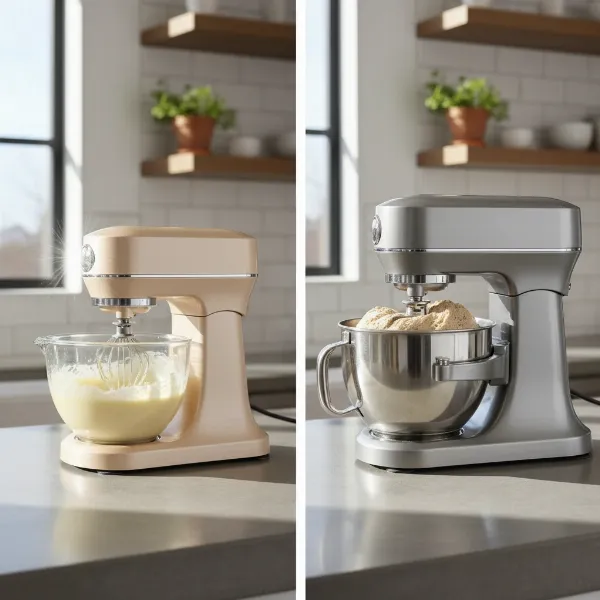 Two stand mixers, one AC and one DC motor type, illustrating differences for bakers.
“For serious home bakers or those frequently working with dense doughs, the consistent power and quieter operation of a DC motor can transform the baking process.” – Chef Antoine Dubois, Master Baker & Culinary Engineer
Identifying Motor Types in Stand Mixers
Unfortunately, the motor type isn’t always prominently displayed on a stand mixer’s product description. However, there are a few indicators and commonalities to help you determine which motor type a particular model might feature:
- Price and Class: Higher-end, professional, and commercial-grade stand mixers are more likely to incorporate DC motors due to their performance advantages.
- Weight: Mixers with DC motors often include an inverter to convert AC to DC, which can add to the appliance’s overall weight compared to similarly sized AC models.
- Specific Models/Brands: For example, older KitchenAid Professional 6000 HD, Pro Line 7 qt, and Commercial 8 qt models are known for their DC motors, whereas popular residential lines like the Artisan and Classic series traditionally use AC motors. Always check the manufacturer’s specifications or reliable reviews for the most accurate information on newer models, as motor types can evolve.
Making Your Choice: Factors to Consider
When weighing your options between an AC and DC motor stand mixer, consider these key factors:
- Your Baking Repertoire: Are you primarily mixing light batters, or are heavy bread doughs a weekly affair?
- Frequency of Use: How often will you be using your stand mixer, and for how long?
- Budget: DC motor mixers often come with a higher price tag.
- Noise Sensitivity: Do you prefer a quieter kitchen appliance?
- Desired Precision: Do you need extremely precise speed control for delicate tasks?
Your personal culinary journey will guide you to the motor type that makes the most sense for your kitchen.
Conclusion
The motor beneath your stand mixer’s hood—be it AC or DC—plays a fundamental role in its performance and your overall satisfaction. While AC motors offer a reliable and affordable solution for general home baking, DC motors stand out with their superior torque, consistent power, quieter operation, and enhanced efficiency, making them the preferred choice for avid bakers who tackle challenging doughs and large batches. Ultimately, understanding these distinctions empowers you to make an informed decision, ensuring your stand mixer is a powerful and dependable partner in all your culinary adventures.
What kind of baking projects are you hoping to conquer with your next stand mixer?
Frequently Asked Questions
What are the main advantages of a DC motor in a stand mixer?
DC motors in stand mixers offer higher torque, ensuring consistent speed even with heavy loads like bread dough, and typically operate much quieter than AC motors. They are also generally more energy-efficient and run cooler during prolonged use.
Are all KitchenAid stand mixers using DC motors?
No, not all KitchenAid stand mixers use DC motors. While some high-end professional and commercial models (like certain Pro Line and Commercial series mixers) are known for their powerful DC motors, many popular residential models, such as the Artisan and Classic series, feature AC motors. Always check the specific model’s specifications.
Can an AC motor stand mixer handle bread dough?
An AC motor stand mixer can handle lighter bread doughs and smaller batches. However, for very stiff, heavy doughs or large quantities, an AC motor may struggle, leading to straining, speed inconsistency, or potential overheating. DC motors are generally better suited for frequent bread making due to their higher torque.
Why do DC motor mixers often cost more?
DC motor mixers typically cost more due to the advanced technology involved, including the motor’s design and the necessary power inverter to convert household AC current to DC. This investment often translates to superior performance, quieter operation, and greater durability for heavy-duty tasks.
Do DC motor stand mixers require a special outlet?
No, stand mixers with DC motors do not require a special electrical outlet. Although they operate on direct current internally, they come equipped with an internal power inverter that seamlessly converts the alternating current from standard household outlets to direct current, so they can be plugged into any regular wall socket.