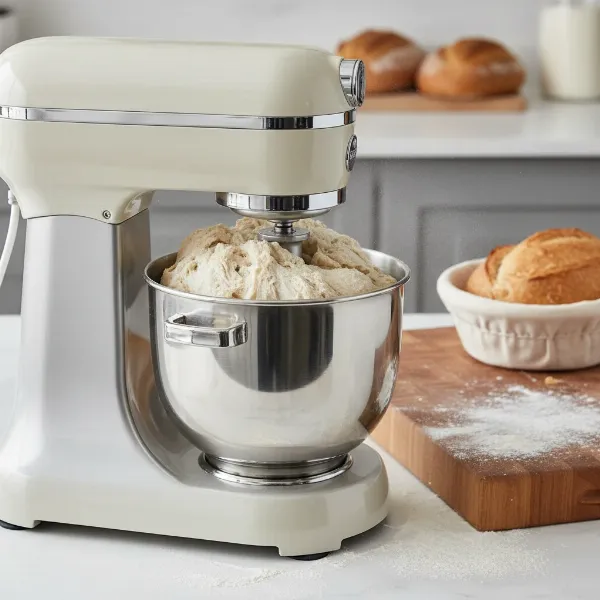
As someone who has spent over a decade intimately familiar with stand mixers, from classic models to the latest innovations, I can tell you that the secret to perfectly mixed cookie dough often lies in one crucial accessory: the scraper paddle. Achieving that ideal texture – uniform, consistent, and free from streaks of unmixed flour or butter – is a goal every baker shares. While a standard flat beater does a commendable job, a scraper paddle takes your cookie dough mixing to an entirely new level of efficiency and excellence. This guide will walk you through everything you need to know to select and use the ultimate tool for flawless cookies.
The Stand Mixer Paddle: Your Key to Cookie Perfection
Stand mixer paddles are the workhorses of the baking world, primarily designed for medium-thick mixtures like batters, frostings, and, of course, cookie dough. There are two main types you’ll encounter: the standard flat beater and the flex-edge, or scraper, paddle. Both attach to your stand mixer’s planetary action, ensuring ingredients are thoroughly incorporated.
The standard flat beater is a solid, often metal or coated, attachment that agitates ingredients within the bowl. It’s incredibly versatile and effective for general mixing tasks. However, its rigid design means ingredients often stick to the sides and bottom of the bowl, requiring you to constantly stop the mixer and manually scrape them down with a spatula.
Enter the scraper paddle. This innovative attachment looks much like a flat beater but with one or two flexible silicone edges. These edges continuously scrape the inside of your mixing bowl as the paddle rotates, virtually eliminating the need for manual intervention. For cookie dough, this means every speck of butter, sugar, and flour is consistently brought into the mixing action, resulting in a perfectly homogenized dough. This not only saves you time and effort but also prevents common baking mishaps like unevenly baked cookies caused by pockets of unmixed ingredients. The efficiency of a scraper paddle also helps prevent overmixing, a common pitfall that can lead to tough cookies, by ensuring rapid and complete incorporation of ingredients.
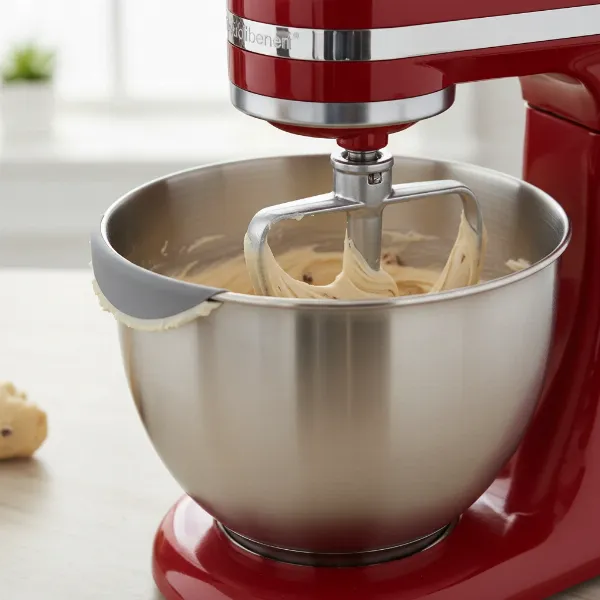 Flex-edge scraper paddle effectively mixing cookie dough in a stand mixer bowl.
How to Choose the Ideal Scraper Paddle for Your Baking Needs
Selecting the right scraper paddle goes beyond just finding one that fits your mixer. It’s about understanding your baking habits and prioritizing features that will genuinely enhance your experience.
Understanding Your Cookie Dough Requirements
|
Our Picks for the Best Stand mixer in 2026
As an Amazon Associate I earn from qualifying purchases.
|
||
| Num | Product | Action |
|---|---|---|
| 1 | Kitchen in the box Stand Mixer,3.2Qt Small Electric Food Mixer,6 Speeds Portable Lightweight Kitchen Mixer for Daily Use with Egg Whisk,Dough Hook,Flat Beater (Black) |

|
| 2 | Cuisinart SM-50G Precision Master 5.5-Quart 12-Speed Stand Mixer with Mixing Bowl, Chef's Whisk, Flat Mixing Paddle, Dough Hook, and Splash Guard with Pour Spout, Agave Green, Manual |
|
| 3 | Kitchen in the box Stand Mixer,3.2Qt Small Electric Food Mixer,6 Speeds Portable Lightweight Kitchen Mixer for Daily Use with Egg Whisk,Dough Hook,Flat Beater (Blue) |
|
| 4 | Cuisinart SMD-50CRM Precision Pro 5.5-Quart Digital Stand Mixer with 12-Speeds, 3 Preprogrammed Food Prep Settings, Mixing Bowl, Chef's Whisk, Flat Mixing Paddle, Dough Hook, and Splash Guard, Cream |
|
| 5 | 3-IN-1 Electric Stand Mixer, 6.5QT Bowl 660W 10-Speed Kitchen Mixer, Household Food Mixers include Dough Hook, Beater and Whisk, Bread Cake Mixer for Baking and Most Home Cooks, Red |
|
| 6 | Cuisinart SPI-50 Spiralizer, White |
|
| 7 | Cuisinart SMD-50BC Precision Pro 5.5-Quart Digital Stand Mixer With 12-Speeds, 3 Preprogrammed Food Prep Settings, Mixing Bowl, Whisk, Flat Mixing Paddle, Dough Hook, And Splash Guard, Silver Lining |
|
| 8 | Kitchen in the box Stand Mixer,3.2Qt Mini Electric Food Mixer,6 Speeds Portable Lightweight Kitchen Mixer for Daily Use with Egg Whisk,Dough Hook,Flat Beater (Green) |
|
| 9 | Cuisinart SMD-50GPH Precision Pro 5.5-Quart Digital Stand Mixer with 12-Speeds, 3 Preprogrammed Food Prep Settings, Mixing Bowl, Whisk, Flat Mixing Paddle, Dough Hook, and Splash Guard, Graphite |
|
| 10 | Cuisinart Stand Mixer, 12 Speeds, 5.5-Quart Mixing Bowl, Chef's Whisk, Flat Mixing Paddle, Dough Hook, and Splash Guard with Pour Spout, Silver Lining, SM-50BC, Silver Lining |
|
Consider the types of cookies you frequently bake. Are you often working with soft, sticky doughs like chocolate chip or oatmeal, or do you gravitate towards stiffer varieties such as shortbread? While scraper paddles excel with most doughs, extremely dense or chilled doughs can put more stress on the silicone edges, potentially shortening their lifespan. For frequent, high-volume bakers, durability will be a paramount consideration. If you’re an occasional baker, a standard, well-made flex-edge will likely serve you well for years.
Key Features to Look For
The design and material of your scraper paddle significantly impact its performance. Look for a paddle with high-quality silicone edges that are securely attached and pliable enough to hug the contours of your mixer bowl without being flimsy. The main body of the paddle should be robust, often made from coated metal or durable plastic, to withstand the demands of thick doughs.
Compatibility is non-negotiable. Scraper paddles are designed for specific stand mixer brands and models, often tailored to the bowl size and attachment mechanism. Always double-check that the paddle you choose is explicitly stated to be compatible with your mixer (e.g., KitchenAid 4.5-quart tilt-head, KitchenAid 6-quart bowl-lift). An incompatible paddle won’t scrape effectively and could even damage your mixer or bowl. The primary benefit of a scraper paddle is its scraping efficiency. Look for reviews that highlight how well the paddle reaches the sides and bottom of the bowl, ensuring no dry spots are left behind.
Brand Reputation and Value
While many stand mixers come with a standard flat beater, the best scraper paddles often come from reputable third-party manufacturers specializing in mixer accessories. Brands that focus on quality materials and precise fit for popular mixer models often offer superior performance. Think of it as an investment in your baking success. While a scraper paddle might cost more than a basic flat beater, the time saved and the consistent results often justify the expense. Always compare features, read reviews, and consider the long-term value over just the initial price.
A Head-to-Head: Standard Flat Beater vs. Flex-Edge Scraper Paddle
To truly appreciate the scraper paddle, let’s compare it directly with its more traditional counterpart, the standard flat beater.
| Feature | Standard Flat Beater (Paddle) | Flex-Edge Scraper Paddle |
|---|---|---|
| Design | Solid metal or coated plastic | Flat beater with flexible silicone edge(s) |
| Scraping Action | Requires manual scraping with a spatula | Automatically scrapes bowl sides while mixing |
| Efficiency | Good for general mixing, needs user intervention | Superior for smooth, consistent mixing, significant time-saving |
| Cookie Dough Suitability | Excellent for most cookie doughs, but less convenient | Ideal for most cookie doughs, especially softer and stickier varieties |
| Durability | Very high, typically long-lasting and robust | Silicone edge can wear or crack over time, particularly with very stiff dough or high heat (dishwasher) |
| Cost | Often included with mixer, replacements affordable | Generally higher than standard, but a worthwhile investment |
| Pros | Versatile, durable, effective for many batters, easy to clean | Eliminates manual scraping, ensures even mix, faster mixing, reduces risk of overmixing |
| Cons | Requires stopping/scraping, potential for unmixed spots, slower overall process | Silicone edge can degrade, may not be ideal for extremely stiff, cold doughs, can be more expensive |
“For bakers who make cookies regularly, a flex-edge paddle isn’t just a convenience; it’s a game-changer for consistency. It truly bridges the gap between manual scraping and automated perfection.” – Standmixerpro Admin, Expert Stand Mixer Technician
While the standard flat beater is a reliable workhorse, the flex-edge scraper paddle offers an undeniable advantage in terms of convenience and consistent results for cookie dough. The trade-off is often in the durability of the silicone edge, which may need replacement after extensive use with particularly stiff doughs. However, for the majority of cookie recipes, its benefits far outweigh this minor consideration.
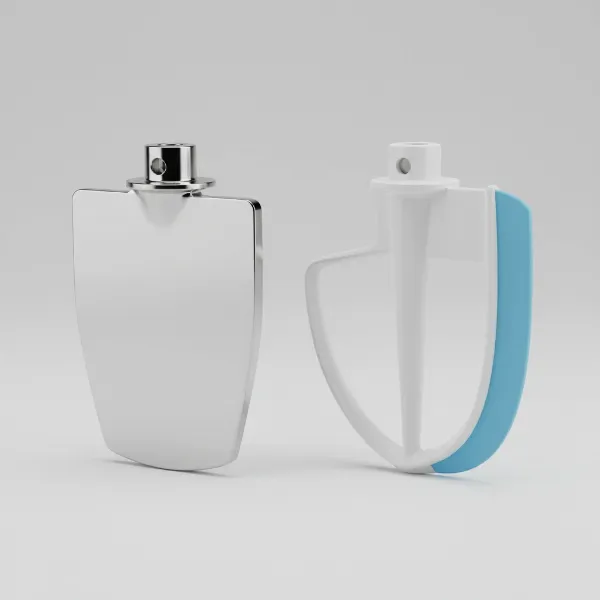 Side-by-side comparison of a standard flat beater and a flex-edge scraper paddle.
Mastering Your Mixer: Tips for Using and Maintaining Your Paddle
Even with the best scraper paddle, proper technique and care are essential to maximize its performance and longevity.
Optimal Mixing Techniques for Cookie Dough
- Proper Attachment Selection: For virtually all cookie doughs, always choose a paddle attachment – either your standard flat beater or, preferably, a flex-edge scraper paddle. The whisk is for aeration (meringues, whipped cream), and the dough hook is for kneading bread; neither is suitable for cookie dough.
- Speed Control: Resist the urge to crank your mixer to high speed. For creaming butter and sugar, and especially after adding dry ingredients, use low to medium speeds. High speeds can incorporate too much air, leading to a cake-like cookie texture, or worse, overmix the dough, resulting in tough cookies. Start slow to prevent a “flour shower” when adding dry ingredients.
- Ingredient Temperature: Ensure your butter is softened (room temperature, but not melted) and eggs are at room temperature. This allows for proper emulsification and aeration, crucial steps for tender, well-structured cookies.
- Scraping Best Practices: Even with a flex-edge paddle, it’s a good habit to give the bowl a quick manual scrape once or twice, especially after adding dry ingredients. This ensures that any stubborn pockets of flour or butter clinging just above or below the scraper edge are fully incorporated.
Cleaning and Longevity: Keeping Your Paddle in Top Shape
- Immediate Cleaning: As soon as you’re done mixing, remove the paddle and clean it promptly. Cookie dough, especially butter-based dough, can harden onto the paddle, making cleaning more difficult if left to dry.
- Dishwasher vs. Hand Wash: Check the manufacturer’s instructions for your specific paddle. Many coated metal paddles are dishwasher safe. However, for flex-edge paddles, hand washing is often recommended to preserve the integrity of the silicone edges, as harsh dishwasher detergents and high heat can accelerate their wear and tear.
- Inspecting for Wear: Regularly examine the silicone edges of your scraper paddle for any signs of cracking, tearing, or hardening. A worn edge will lose its ability to effectively scrape the bowl, diminishing its primary benefit. If you notice significant wear, it might be time for a replacement to maintain optimal performance.
Where to Find Your Perfect Scraper Paddle
Finding the ideal scraper paddle is easier than ever, thanks to a robust online market and well-stocked kitchenware stores.
Major online retailers like Amazon, Walmart, and the websites of stand mixer manufacturers (e.g., KitchenAid) are excellent places to start. They offer a wide selection of both branded and third-party flex-edge paddles, often with customer reviews that can provide valuable insights into fit and performance. Specialized kitchenware stores, both online and brick-and-mortar, can also be a great resource, offering expert advice and a curated selection of high-quality attachments.
When purchasing online, always:
- Verify Compatibility: Use the product’s compatibility chart to ensure it fits your specific mixer model.
- Read Customer Reviews: Pay attention to comments regarding fit, durability of the silicone, and overall mixing performance, especially concerning cookie dough.
- Check Return Policies: Ensure you can return the paddle if it doesn’t fit or meet your expectations.
The Ultimate Buying Guide: Expert Advice for Scraper Paddle Selection
Choosing the right scraper paddle for your stand mixer is a simple step that yields significant returns in your baking endeavors. As an experienced technician, my advice is to prioritize functionality and durability. Always opt for a flex-edge paddle that is specifically designed for your mixer model and bowl size. Look for high-quality silicone edges that are flexible yet robust.
Common mistakes to avoid:
- Using the wrong attachment: Never use a whisk or dough hook for cookie dough.
- Ignoring silicone wear: A worn-out silicone edge means your paddle is no longer scraping effectively.
- Overmixing: Even with a scraper paddle, pay attention to the dough’s consistency and stop mixing as soon as ingredients are just combined.
Investing in a quality scraper paddle is an investment in consistently perfect cookie dough. It simplifies your process, enhances ingredient incorporation, and ultimately contributes to superior baked goods every time.
Frequently Asked Questions
Can a standard flat beater mix cookie dough as well as a scraper paddle?
A standard flat beater can certainly mix cookie dough effectively, but it requires you to frequently stop the mixer and manually scrape down the sides of the bowl. A scraper paddle, with its flexible silicone edge, performs this scraping action continuously, ensuring more uniform mixing with less effort and time.
How do I know if a scraper paddle is compatible with my stand mixer?
Always check the product description for compatibility information. Scraper paddles are designed for specific mixer brands, bowl capacities (e.g., 4.5-quart, 5-quart, 6-quart), and mixer styles (e.g., tilt-head, bowl-lift). Refer to your mixer’s model number or user manual to ensure a perfect fit.
What are the signs that my scraper paddle’s silicone edge needs replacing?
Signs of a worn-out silicone edge include visible cracks, tears, hardening, or if the edge no longer makes consistent contact with the bowl, leaving unmixed streaks. A degraded edge will significantly reduce the paddle’s scraping efficiency and should be replaced for optimal performance.
Is a flex-edge paddle suitable for all types of cookie dough, including very stiff ones?
Flex-edge paddles are ideal for most cookie doughs, especially those that are softer or stickier. For very stiff or cold doughs, the silicone edge can experience more stress and potentially wear out faster. While still effective, some bakers might opt for a standard flat beater for extremely dense doughs to preserve the flex-edge paddle’s lifespan.