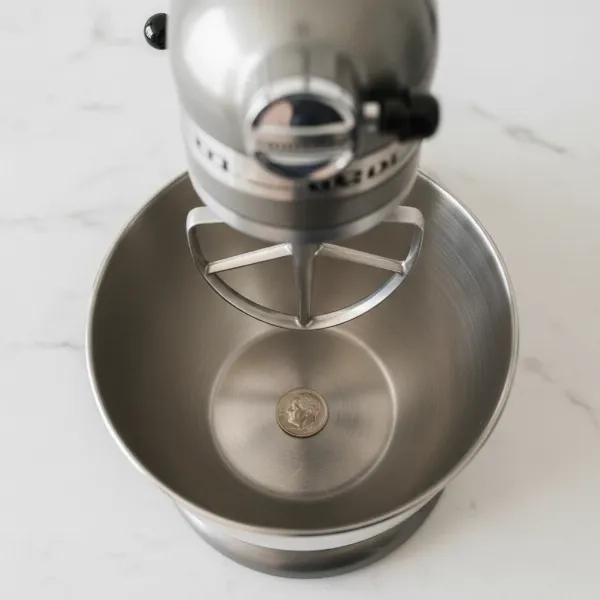
As an Admin of Standmixerpro.com and a technician with over a decade of deep experience in stand mixers, I understand the critical role these powerful machines play in any professional kitchen. From the smallest boutique bakery to the busiest restaurant, a reliable, heavy-duty stand mixer isn’t just a convenience—it’s the backbone of efficient operation. Whether you’re tirelessly kneading dense bread doughs, whipping large batches of delicate meringues, or consistently mixing heavy batters, your commercial mixer needs to be a workhorse that stands up to continuous demands. Choosing the right one is a significant investment that directly impacts productivity, product quality, and ultimately, your bottom line.
This comprehensive guide is designed to help you navigate the world of commercial-grade stand mixers, focusing on models built for heavy usage. We’ll explore essential features, compare top contenders, and provide expert advice to ensure you select the perfect mixer that meets your specific needs, budget, and high-volume demands.
Stand Mixer: Overview and Benefits
A commercial stand mixer is a robust kitchen appliance engineered for the rigorous demands of professional food service environments. Unlike their domestic counterparts, these machines are built with stronger motors, larger capacities, and durable construction materials to withstand continuous, heavy-duty operation. Their primary function is to mix, beat, whip, and knead ingredients efficiently and consistently, saving significant manual labor and time.
Historically, the concept of mechanical mixing dates back centuries, but modern stand mixers, particularly the planetary type, gained prominence in commercial kitchens with the advent of brands like Hobart in the early 20th century. Planetary mixers are named for their unique action: the agitator (beater, whisk, or dough hook) rotates on its axis while simultaneously revolving around the inside of the stationary bowl, mimicking the movement of planets orbiting the sun. This action ensures thorough and even mixing of ingredients. Another common type for heavy dough production is the spiral mixer, where a spiral-shaped agitator remains stationary while the bowl rotates around it, specifically designed to handle large quantities of dense dough without overworking it.
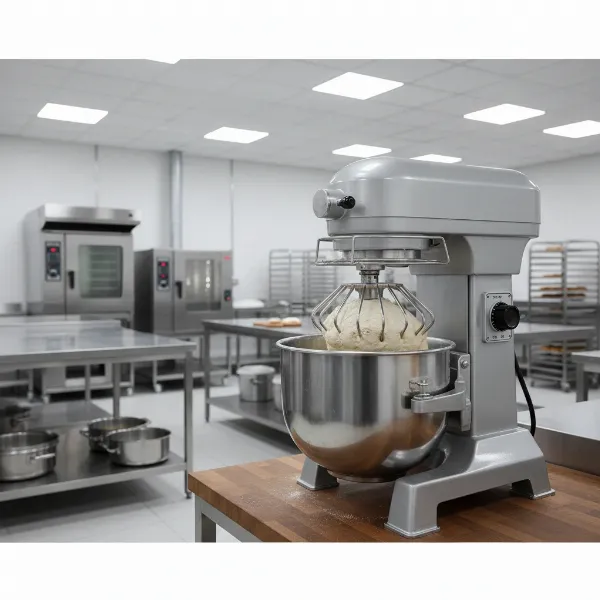 A large commercial planetary stand mixer with a stainless steel bowl, operating in a professional kitchen.
The benefits of integrating a commercial stand mixer into your operation are manifold. They dramatically increase efficiency by automating laborious mixing tasks, allowing staff to focus on other critical duties. Consistency in product quality is greatly enhanced as these machines deliver uniform mixing results batch after batch. Their power and robust build enable them to handle tough ingredients like stiff bread doughs that would quickly overwhelm a residential mixer, thereby expanding your menu capabilities.
Choosing the Right Commercial Stand Mixer for Heavy Usage
Selecting a commercial stand mixer requires careful consideration of several factors to ensure it aligns perfectly with your kitchen’s heavy usage demands.
Determining Your Usage Needs
|
Our Picks for the Best Stand mixer in 2026
As an Amazon Associate I earn from qualifying purchases.
|
||
| Num | Product | Action |
|---|---|---|
| 1 | Cuisinart SMD-50GPH Precision Pro 5.5-Quart Digital Stand Mixer with 12-Speeds, 3 Preprogrammed Food Prep Settings, Mixing Bowl, Whisk, Flat Mixing Paddle, Dough Hook, and Splash Guard, Graphite |

|
| 2 | Cuisinart SMD-50CRM Precision Pro 5.5-Quart Digital Stand Mixer with 12-Speeds, 3 Preprogrammed Food Prep Settings, Mixing Bowl, Chef's Whisk, Flat Mixing Paddle, Dough Hook, and Splash Guard, Cream |
|
| 3 | 3-IN-1 Electric Stand Mixer, 6.5QT Bowl 660W 10-Speed Kitchen Mixer, Household Food Mixers include Dough Hook, Beater and Whisk, Bread Cake Mixer for Baking and Most Home Cooks, Red |
|
| 4 | Kitchen in the box Stand Mixer,3.2Qt Mini Electric Food Mixer,6 Speeds Portable Lightweight Kitchen Mixer for Daily Use with Egg Whisk,Dough Hook,Flat Beater (Green) |
|
| 5 | Cuisinart SM-50G Precision Master 5.5-Quart 12-Speed Stand Mixer with Mixing Bowl, Chef's Whisk, Flat Mixing Paddle, Dough Hook, and Splash Guard with Pour Spout, Agave Green, Manual |
|
| 6 | Kitchen in the box Stand Mixer,3.2Qt Small Electric Food Mixer,6 Speeds Portable Lightweight Kitchen Mixer for Daily Use with Egg Whisk,Dough Hook,Flat Beater (Black) |
|
| 7 | Cuisinart Stand Mixer, 12 Speeds, 5.5-Quart Mixing Bowl, Chef's Whisk, Flat Mixing Paddle, Dough Hook, and Splash Guard with Pour Spout, Silver Lining, SM-50BC, Silver Lining |
|
| 8 | Cuisinart SMD-50BC Precision Pro 5.5-Quart Digital Stand Mixer With 12-Speeds, 3 Preprogrammed Food Prep Settings, Mixing Bowl, Whisk, Flat Mixing Paddle, Dough Hook, And Splash Guard, Silver Lining |
|
| 9 | Kitchen in the box Stand Mixer,3.2Qt Small Electric Food Mixer,6 Speeds Portable Lightweight Kitchen Mixer for Daily Use with Egg Whisk,Dough Hook,Flat Beater (Blue) |
|
| 10 | Cuisinart SPI-50 Spiralizer, White |
|
Before diving into specifications, accurately assess your operational needs. What will be the primary purpose of your commercial stand mixer? Are you running a pizzeria that kneads hundreds of pounds of high-hydration dough daily, a bakery focusing on delicate cakes and pastries, or a restaurant that needs a versatile machine for various tasks? Consider the frequency of use – will it be running continuously for hours, or in multiple heavy batches throughout the day? The quantity of ingredients per batch is also crucial. For instance, mixing large volumes of dense dough for bagels will require a more powerful and higher-capacity mixer than whipping multiple batches of meringue. Understanding these specifics will guide your decisions on capacity, motor strength, and type.
Capacity and Power
The capacity of a commercial stand mixer is typically measured in quarts (qt) and directly correlates with the volume of ingredients it can handle per batch. For heavy usage, mixers generally range from 20 quarts up to 80 quarts or more, though “stand mixers” often refer to those that are floor-standing or large countertop units up to around 60 quarts. A small restaurant might find a 5 to 20 qt planetary mixer sufficient, while a busy pizzeria or bakery will likely need 40 qt or larger, or even a dedicated spiral mixer for very large-scale dough production. Keep in mind that different ingredients and their absorption ratios (water content divided by flour content) will affect maximum batch size; denser doughs with lower absorption ratios often require smaller batch sizes or more powerful motors.
Motor power, usually expressed in horsepower (HP) or watts, is paramount for heavy usage. Mixers for light-duty tasks might have 1/3 HP, whereas heavy-duty, continuous-use machines can range from 1 to 5 HP. Higher horsepower is essential for effectively mixing and kneading thick doughs like those for bread, pizza, or bagels. Gear-driven motors are generally preferred over belt-driven systems in commercial settings for their durability and consistent power delivery, especially when tackling stiff mixtures.
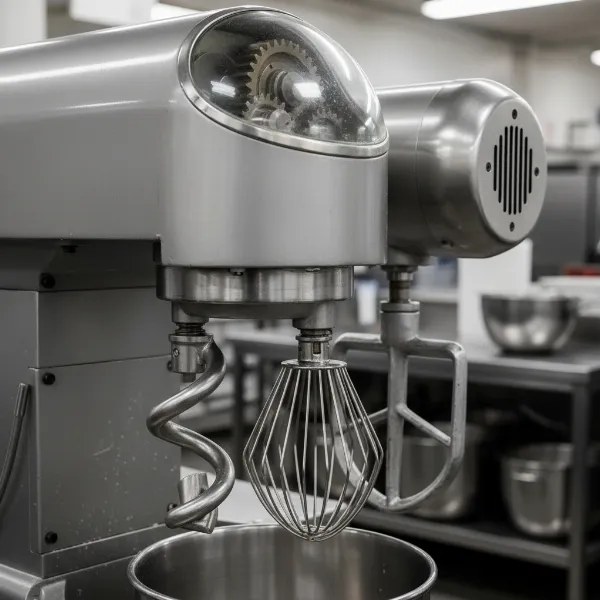 Close-up of commercial stand mixer attachments and powerful gear-driven motor for heavy use.
Essential Features
- Mixing Speeds: A good commercial mixer for heavy usage should offer multiple speed settings. This versatility allows you to gently fold delicate ingredients, cream butter and sugar, or vigorously knead dense doughs. Some advanced models offer infinitely variable speeds for precise control.
- Attachments: Commercial stand mixers typically come with a standard set of agitators: a dough hook for kneading heavy doughs, a wire whisk (or whip) for aerating light ingredients like egg whites and cream, and a flat beater (or paddle) for general mixing tasks like batters and icings. Ensure these attachments are robust and made from durable materials like stainless steel or aluminum.
- Dough Kneading Functionality: If bread or pizza is a core product, prioritize mixers with strong dough kneading capabilities. Spiral mixers excel here, but powerful planetary mixers with robust dough hooks can also perform exceptionally well for various dough types.
- Timer Function: A built-in timer is a practical feature, allowing for precise mixing durations and freeing up staff for other tasks. This helps ensure consistent results and prevents over or under-mixing.
- Safety Guards: Essential for any commercial kitchen, safety guards protect operators from moving parts and prevent foreign objects from falling into the mixing bowl. Look for models with interlock systems that prevent operation if the guard is not properly in place.
Brand and Price Considerations
Investing in a reputable brand is crucial for commercial equipment. Brands like Hobart, KitchenAid Commercial, and Waring Commercial are widely recognized for their durability, performance, and reliability in demanding environments. While these come with a higher upfront cost, they typically offer superior longevity, better warranty support, and readily available parts, making them more economical in the long run. When comparing prices, consider the total cost of ownership, including potential maintenance and energy consumption, not just the initial purchase price. A higher-priced model from a trusted brand may save you money and headaches over years of heavy use.
Comparison of Popular Commercial Stand Mixer Models
To help you make an informed decision, here’s a comparison of five prominent commercial-grade mixers suitable for heavy usage.
| Feature | Hobart HL200 Planetary Mixer | KitchenAid KSM8990CU 8-Quart Commercial | Waring Commercial Planetary WSM7L1 (7-Qt) | Towallmark Commercial Food Mixer (15-Qt) | KitchenWare Station M-B7 (7-Qt) |
|---|---|---|---|---|---|
| Type | Planetary | Planetary | Planetary | Planetary | Planetary |
| Capacity | 20 Quarts | 8 Quarts | 7 Quarts | 15 Quarts | 7 Quarts |
| Motor Power | Varies (often 1/2 – 1 HP commercial) | 1.3 HP (approx. 970W) | 1/2 HP (approx. 370W) | 600W | 620W |
| Speed Settings | 3 fixed speeds + Stir speed (gear-driven) | 10 speeds (gear-driven) | 3 fixed speeds | 3 fixed speeds | 20 speeds |
| Notable Features | PLUS System (VFD, overheat protection, reinforced planetary shaft), gear-driven, durable. | Bowl-lift design, power hub for attachments, all-metal construction. | Die-cast construction, heavy-duty motor, NSF certified. | Safety guard, stainless steel bowl, adjustable speeds. | Anodized aluminum casing, high resistance to corrosion. |
| Best Use Case | High-volume bakeries, delis, large restaurants needing extreme durability. | Medium-volume bakeries, catering, demanding home bakeries. | Medium-volume commercial kitchens, consistent mixing tasks. | Mid-sized bakeries, restaurants, schools. | Small to medium-sized commercial operations, bakeries. |
| Pros | Extremely durable, reliable, long lifespan, excellent for heavy doughs. | Robust motor, versatile, wide range of attachments. | Compact, powerful for its size, good for consistent use. | Good capacity for its price point, solid for heavy use. | High number of speed settings, corrosion resistance. |
| Cons | Higher price, larger footprint, can be overkill for smaller operations. | Can still be challenged by continuous extremely stiff dough compared to industrial giants. | Smaller capacity than others for truly heavy usage. | Less known brand, potential for less aftermarket support. | May be less heavy-duty than Hobart/KitchenAid for constant, extreme demands. |
Note: Power specifications can vary slightly by specific model variant and region. Prices are subject to market fluctuations.
Tips for Using and Maintaining Your Commercial Stand Mixer
Maximizing the lifespan and performance of your commercial stand mixer, especially under heavy usage, hinges on proper operation and diligent maintenance.
Safe Operation of Your Commercial Stand Mixer
Always begin by thoroughly reading the manufacturer’s instruction manual. Ensure your mixer is placed on a stable, level, and sturdy surface, capable of supporting its weight and absorbing vibrations during operation. Verify that the power cord is in perfect condition, free from damage, and properly grounded. Never operate the mixer with a damaged cord or if it shows any signs of malfunction. It’s crucial to always use the safety guard provided, and ensure it’s correctly engaged before starting the machine. This protects against accidental contact with moving parts and keeps ingredients contained. Never reach into the bowl or attempt to remove attachments while the mixer is running. Teach all staff members who will operate the mixer these safety protocols to prevent accidents.
Cleaning and Maintenance of Your Commercial Stand Mixer
Consistent cleaning after each use is non-negotiable for hygiene and longevity. Disconnect the mixer from the power supply before cleaning. Remove the bowl and all attachments, washing them thoroughly with warm, soapy water, sanitizing them, and then drying them completely to prevent rust or corrosion. Wipe down the mixer body with a damp cloth, paying attention to crevices where flour or batter might accumulate. Avoid using abrasive cleaners or submerging the motor head in water.
Regular preventative maintenance is key to extending the life of your heavy-duty mixer. Check the attachments and shafts for any signs of wear or damage. Periodically inspect the planetary head (if applicable) and lubricate moving parts according to the manufacturer’s guidelines. For gear-driven mixers, ensure the gears are functioning smoothly without unusual noises. Schedule professional servicing annually or bi-annually, depending on usage intensity, to address any internal wear and tear before it leads to a breakdown. Proper storage in a clean, dry area when not in use will also contribute to its durability.
Where to Purchase Commercial Stand Mixers
When acquiring a commercial stand mixer for heavy usage, it’s vital to purchase from reputable sources that can offer genuine products, warranties, and after-sales support.
- Authorized Restaurant Equipment Suppliers: These dedicated stores, whether brick-and-mortar or online, specialize in commercial-grade kitchen equipment. They often have knowledgeable staff who can provide expert advice, offer a wide selection of brands and models, and assist with installation and servicing. Examples include KaTom Restaurant Supply, WebstaurantStore, or local restaurant supply dealers.
- Manufacturer Websites and Direct Sales: Brands like Hobart and KitchenAid Commercial often sell directly through their official websites or authorized dealer networks, ensuring authenticity and direct manufacturer warranty support.
- Online Marketplaces (with caution): While large online retailers like Amazon may carry commercial mixers, it’s crucial to ensure the seller is an authorized dealer and that the product comes with a full manufacturer’s warranty valid for commercial use. Always verify product specifications and reviews carefully.
When buying online, always scrutinize the product description for commercial-grade certifications (like NSF), warranty details, return policies, and shipping information for large appliances. Confirm that the voltage and plug type are compatible with your facility’s electrical system.
Buying Guide: Expert Insights for Your Stand Mixer Choice
Choosing the ideal commercial stand mixer for heavy usage boils down to a strategic blend of understanding your specific operational demands and the mixer’s capabilities. Based on my decade of experience, here are the crucial takeaways:
Firstly, never compromise on power and durability when anticipating heavy use. A mixer with a robust motor (higher HP/wattage) and gear-driven transmission made of quality materials like stainless steel or alloy steel will outlast and outperform lighter-duty alternatives. Secondly, match capacity to your batch size and frequency. Oversizing might be inefficient, but undersizing will lead to motor strain and frequent breakdowns. Aim for a mixer that can comfortably handle your largest, densest batches without being constantly pushed to its limit.
Consider the “Absorption Ratio”—the ratio of water to flour in your dough. Lower ratios mean stiffer doughs, demanding more power. If you’re frequently making low-hydration doughs, a spiral mixer or a planetary mixer with a very high horsepower is non-negotiable. Don’t overlook safety features like interlocked safety guards; they protect your staff and ensure smooth operations, which is critical in a fast-paced kitchen. Finally, invest in a reputable brand. The initial cost may be higher, but the reliability, readily available parts, and manufacturer support will save you money and headaches in the long term.
“For true heavy usage in a commercial setting, a mixer isn’t just a tool; it’s a partner. Prioritize rugged construction and a powerful, gear-driven motor. Skimping here only costs more down the line in repairs and downtime.” – Admin, Standmixerpro.com
What challenging recipes or high-volume tasks are you hoping your new commercial stand mixer will conquer?
Frequently Asked Questions
What is the difference between a planetary mixer and a spiral mixer for commercial use?
Planetary mixers are versatile, with an agitator rotating on its own axis while orbiting the bowl, suitable for various tasks including whipping, beating, and kneading medium to heavy doughs. Spiral mixers, however, feature a stationary spiral hook and a rotating bowl, specifically designed to efficiently knead large, heavy, and stiff doughs like pizza and bread without overworking them, making them ideal for high-volume bakeries.
How much horsepower do I need for a commercial stand mixer for heavy dough?
For heavy doughs and continuous commercial use, a stand mixer should ideally have at least 1 HP (horsepower), with many robust models offering 2 HP or more. Mixers with 1/2 to 3/4 HP might handle some heavy doughs in smaller batches, but for consistent, high-volume production, greater power ensures longevity and efficiency, especially for low-absorption-ratio doughs.
Can I use a home stand mixer for light commercial use?
While some heavy-duty home stand mixers (like certain KitchenAid Pro Line models) are robust, they are generally not designed for the continuous, heavy usage of a commercial kitchen. Commercial-grade mixers feature stronger motors, more durable components, larger capacities, and often better safety certifications (like NSF) required for professional environments, making them a necessity for any sustained commercial operation.
What does “gear-driven” mean for a commercial mixer?
“Gear-driven” indicates that the mixer’s motor directly powers the attachments through a system of gears, rather than belts. This design is known for its superior durability, efficiency, and consistent power delivery, especially when mixing dense ingredients or large batches. Gear-driven mixers are generally considered more robust and reliable for heavy commercial usage compared to belt-driven models, which can be prone to belt stretching or breakage over time.
How important is NSF certification for a commercial mixer?
NSF (National Sanitation Foundation) certification is highly important for commercial mixers as it signifies that the equipment meets strict public health and safety standards. NSF-certified mixers are designed for easy cleaning, durability, and prevention of food contamination, which is crucial for compliance with health regulations in professional food service establishments.