As an admin at Standmixerpro.com and a technician with over a decade of hands-on experience with stand mixers, from vintage models to the latest innovations, I know firsthand the joy—and occasional struggle—these powerful kitchen workhorses bring. One common challenge I hear from home bakers and culinary enthusiasts alike is the sheer weight of a stand mixer. Moving these heavy appliances across your countertop can be a real workout, leading to scratched surfaces, strained backs, and a general reluctance to pull out your beloved mixer as often as you’d like. This article dives deep into the world of stand mixer slide mats and glides, offering expert advice to help you choose the perfect solution to protect your counters and make your kitchen experience smoother than ever.
Why You Need a Slide Mat for Your Heavy Stand Mixer
Stand mixers are indispensable tools in any kitchen, but their robust construction often comes with considerable weight. A high-quality stand mixer can weigh upwards of 20-30 pounds, making it cumbersome to reposition for use or storage. This is where slide mats and glides become invaluable, transforming a wrestling match with your appliance into a simple, graceful movement.
Imagine effortlessly pulling your mixer from beneath an upper cabinet or tucking it away after a baking session without leaving unsightly scratches on your precious granite, quartz, or laminate countertops. These accessories act as a crucial barrier, preventing direct friction between the mixer’s rubber feet and the counter surface. Beyond protection, they significantly reduce the physical strain of lifting and dragging, making your baking routine more enjoyable and accessible. By allowing easy movement, they also enhance your kitchen workflow, ensuring your mixer is always precisely where you need it, when you need it. Crucially, a well-designed slide solution also maintains the mixer’s stability during operation, preventing it from “walking” across the counter even during heavy-duty tasks like kneading dough.
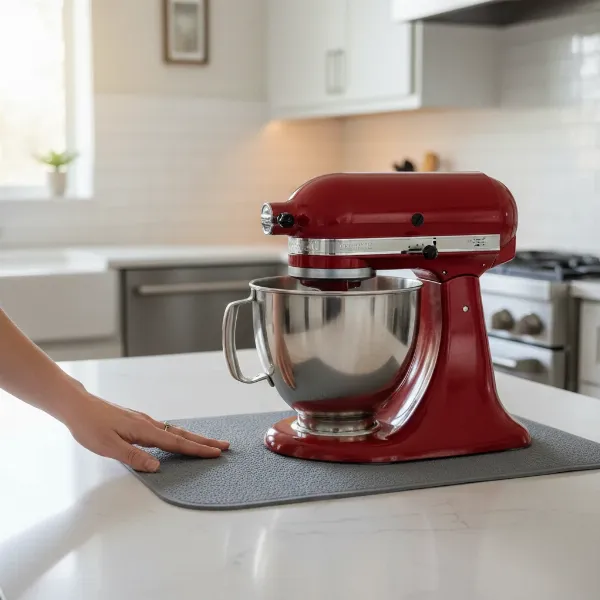 Stand mixer on a slide mat protecting a kitchen countertop from scratches and heavy lifting.
Types of Stand Mixer Slide Solutions
When it comes to making your heavy stand mixer more mobile, you’ll find a few effective categories of solutions, each with its own benefits and considerations. Understanding these options will help you decide which best fits your mixer, your kitchen, and your personal preferences.
Adhesive Appliance Glides (Feet)
These are small, typically round, adhesive pads designed to stick directly onto the existing rubber feet of your stand mixer. They often feature an ultra-low friction material on their sliding surface, such as PTFE (commonly known as Teflon). Once attached, these glides transform your mixer’s stationary grip into a smooth, effortless slide across various countertop materials.
- Description: Small, self-adhesive discs or squares that attach to the bottom of your appliance’s feet.
- Materials: Frequently made with an ultra-low friction plastic (like PTFE) on one side and a strong adhesive on the other.
- Pros:
- Discreet: They are largely invisible once installed, maintaining your mixer’s original aesthetic.
- Cost-Effective: Often sold in multi-packs, making them an economical choice.
- Easy Installation: Simply peel and stick to a clean surface.
- Multi-directional Movement: Allow for fluid movement in any direction, not just back and forth.
- Countertop Protection: Create a protective barrier, preventing scratches and scuffs.
- Enhanced Airflow: Some models, like GorillaGlide, can slightly elevate the appliance, increasing airflow and preventing moisture buildup.
- Vibration Reduction: A cushioning pad in certain glides can help reduce mixer vibration during use.
- Cons:
- Permanent Attachment: The adhesive is strong, so removal can be challenging and may leave residue or damage the original rubber feet if not done carefully.
- Might Affect Stability: If not applied evenly or if the mixer is prone to “walking,” some users might find slightly reduced stability compared to the original rubber feet.
|
Our Picks for the Best Stand mixer in 2026
As an Amazon Associate I earn from qualifying purchases.
|
||
| Num | Product | Action |
|---|---|---|
| 1 | Kitchen in the box Stand Mixer,3.2Qt Small Electric Food Mixer,6 Speeds Portable Lightweight Kitchen Mixer for Daily Use with Egg Whisk,Dough Hook,Flat Beater (Black) |

|
| 2 | Cuisinart SMD-50GPH Precision Pro 5.5-Quart Digital Stand Mixer with 12-Speeds, 3 Preprogrammed Food Prep Settings, Mixing Bowl, Whisk, Flat Mixing Paddle, Dough Hook, and Splash Guard, Graphite |
|
| 3 | Cuisinart SM-50G Precision Master 5.5-Quart 12-Speed Stand Mixer with Mixing Bowl, Chef's Whisk, Flat Mixing Paddle, Dough Hook, and Splash Guard with Pour Spout, Agave Green, Manual |
|
| 4 | Cuisinart SMD-50CRM Precision Pro 5.5-Quart Digital Stand Mixer with 12-Speeds, 3 Preprogrammed Food Prep Settings, Mixing Bowl, Chef's Whisk, Flat Mixing Paddle, Dough Hook, and Splash Guard, Cream |
|
| 5 | 3-IN-1 Electric Stand Mixer, 6.5QT Bowl 660W 10-Speed Kitchen Mixer, Household Food Mixers include Dough Hook, Beater and Whisk, Bread Cake Mixer for Baking and Most Home Cooks, Red |
|
| 6 | Cuisinart SPI-50 Spiralizer, White |
|
| 7 | Cuisinart Stand Mixer, 12 Speeds, 5.5-Quart Mixing Bowl, Chef's Whisk, Flat Mixing Paddle, Dough Hook, and Splash Guard with Pour Spout, Silver Lining, SM-50BC, Silver Lining |
|
| 8 | Cuisinart SMD-50BC Precision Pro 5.5-Quart Digital Stand Mixer With 12-Speeds, 3 Preprogrammed Food Prep Settings, Mixing Bowl, Whisk, Flat Mixing Paddle, Dough Hook, And Splash Guard, Silver Lining |
|
| 9 | Kitchen in the box Stand Mixer,3.2Qt Mini Electric Food Mixer,6 Speeds Portable Lightweight Kitchen Mixer for Daily Use with Egg Whisk,Dough Hook,Flat Beater (Green) |
|
| 10 | Kitchen in the box Stand Mixer,3.2Qt Small Electric Food Mixer,6 Speeds Portable Lightweight Kitchen Mixer for Daily Use with Egg Whisk,Dough Hook,Flat Beater (Blue) |
|
Stand Mixer Sliding Mats/Pads
Sliding mats are larger, often rectangular or custom-shaped pads that your stand mixer sits directly upon. These mats typically feature a dual-surface design: a non-slip top layer to securely hold the mixer in place during operation, and a smooth, low-friction bottom layer that enables easy gliding across the countertop. Many models also include a small handle or tab, making it even simpler to pull the mixer forward.
- Description: A larger mat, often custom-sized for stand mixers, which the appliance rests on.
- Materials: The top surface is usually a non-slip material like rubber, silicone, or a grippy fabric. The bottom surface is smooth and low-friction, often made from felt, various plastics, or a slick fabric.
- Pros:
- Easy to Clean: Most mats are wipeable, and some fabric-based options might even be machine washable.
- No Permanent Attachment: The mixer simply sits on the mat, allowing for easy removal of the mat for cleaning or when not needed.
- Can Have Handles: Many designs incorporate an unobtrusive handle for effortless pulling.
- Reversible Options: Some mats offer different textures or patterns on either side.
- Versatile Sizing: Many come in standard sizes that fit popular mixers, or some can even be cut to custom dimensions.
- Comprehensive Countertop Protection: Offers a larger area of protection underneath the appliance.
- Cons:
- Less Discreet: The mat is visible under the mixer, which might not appeal to everyone.
- Takes Up More Counter Space: While slim, the mat’s footprint is larger than just the mixer’s feet.
- Potential for Mixer “Dancing”: If the top surface isn’t sufficiently grippy, or if the mat itself is too lightweight, the mixer could potentially shift during vigorous mixing tasks.
DIY Solutions
For those who enjoy a bit of ingenuity or are looking for a highly budget-friendly option, several DIY methods can achieve similar results. These often involve repurposing common household items or using readily available materials to create a custom sliding solution.
- Felt Pads: Larger felt furniture pads (1.25 inches or more in diameter) can be adhered to the bottom of the mixer’s feet. These provide a softer, quieter slide compared to bare rubber feet.
- Silicone Cutting Mats: A common hack involves using a flexible silicone cutting mat. Place the mixer on the rough side (up) and the shiny side (down) on the counter. The mat can be trimmed to fit the mixer’s base.
- Wooden Boards with Glides: A wooden cutting board fitted with adhesive Teflon or furniture glides on its underside can serve as a sturdy sliding platform.
- Pros:
- Highly Customizable: You can tailor the size, shape, and materials to your specific needs.
- Budget-Friendly: Often utilizes materials you already own or can purchase cheaply.
- Sense of Accomplishment: There’s satisfaction in creating a functional solution yourself.
- Cons:
- Variable Effectiveness: Results can differ widely depending on materials and execution.
- Potential for Stability Issues: DIY solutions might not offer the same level of stability or vibration dampening as purpose-built products.
- May Lack Professional Finish: The aesthetic might not be as polished as commercial products.
- Durability Concerns: Some DIY materials may wear out faster or degrade with exposure to moisture or heat.
Key Features to Look for in a Stand Mixer Slide Mat
Choosing the best slide mat or glides for your stand mixer involves more than just picking the first option you see. Several critical features contribute to the effectiveness, durability, and user experience of these essential kitchen accessories.
Material and Durability
The materials used are paramount to both performance and longevity. For the sliding surface, look for ultra-low friction materials like PTFE (Teflon) or dense felt that allow for smooth, quiet movement without scratching. If opting for a mat, the bottom should be equally slick. The top surface of a sliding mat, where your mixer rests, needs to be non-slip—typically made of high-grip rubber or silicone—to ensure the mixer stays securely in place during vigorous mixing tasks. The overall construction should feel robust and capable of supporting the heavy weight of your mixer over time, resisting tears, deforming, or losing its low-friction properties.
Size and Fit
Accuracy in sizing is crucial. For adhesive glides, ensure they are large enough to cover the mixer’s existing feet effectively. For sliding mats, measure the footprint of your stand mixer to select a mat that is neither too small (leading to instability) nor unnecessarily large (wasting valuable counter space). Some mats offer the flexibility to be trimmed to a custom size, which can be a significant advantage for uniquely shaped appliances or specific counter layouts. Always consider the slight increase in height the solution will add, ensuring it still clears upper cabinets if stored beneath them.
Ease of Cleaning
Kitchen environments are prone to spills and splashes, so your slide solution should be easy to maintain. Smooth, non-porous surfaces on both glides and mats are ideal as they can be quickly wiped clean with a damp cloth. Fabric-based mats should ideally be machine washable for thorough cleaning, though many are designed for simple spot cleaning. An odorless material is also a plus, as it won’t transfer any unwanted smells to your kitchen or your mixer.
Stability During Use
This is perhaps the most critical feature. While the primary goal is easy movement, the mixer must remain rock-solid stable when in operation. The non-slip top surface of a mat is essential here, preventing any “walking” or unwanted movement of the mixer during kneading or high-speed whipping. For adhesive glides, ensure they are applied evenly to all feet to maintain the mixer’s balance and prevent wobbling. “The best slide solution shouldn’t just make moving your mixer easier; it should also make working with it safer and more stable,” notes our lead technician.
Additional Features
Beyond the basics, some slide solutions offer extra functionalities that enhance convenience:
- Handles (for mats): A small, integrated handle or tab on the front of a sliding mat provides an ergonomic grip for pulling the mixer forward, further reducing strain.
- Vibration Reduction: Certain appliance glides incorporate a cushioning pad that helps absorb vibrations, leading to quieter operation and potentially extending the life of your mixer.
- Countertop Protection: While inherent to all solutions, some glides specifically mention preventing moisture buildup by slightly elevating the appliance, adding an extra layer of counter preservation.
- Warranty: A product-backed warranty, such as the 5-year replacement warranty offered by some brands like GorillaGlide, indicates confidence in the product’s durability and offers peace of mind.
Top Picks: Popular Slide Mats and Glides for Stand Mixers
Based on effectiveness, user feedback, and innovative design, certain products stand out for their ability to make moving heavy stand mixers a breeze. Here’s a comparative look at some popular options:
| Feature | GorillaGlide Appliance Sliders | Owowong Mover Slider Mat Pad | Cooks Innovation Glide Mats |
|---|---|---|---|
| Type | Adhesive Glides (stick-on feet) | Full Sliding Mat | Full Sliding Mat |
| Movement | Ultra-low friction, smooth, quiet, multi-directional sliding. | Smooth gliding bottom, non-slip top. | Smooth gliding bottom, non-slip top. |
| Materials | Ultra-low friction plastic (e.g., PTFE), heavy-duty adhesive. | Soft, padded, non-slip rubber top; smooth gliding bottom. | Various patterns, smooth underside. |
| Key Benefits | Discreet, increases airflow, reduces vibration, 5-year warranty. | Padded, integrated handle, odorless, easy to clean. | Versatile, prevents scratches, can be cut to size. |
| Installation | Peel and stick to appliance feet. | Place mixer on top. | Place mixer on top; can be cut to fit. |
| Countertop Care | Protects from scratches, prevents moisture buildup. | Protects from scratches. | Protects from scratches and scuffs. |
| Versatility | Suitable for various small appliances, not just mixers. | Primarily designed for stand mixers (e.g., KitchenAid). | Good for mixers, coffee makers, toasters, etc. |
| Cost | Generally affordable (sold in packs). | Highly affordable (e.g., around $10). | Affordable (e.g., 3-pc set for around $32). |
GorillaGlide Appliance Sliders: These small, adhesive sliders are a fantastic option if you prefer a nearly invisible solution. Made with a high-durability, ultra-low friction base, they allow heavy appliances to glide smoothly and quietly. An added benefit is the slight elevation they provide, which can increase airflow and protect counters from moisture. Their 5-year warranty offers significant assurance of quality.
Owowong Mover Slider Mat Pad: This mat is praised for its practicality and affordability. It features a soft, slightly padded surface with non-slip rubber on top to keep your mixer stable, while the underside is designed for smooth gliding. The unobtrusive handle is a thoughtful addition, making it exceptionally easy to pull your mixer out when needed. It’s also odorless and simple to clean.
Cooks Innovation Glide Mats: These versatile mats are another excellent choice, particularly if you appreciate aesthetic options as they come in various patterns. They effectively prevent scratching and scuffing, ensuring your counters stay pristine. The ability to cut them to size means they can be perfectly tailored to your mixer or other appliances, offering great flexibility.
Tips for Using and Maintaining Your Mixer Slide Solution
Once you’ve invested in a slide mat or set of glides for your stand mixer, proper usage and maintenance will ensure its longevity and continued effectiveness. These simple tips will help you get the most out of your purchase and keep your kitchen running smoothly.
How to Use Your Stand Mixer Slide Solution Safely
- Proper Placement: For mats, always ensure your stand mixer is centered and fully resting on the non-slip top surface. For glides, make sure they are securely attached to all of the mixer’s feet.
- Stable Surface: Always place your mixer and its slide solution on a flat, stable countertop. Uneven surfaces can compromise stability and the effectiveness of the glide.
- Gentle Movement: While these solutions are designed to make movement easy, avoid yanking or sudden, forceful pushes. A gentle pull or push is usually sufficient.
- Check for Obstructions: Before sliding, quickly check for any crumbs, sugar, or liquid under the mat or glides that could impede movement or scratch your counter.
- Monitor Stability During Use: Even with a non-slip top, occasionally check that your mixer isn’t shifting excessively during heavy mixing. If it does, reposition it or consider a different solution.
Cleaning and Care for Your Stand Mixer Slide Solution
- Regular Wiping: After each use, or at least regularly, wipe down the mat or the visible parts of the glides with a damp cloth to remove any dust, flour, or spills.
- Deep Cleaning Mats: If your mat is made of washable fabric, follow the manufacturer’s instructions for machine washing. For rubber or silicone mats, a gentle scrub with soap and water can remove stubborn residue. Ensure it’s completely dry before placing the mixer back on it.
- Inspect Glides: Periodically check adhesive glides for any signs of wear, loosening, or damage. If a glide is compromised, it may need to be replaced to maintain smooth movement and countertop protection.
- Avoid Harsh Chemicals: Stick to mild cleaning agents. Harsh chemicals can degrade the materials of your mat or glides, reducing their effectiveness and lifespan.
- Dry Storage: Store your mixer and its slide solution in a dry environment to prevent moisture buildup, which can affect adhesive glides or lead to mold on fabric mats.
Ensuring Mixer Stability During Operation
“The primary job of a mixer’s original rubber feet is stability, so any sliding solution must prioritize maintaining that during use,” explains our expert. If using a mat, ensure the top surface is genuinely non-slip. For adhesive glides, verify they are applied uniformly and don’t introduce any wobbling. If your mixer still tends to “walk” during heavy-duty tasks, you might consider placing an anti-fatigue mat or a specialized anti-vibration pad under the sliding mat for added grip and dampening, or opting for a different type of slide solution altogether.
Buying Guide: Making the Right Choice for Your Kitchen
Navigating the options for stand mixer slide solutions can seem daunting, but by focusing on a few key factors, you can confidently select the perfect accessory for your culinary space.
First, consider your mixer’s weight and size. Larger, heavier mixers will benefit most from robust solutions designed for substantial loads, ensuring both ease of movement and stability during operation. Measure the footprint of your mixer to guarantee a perfect fit, whether you choose individual glides or a full mat.
Next, evaluate your countertop material. Delicate surfaces like polished wood or certain laminates might benefit from the added protection of a full sliding mat, which covers a larger area. For more durable surfaces like granite or quartz, adhesive glides can be a discreet and effective choice, offering targeted protection at the contact points.
Prioritize ease of movement versus discreetness based on your personal preference. If you prefer a solution that is virtually invisible, adhesive glides are ideal. If you value maximum ease of movement, perhaps with an integrated handle, and don’t mind a visible accessory, a sliding mat might be more suitable.
Finally, set a realistic budget. There are excellent options available across various price points, from affordable DIY solutions to premium, feature-rich commercial products. Remember that investing a little more in a durable, high-quality slide solution can save you from costly countertop repairs or potential injuries in the long run.
“Choosing the right slide mat is about harmonizing functionality with your kitchen’s aesthetic and your personal baking habits. It’s an investment in both convenience and countertop longevity.” – Standmixerpro.com Admin, Senior Stand Mixer Technician
Conclusion
Heavy stand mixers are a joy to use, but their weight can be a significant drawback when it comes to positioning them on your countertop. Thankfully, a wide array of slide mats and glides offers elegant solutions to this common kitchen dilemma. Whether you opt for discreet adhesive glides that seamlessly integrate with your mixer’s design or a versatile sliding mat with a convenient handle, the right choice can transform your baking experience. By protecting your countertops, preventing strain, and enhancing your kitchen’s workflow, a quality slide solution is an indispensable accessory for any stand mixer owner. So, which method will you choose to effortlessly glide your culinary companion across your kitchen counter?
Frequently Asked Questions
Will a slide mat affect my stand mixer’s stability during operation?
A well-designed slide mat or glides should not negatively impact your stand mixer’s stability. Quality products feature a non-slip top surface (for mats) or are designed to be securely attached (for glides) to ensure the mixer remains firmly in place, even during vigorous tasks like kneading heavy dough. Always choose products with good grip on the top layer or secure adhesion for glides to prevent your mixer from “walking.”
Can I use these slide mats on any countertop material?
Most stand mixer slide mats and glides are designed to work effectively on a variety of hard countertop surfaces, including granite, quartz, marble, laminate, and wood. They are specifically engineered to provide a low-friction base that prevents scratching and scuffing. However, it’s always wise to check product specifications and user reviews for any known incompatibilities with particularly delicate or textured surfaces.
Are slide mats or adhesive glides better for a heavy KitchenAid mixer?
Both slide mats and adhesive glides are effective for heavy KitchenAid mixers, and the “better” option often comes down to personal preference. Adhesive glides are more discreet and allow multi-directional movement, while mats often offer a larger protective surface and may include features like handles for easier pulling. Consider how often you move your mixer, your counter space, and your aesthetic preferences when making your decision.
How do I clean a stand mixer slide mat?
Cleaning instructions vary by material. Most rubber or silicone slide mats can be easily wiped clean with a damp cloth and mild soap. Some fabric-based mats might be machine washable, so always check the manufacturer’s care instructions. For adhesive glides, simply wipe the exposed surfaces with a damp cloth as needed, taking care not to loosen the adhesive.